


















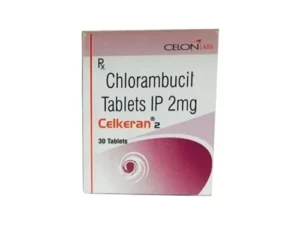
What Is Celkeran 5 mg?
Celkeran 5 mg is an oral chemotherapy medicine containing chlorambucil, an alkylating antineoplastic agent used in selected hematological cancers.
Chlorambucil interferes with the genetic material of cells, preventing normal DNA replication and cell division.
This action can slow or stop the growth of susceptible cancer cells.
Chlorambucil has historically been used to treat certain blood and lymphatic system cancers, including chronic lymphocytic leukemia (CLL), Hodgkin lymphoma, and selected non-Hodgkin lymphomas.
However, modern cancer treatment has evolved considerably. Targeted therapies, immunotherapies, and other treatment combinations are now preferred for many patients.
Chlorambucil remains an option in selected clinical circumstances, depending on the diagnosis, patient characteristics, treatment history, and locally approved indications.
The 5 mg tablet strength allows an oncologist to prescribe an individualized regimen. It does not represent a standard daily dose for every patient.
Common Reasons for Prescribing Chlorambucil
- Selected chronic lymphocytic leukemia treatment regimens
- Certain indolent non-Hodgkin lymphomas
- Selected historical or specialist-directed Hodgkin lymphoma regimens
- Certain lymphoproliferative disorders
- Selected patients requiring oral alkylating chemotherapy
- Specific specialist-directed treatment protocols
Important: Chlorambucil is not appropriate for every leukemia or lymphoma. Treatment selection must be based on the confirmed diagnosis and current oncology guidelines.
How Does Celkeran 5 mg Work?
1. Acts as an Alkylating Agent
Chlorambucil belongs to the nitrogen mustard group of alkylating chemotherapy medicines.
2. Interacts With Cellular DNA
Chlorambucil forms reactive compounds that bind to DNA.
3. Produces DNA Cross-Links
These reactions can create cross-links within or between DNA strands.
4. Disrupts DNA Replication
DNA cross-linking interferes with the ability of cells to copy their genetic material.
5. Interferes With Cell Division
Cells exposed to sufficient DNA damage may be unable to divide normally.
6. Promotes Cancer Cell Death
Accumulated DNA damage can trigger cellular pathways leading to cell death.
7. Affects Healthy Rapidly Dividing Cells
Chlorambucil can also damage healthy cells, particularly blood-forming cells in the bone marrow.
This explains important adverse effects such as anemia, neutropenia, and thrombocytopenia.
Important: Chlorambucil is not selective for cancer cells alone. Its effects on normal tissues require careful dose management and laboratory monitoring.
Uses of Celkeran 5 mg
1. Chronic Lymphocytic Leukemia (CLL)
Chlorambucil has been used to treat chronic lymphocytic leukemia, a cancer affecting certain lymphocytes.
It may reduce the number of abnormal lymphocytes and help control disease-related symptoms.
However, modern targeted treatments are generally preferred for many patients with CLL.
2. Non-Hodgkin Lymphoma
Chlorambucil may be used in selected non-Hodgkin lymphoma treatment regimens.
Its role depends on the lymphoma subtype, disease stage, and available alternatives.
3. Follicular Lymphoma
Chlorambucil has historically been used for certain indolent lymphomas, including follicular lymphoma.
Current treatment approaches frequently involve other systemic therapies.
4. Hodgkin Lymphoma
Chlorambucil has historical use in certain Hodgkin lymphoma regimens.
It is not a routine first-line treatment in modern Hodgkin lymphoma care.
5. Other Indolent Lymphoproliferative Disorders
An oncology specialist may consider chlorambucil for selected lymphoproliferative disorders when supported by the clinical circumstances.
6. Disease Control in Selected Patients
Chlorambucil may help control susceptible hematological malignancies in patients for whom it is an appropriate treatment option.
7. Reduction of Abnormal Lymphocyte Burden
Its cytotoxic effects may reduce abnormal lymphocyte populations in responsive diseases.
8. Specialist-Directed Combination Treatment
Chlorambucil has been studied and used in combination with other anticancer medicines.
Combination treatment must follow an established oncology protocol.
9. Selected Non-Oncology Uses
Chlorambucil has historically been used off-label for certain severe immune-mediated conditions.
Because of its toxicity and availability of safer alternatives, such use requires exceptional specialist justification.
10. Individualized Hematological Cancer Management
An oncologist may prescribe chlorambucil when the expected benefits outweigh the risks and it remains appropriate under current clinical guidance.
Important: Chlorambucil is not a universal cancer medicine. It should not be promoted as a treatment for unrelated cancers without an established clinical indication.
Celkeran 5 mg Dosage and Administration
Chlorambucil dosing must be determined by an oncology specialist.
The prescribed dose depends on the cancer type, treatment protocol, body weight or other dosing parameters, blood counts, treatment response, and toxicity.
General Dosage Information
| Dosage Information | Details |
|---|---|
| Tablet Strength | 5 mg |
| Active Ingredient | Chlorambucil |
| Administration Route | Oral |
| Adult Dosage | Individualized according to the oncology protocol |
| Treatment Frequency | May involve daily or intermittent dosing depending on the regimen |
| Treatment Duration | Determined by disease response and toxicity |
| Dose Adjustments | May be necessary for low blood counts or other adverse effects |
| Pediatric Use | Requires specialist assessment; not routinely established for all indications |
| Medical Supervision | Required throughout treatment |
Important: The 5 mg tablet strength must not be interpreted as a recommended daily dose. Chlorambucil has a narrow therapeutic margin, and incorrect dosing can cause life-threatening toxicity.
General Administration Instructions
- Take Celkeran only according to the oncologist’s written instructions.
- Confirm the exact dose and treatment days.
- Swallow the tablet whole with water.
- Do not crush, chew, or split cytotoxic tablets unless the oncology pharmacy has specifically authorized a safe method.
- Follow the product-specific instructions regarding food.
- Do not take additional doses.
- Do not change the treatment schedule without medical approval.
- Attend all required blood tests.
- Inform the oncology team about fever, bleeding, unusual bruising, or severe weakness.
- Follow cytotoxic medicine handling and storage instructions.
- Keep tablets away from children and pets.
- Ask the oncology pharmacy how to dispose of unused tablets.
Should Celkeran Be Taken With Food?
Administration instructions depend on the specific product and treatment protocol.
Some chlorambucil products are recommended on an empty stomach.
Follow the instructions supplied by the oncology team and manufacturer.
What If a Dose Is Missed?
Contact the oncology team for instructions.
Do not double the next dose or independently change the chemotherapy schedule.
What If Too Much Celkeran Is Taken?
An overdose may cause severe bone marrow suppression, neurological toxicity, and other serious complications.
Seek emergency medical attention immediately.
Can Celkeran Be Stopped Suddenly?
Do not independently stop or modify the treatment regimen.
An oncologist may interrupt, reduce, or discontinue treatment based on disease response, blood counts, and toxicity.
How Long Does Celkeran 5 mg Take to Work?
Chlorambucil begins affecting susceptible cells after administration, but the clinical response is not immediate.
The time required to observe treatment benefits varies according to the malignancy, disease burden, treatment schedule, and individual response.
Oncologists assess effectiveness through clinical examination, blood counts, imaging when indicated, and other disease-specific tests.
Treatment response may be evaluated over several weeks or treatment cycles.
Patients should not judge treatment effectiveness based only on whether symptoms improve immediately.
Common Side Effects
Possible side effects include:
- Nausea
- Vomiting
- Reduced appetite
- Fatigue
- Weakness
- Diarrhea
- Mouth irritation
- Anemia
- Low white blood cell count
- Low platelet count
- Increased infection susceptibility
- Unusual bruising
- Skin rash
The likelihood and severity of adverse effects depend on the treatment regimen, cumulative exposure, and individual patient factors.
Potentially Harmful Effects & Serious Health Risks
1. Bone Marrow Suppression
Chlorambucil can suppress the production of red blood cells, white blood cells, and platelets.
2. Neutropenia
A reduced neutrophil count increases the risk of serious infections.
3. Thrombocytopenia
Low platelet counts may cause bruising or bleeding.
4. Anemia
Reduced red blood cell production may cause fatigue, weakness, and shortness of breath.
5. Serious Infections
Patients receiving chlorambucil may develop severe infections, particularly when blood counts are low.
6. Secondary Malignancies
Chlorambucil can increase the risk of secondary cancers, including treatment-related leukemia.
7. Infertility
Chlorambucil may impair fertility in both males and females, sometimes permanently.
8. Fetal Harm
Chlorambucil can cause fetal harm and must not be used during pregnancy unless a specialist determines that treatment is essential under exceptional circumstances.
9. Seizures
Seizures and other neurological complications have been reported.
10. Severe Skin Reactions
Rare but serious reactions, including Stevens-Johnson syndrome and toxic epidermal necrolysis, may occur.
11. Pulmonary Toxicity
Rare pulmonary complications, including interstitial pneumonitis and pulmonary fibrosis, have been reported.
12. Liver Injury
Liver-related adverse effects may occur and require clinical assessment.
13. Severe Gastrointestinal Toxicity
Nausea, vomiting, and other gastrointestinal symptoms may become significant in some patients.
14. Allergic Reactions
Hypersensitivity reactions, including serious skin or systemic reactions, may occur.
15. Cumulative Toxicity
Repeated exposure can increase the risk of bone marrow suppression, infertility, and certain long-term complications.
Emergency warning: Patients receiving chlorambucil should seek urgent medical assessment for fever of 38°C (100.4°F) or higher, chills, unusual bleeding, severe shortness of breath, seizures, or a widespread blistering rash.
Contraindications & Safety Precautions
1. Allergy to Chlorambucil
Do not take Celkeran if allergic to chlorambucil or another product ingredient.
2. Previous Resistance to Chlorambucil
Chlorambucil should not be used when the disease has demonstrated resistance and the treating specialist determines it is inappropriate.
3. Severe Bone Marrow Suppression
Patients with significantly reduced blood counts require careful assessment before treatment.
4. Active Infections
Infections should be evaluated before and during chemotherapy.
5. Pregnancy
Chlorambucil can harm an unborn baby. Pregnancy must be avoided during treatment.
6. Breastfeeding
Breastfeeding is not recommended during chlorambucil treatment because of the potential for serious harm to the infant.
7. Fertility Concerns
Patients should discuss fertility preservation before starting treatment when appropriate.
8. Contraception
Patients who can become pregnant or cause pregnancy should follow the oncology team’s contraception recommendations during and after treatment.
The required duration depends on the applicable product guidance and individual circumstances.
9. Liver Disease
Patients with significant liver impairment may require dose adjustment or additional monitoring.
10. Kidney Disease
Patients with kidney disease should inform the oncology team so overall treatment safety can be assessed.
11. Previous Chemotherapy
Prior cytotoxic treatment may increase the risk of cumulative bone marrow toxicity.
12. Previous Radiation Therapy
Radiation exposure may affect bone marrow reserve and treatment tolerance.
13. Seizure Disorders
Patients with a history of seizures require careful assessment because chlorambucil may cause neurological toxicity.
14. Live Vaccines
Live vaccines are generally avoided during significant chemotherapy-related immunosuppression.
15. Drug Interactions
Potentially important concerns include:
- Other Cytotoxic Medicines: May increase bone marrow suppression.
- Other Immunosuppressants: May increase infection risk.
- Live Vaccines: May cause serious infection in immunosuppressed patients.
- Medicines Affecting Blood Counts: May increase hematological toxicity.
- Certain Anticancer Combinations: Require protocol-specific monitoring.
- Over-the-Counter Medicines and Supplements: Should be reviewed by the oncology team.
16. Handling Cytotoxic Tablets
Chlorambucil tablets should be handled carefully.
Do not crush or break tablets without specific pharmacy instructions.
Pregnant individuals should avoid handling damaged cytotoxic tablets.
17. Refrigerated Storage
Many chlorambucil tablet products require storage at 2–8°C.
Do not freeze unless the manufacturer specifically instructs otherwise.
Confirm the exact storage requirements for Celkeran.
18. Medical Monitoring
Healthcare professionals may monitor:
- Complete blood count
- Neutrophil count
- Platelet count
- Hemoglobin
- Liver function
- Kidney function
- Infection symptoms
- Bleeding symptoms
- Neurological symptoms
- Skin reactions
- Pulmonary symptoms
- Disease response
- Cumulative treatment exposure
- Fertility-related concerns
- Need for dose interruption or adjustment
Advantages
- Established alkylating chemotherapy agent.
- Oral administration.
- Activity against selected hematological malignancies.
- Historical use in chronic lymphocytic leukemia.
- Use in selected lymphoma treatment regimens.
- May reduce abnormal lymphocyte populations.
- May help control susceptible disease.
- Can be incorporated into individualized oncology protocols.
- Extensive historical clinical experience.
- May remain an option for selected patients when clinically appropriate.
Disadvantages / Limitations
- Can cause severe bone marrow suppression.
- Increases infection risk.
- May cause anemia.
- May cause thrombocytopenia.
- May cause serious bleeding.
- May cause nausea.
- May cause vomiting.
- May cause fatigue.
- May cause severe skin reactions.
- May cause seizures.
- May cause pulmonary toxicity.
- May cause infertility.
- Can harm an unborn baby.
- May increase the risk of secondary malignancies.
- Requires regular blood tests.
- Requires specialist oncology supervision.
- May require refrigerated storage.
- Requires careful cytotoxic handling.
- Not suitable for self-medication.
- Not appropriate for every cancer type.
- Newer treatments may be preferred for many patients.
Important Notes
Generic Name: Chlorambucil.
Brand Name: Celkeran.
Strength: 5 mg.
Drug Class: Alkylating Antineoplastic Agent.
Therapeutic Category: Chemotherapy / Anticancer Medicine.
Primary Uses: Selected chronic lymphocytic leukemia and lymphoma treatment regimens.
Mechanism: DNA alkylation and cross-link formation.
Administration Route: Oral.
Dosage: Individualized by an oncology specialist.
Major Warning: Severe bone marrow suppression, infections, bleeding, infertility, fetal harm, and secondary malignancies.
Pregnancy Warning: Can cause fetal harm.
Breastfeeding Warning: Breastfeeding is not recommended during treatment.
Fertility Warning: May cause permanent infertility.
Monitoring: Regular blood counts and clinical assessment.
Prescription Status: Prescription-Only Cytotoxic Medicine.
Storage: Follow product-specific instructions; refrigeration is commonly required.
Frequently Asked Questions
1. What is Celkeran 5 mg used for?
Celkeran 5 mg contains chlorambucil, a chemotherapy medicine used in selected treatment regimens for chronic lymphocytic leukemia and certain lymphomas.
2. What is the generic name of Celkeran?
The generic name is chlorambucil.
3. Is Celkeran 5 mg a chemotherapy medicine?
Yes. Chlorambucil is a cytotoxic alkylating chemotherapy medicine.
4. How does Celkeran work?
It damages cellular DNA through alkylation and cross-link formation, interfering with cell division and survival.
5. Can Celkeran treat chronic lymphocytic leukemia?
Chlorambucil has been used for CLL, although modern targeted treatments are preferred for many patients.
6. Can Celkeran treat lymphoma?
It may be used in selected lymphoma treatment regimens depending on the subtype and clinical circumstances.
7. Is Celkeran suitable for every cancer?
No. Chlorambucil is used for specific conditions and is not appropriate for all cancer types.
8. How should Celkeran 5 mg be taken?
Take it orally exactly according to the oncologist’s prescribed treatment schedule.
9. Can Celkeran tablets be crushed?
Cytotoxic tablets should not be crushed, chewed, or split unless the oncology pharmacy specifically authorizes a safe method.
Aiden (verified owner) –
Improved my overall wellness, fewer colds and viral infections.
Zohar (verified owner) –
Viral Care is my shield against seasonal sickness.