



Important Safety Warning: Naltrexone blocks opioid receptors and must not be started while a patient is using opioids or experiencing opioid withdrawal. Starting treatment too soon after opioid use can cause severe precipitated withdrawal.
Naltrexone is also not suitable for patients with certain serious liver conditions and should be used under medical supervision.
What Is Naltrexone 50 mg?
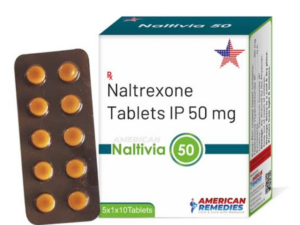
Naltrexone 50 mg Tablets contain naltrexone hydrochloride, a prescription medicine belonging to the opioid receptor antagonist class.
It is used as part of comprehensive treatment programs for alcohol use disorder and opioid use disorder.
Naltrexone works by blocking opioid receptors in the brain and other parts of the body.
These receptors are involved in the effects of opioid medicines and substances such as heroin, morphine, oxycodone, and fentanyl.
By blocking these receptors, naltrexone prevents or reduces the effects of opioids.
This can help support relapse prevention in patients who have completed opioid withdrawal and are no longer physically dependent on opioids.
Naltrexone is also used in the treatment of alcohol use disorder.
Its effects on the brain’s reward pathways may help reduce alcohol craving and the reinforcing effects of drinking.
Naltrexone is not an opioid and does not produce opioid-like euphoria.
It is not generally associated with physical dependence.
However, successful treatment requires appropriate patient selection, medical monitoring, and behavioral or psychosocial support.
Naltrexone does not treat acute opioid withdrawal and is not a substitute for emergency treatment of opioid overdose.
Common Reasons for Prescribing Naltrexone 50 mg
- Alcohol use disorder
- Alcohol dependence
- Reduction of alcohol-related reward
- Support for reducing heavy drinking
- Relapse prevention in alcohol use disorder
- Opioid use disorder after detoxification
- Prevention of relapse to opioid use
- Maintenance of opioid receptor blockade
- Support for substance use disorder recovery
- Medication-assisted treatment as part of a comprehensive care program
- Selected specialist-directed off-label indications
Important: Naltrexone should be used as part of a structured treatment plan that may include counseling, behavioral therapy, and ongoing medical follow-up.
How Does Naltrexone 50 mg Work?
1. Targets Opioid Receptors
Naltrexone acts primarily as an antagonist at opioid receptors, especially mu-opioid receptors.
2. Blocks Opioid Receptor Activation
It occupies opioid receptors and prevents opioid agonists from activating them effectively.
3. Reduces Opioid Effects
Naltrexone blocks or reduces the effects of opioids, including euphoria and other opioid-mediated responses.
4. Helps Prevent Opioid Relapse
Opioid receptor blockade may reduce the reinforcing effects of opioid use.
5. Influences Alcohol Reward Pathways
The endogenous opioid system contributes to alcohol-related reward signaling.
6. Reduces Alcohol-Related Reinforcement
Naltrexone may reduce the rewarding effects associated with alcohol consumption.
7. May Reduce Alcohol Craving
Some patients experience reduced alcohol cravings during treatment.
8. Supports Reduction in Heavy Drinking
Naltrexone may help reduce the frequency or severity of heavy drinking episodes.
9. Does Not Produce Opioid Euphoria
Naltrexone does not activate opioid receptors in the same way as opioid agonists.
10. Does Not Treat Acute Withdrawal
Naltrexone is not used to relieve acute opioid withdrawal symptoms.
11. Supports Long-Term Recovery
When combined with appropriate behavioral and medical support, naltrexone may help patients maintain treatment goals.
12. Provides Oral Opioid Receptor Blockade
The 50 mg tablet provides a commonly prescribed once-daily oral treatment option.
Important: Naltrexone does not eliminate addiction on its own and does not guarantee that relapse will not occur.
Uses of Naltrexone 50 mg
1. Alcohol Use Disorder
Naltrexone is an established medication for treating alcohol use disorder.
2. Alcohol Dependence
It may help patients reduce alcohol-related reinforcement and maintain treatment goals.
3. Reduction of Heavy Drinking
Naltrexone can reduce heavy drinking episodes in some patients.
4. Alcohol Relapse Prevention
It may support continued recovery after a patient reduces or stops alcohol consumption.
5. Alcohol Craving Management
Naltrexone may help reduce alcohol cravings.
6. Opioid Use Disorder
Naltrexone may be used after opioid detoxification to support relapse prevention.
7. Prevention of Opioid Relapse
By blocking opioid receptors, it reduces the reinforcing effects of opioid use.
8. Maintenance of Opioid Abstinence
Naltrexone may support continued abstinence in appropriately selected patients.
9. Comprehensive Substance Use Disorder Treatment
It may be combined with counseling and behavioral interventions.
10. Long-Term Recovery Support
Naltrexone may be continued as part of an individualized recovery program.
11. Selected Off-Label Behavioral Conditions
Naltrexone has been investigated for certain impulse-control and behavioral conditions, but these are not established approved indications for standard 50 mg treatment.
12. Other Specialist-Directed Uses
Additional uses may be considered by specialists when supported by appropriate clinical evidence.
Important: Low-dose naltrexone (LDN), often discussed in relation to chronic pain, autoimmune disorders, or inflammatory conditions, is an off-label approach that generally uses much lower doses than 50 mg. Evidence for many proposed LDN indications remains limited, and these uses should not be presented as established benefits of Naltrexone 50 mg.
Naltrexone 50 mg Dosage and Administration
The appropriate dose depends on the treatment indication, clinical assessment, opioid exposure history, and liver function.
General Dosage Information
| Treatment Information | Details |
|---|---|
| Active Ingredient | Naltrexone Hydrochloride |
| Tablet Strength | 50 mg |
| Common Alcohol Use Disorder Regimen | 50 mg orally once daily |
| Common Opioid Relapse Prevention Regimen | 50 mg orally once daily after appropriate opioid detoxification |
| Administration Route | Oral |
| Food Requirement | May be taken with or without food |
| Treatment Duration | Individualized according to response and treatment goals |
| Opioid-Free Requirement | Usually at least 7–10 days after short-acting opioids; longer intervals may be required after methadone or buprenorphine |
| Liver Assessment | Recommended as clinically appropriate |
| Medical Supervision | Required |
Important: The opioid-free interval must be determined by a healthcare professional. Patients transitioning from methadone or buprenorphine may remain vulnerable to precipitated withdrawal for up to two weeks or longer in some circumstances.
How to Take Naltrexone 50 mg Tablets
- Confirm the prescribed treatment indication.
- Inform the prescriber about all recent opioid use.
- Do not begin treatment until opioid-free status has been appropriately established.
- Follow the prescribed dosing schedule.
- Swallow the tablet with water.
- Take the medicine with food if it causes nausea.
- Do not take extra tablets.
- Do not use opioids to attempt to overcome the blockade.
- Avoid opioid-containing cough medicines unless specifically approved.
- Inform healthcare professionals about naltrexone treatment before surgery or emergency care.
- Attend scheduled medical appointments.
- Follow recommended liver monitoring.
- Report persistent abdominal pain or unusual fatigue.
- Seek medical advice for yellowing of the skin or eyes.
- Report significant mood changes.
- Continue recommended counseling or behavioral treatment.
- Do not stop treatment without discussing relapse prevention with the prescriber.
- Store tablets safely away from children.
- Follow the prescribed recovery plan.
- Carry or maintain accessible medication information for emergency healthcare providers.
Can Naltrexone Be Taken With Food?
Yes.
Naltrexone may be taken with or without food.
Taking it with food may help reduce nausea.
Should Naltrexone Be Taken in the Morning or Evening?
Naltrexone may be taken at a consistent time that suits the treatment plan.
The prescriber may adjust the timing based on tolerability.
What If a Dose Is Missed?
Take the missed dose when remembered unless it is nearly time for the next scheduled dose.
Do not double the dose.
Can Naltrexone Be Taken Every Day?
Yes.
Daily oral treatment is a common approved approach.
Can Naltrexone Be Stopped Suddenly?
Naltrexone itself does not generally cause physical dependence or a withdrawal syndrome when discontinued.
However, stopping treatment removes opioid receptor blockade and may increase relapse and overdose risk if opioid use resumes.
Discuss treatment discontinuation with the prescriber.
How Long Does Naltrexone 50 mg Take to Work?
Naltrexone begins blocking opioid receptors after oral administration.
Opioid receptor blockade develops within hours.
For alcohol use disorder, improvements in craving or drinking behavior may develop over days or weeks.
Treatment response varies among patients.
Some patients experience meaningful reductions in heavy drinking, while others require additional or alternative treatment strategies.
Important: Naltrexone is not a cure for substance use disorders and does not replace behavioral support.
Common Side Effects
Possible side effects include:
- Nausea
- Headache
- Dizziness
- Fatigue
- Abdominal discomfort
- Vomiting
- Reduced appetite
- Anxiety
- Nervousness
- Difficulty sleeping
- Sleepiness
- Muscle pain
- Joint discomfort
- Diarrhea
- Constipation
Side effects may be more noticeable when treatment begins and may improve with time.
Potentially Harmful Effects & Serious Health Risks
1. Precipitated Opioid Withdrawal
Starting naltrexone while opioids remain in the body can trigger severe withdrawal.
2. Opioid Overdose Risk
Patients may attempt to overcome opioid receptor blockade by taking large opioid doses.
This can cause fatal overdose.
3. Increased Opioid Sensitivity After Treatment
After naltrexone is stopped, reduced opioid tolerance may increase overdose risk if opioid use resumes.
4. Liver Injury
Naltrexone can cause liver enzyme elevations and, rarely, clinically significant liver injury.
5. Acute Hepatitis Concerns
Patients with acute hepatitis or liver failure should not use oral naltrexone under standard labeling.
6. Severe Nausea and Vomiting
Significant gastrointestinal symptoms may occur.
7. Severe Allergic Reactions
Rare hypersensitivity reactions may occur.
8. Depression
Depressive symptoms have been reported during treatment.
9. Suicidal Thoughts
Patients experiencing new or worsening depression or suicidal thoughts require immediate medical evaluation.
10. Sleep Disturbances
Insomnia and abnormal sleep patterns may occur.
11. Dizziness
Dizziness may interfere with driving or operating machinery.
12. Inadequate Pain Control
Naltrexone blocks opioid pain medicines, complicating the management of acute pain.
13. Drug Interaction Risks
Concurrent opioid-containing medicines may be ineffective or precipitate withdrawal.
14. Treatment Nonadherence
Missing doses may reduce the intended opioid blockade and relapse prevention benefit.
15. Relapse After Discontinuation
Stopping treatment may increase vulnerability to relapse.
16. Overdose Following Relapse
Loss of opioid tolerance during abstinence increases the danger of overdose if previous opioid doses are resumed.
17. Incorrect Patient Selection
Naltrexone may cause serious complications if prescribed without confirming opioid-free status.
18. Inadequate Treatment of Acute Withdrawal
Naltrexone does not treat acute opioid withdrawal and can worsen it if administered prematurely.
Emergency warning: Seek immediate medical attention for severe opioid withdrawal, suspected opioid overdose, difficulty breathing, severe allergic reactions, jaundice, or suicidal thoughts.
Contraindications & Safety Precautions
1. Current Opioid Use
Naltrexone must not be started in patients who are currently receiving opioid analgesics or using opioids.
2. Current Opioid Dependence
Patients with active physical opioid dependence should not begin naltrexone until appropriate detoxification is completed.
3. Acute Opioid Withdrawal
Naltrexone is contraindicated during acute opioid withdrawal.
4. Positive Opioid Screening
Patients who have not demonstrated an appropriate opioid-free status should not start treatment.
5. Failed Naloxone Challenge
A failed naloxone challenge indicates that naltrexone initiation may be unsafe.
6. Hypersensitivity
Do not use naltrexone if allergic to the active ingredient or formulation components.
7. Acute Hepatitis
Oral naltrexone is contraindicated in acute hepatitis under standard prescribing information.
8. Liver Failure
Naltrexone should not be used in patients with liver failure.
9. Chronic Liver Disease
Patients with chronic liver disease require individualized assessment and monitoring.
10. Kidney Disease
Naltrexone and its metabolites are eliminated partly through the kidneys, so caution may be appropriate in significant renal impairment.
11. Pregnancy
Human pregnancy safety data are limited.
Treatment should be individualized after assessing the risks of untreated substance use disorder and medication exposure.
12. Breastfeeding
Naltrexone and its metabolites can enter breast milk in small amounts.
Breastfeeding decisions should be individualized with a healthcare professional.
13. Children and Adolescents
Safety and effectiveness of oral naltrexone for these indications have not been established in pediatric patients under standard US labeling.
14. Older Adults
Older patients may require additional assessment because of concurrent diseases and medicines.
15. Opioid Pain Medicines
Naltrexone blocks the effects of opioid analgesics.
16. Emergency Pain Management
Patients receiving naltrexone may require alternative pain management strategies.
In emergencies, opioid administration may require specialized monitoring because higher doses can produce serious respiratory complications.
17. Alcohol Withdrawal
Naltrexone does not treat severe acute alcohol withdrawal.
Patients at risk of withdrawal seizures or delirium tremens require appropriate medical management.
18. Mental Health Monitoring
Patients should be monitored for depression and suicidal thoughts.
19. Drug Interactions
Important considerations include:
- Morphine: Opioid effects are blocked; concurrent use is inappropriate.
- Oxycodone: Opioid effects are blocked; concurrent use is inappropriate.
- Hydrocodone: Opioid effects are blocked; concurrent use is inappropriate.
- Codeine: Opioid effects may be blocked.
- Tramadol: Analgesic effects may be reduced, and concurrent use may cause complications.
- Methadone: Naltrexone may precipitate severe withdrawal.
- Buprenorphine: Naltrexone may precipitate severe withdrawal.
- Opioid-Containing Cough Medicines: May be ineffective or cause withdrawal in dependent patients.
- Other Potentially Hepatotoxic Medicines: May require additional liver safety assessment.
20. Medical Monitoring
Healthcare professionals may monitor:
- Alcohol consumption patterns
- Opioid abstinence
- Treatment adherence
- Craving intensity
- Liver function
- Signs of liver injury
- Mood changes
- Depression
- Suicidal thoughts
- Gastrointestinal side effects
- Sleep disturbances
- Medication interactions
- Opioid-free status before initiation
- Relapse risk
- Overdose prevention planning
- Participation in counseling
- Overall treatment response
Advantages
- Established opioid receptor antagonist.
- Used for alcohol use disorder.
- Used for opioid relapse prevention after detoxification.
- May reduce alcohol craving.
- May reduce heavy drinking episodes.
- Blocks opioid receptor activation.
- Does not produce opioid-like euphoria.
- Not generally associated with physical dependence.
- Oral administration.
- Common once-daily dosing.
- Available in 50 mg strength.
- Can support long-term recovery.
- May be combined with counseling and behavioral therapy.
- Supports individualized substance use disorder treatment.
- Provides an alternative to other approved medications in selected patients.
Disadvantages / Limitations
- Must not be started during active opioid use.
- Can precipitate severe opioid withdrawal.
- Does not treat acute opioid withdrawal.
- Does not treat acute alcohol withdrawal.
- May cause nausea.
- May cause headache.
- May cause dizziness.
- May cause fatigue.
- May cause insomnia.
- May cause anxiety.
- May cause abdominal discomfort.
- May affect liver function.
- Requires caution in liver disease.
- Blocks opioid pain medicines.
- May complicate emergency pain management.
- Does not eliminate overdose risk.
- Overdose risk may increase after discontinuation if opioid use resumes.
- Requires appropriate opioid-free status before initiation.
- Requires treatment adherence.
- Does not cure addiction.
- Requires medical supervision.
Important Notes
Generic Name: Naltrexone Hydrochloride.
Product Name: Naltrexone 50 mg Tablets.
Strength: 50 mg.
Drug Class: Opioid Receptor Antagonist.
Therapeutic Category: Alcohol Use Disorder / Opioid Use Disorder Treatment.
Primary Uses: Alcohol dependence and opioid relapse prevention after detoxification.
Mechanism: Opioid receptor blockade.
Administration Route: Oral.
Reference Brand: ReVia.
Common Dose: 50 mg once daily.
Food Requirement: May be taken with or without food.
Opioid-Free Requirement: Must be established before treatment begins.
Major Warning: Severe precipitated opioid withdrawal and opioid overdose risk.
Common Side Effects: Nausea, headache, dizziness, and fatigue.
Serious Risks: Liver injury, severe withdrawal, overdose, and mood-related concerns.
Pregnancy: Requires individualized medical assessment.
Breastfeeding: Requires individualized assessment.
Pediatric Use: Not routinely established under standard US labeling.
Monitoring: Liver function, treatment response, mood, and relapse risk.
Prescription Status: Prescription Medicine.
Storage: Follow manufacturer instructions.
Frequently Asked Questions
1. What is Naltrexone 50 mg used for?
Naltrexone 50 mg is used for alcohol use disorder and relapse prevention in opioid use disorder after appropriate detoxification.
2. What is the generic name of Naltrexone 50 mg?
The generic name is naltrexone hydrochloride.
3. Is naltrexone an opioid?
No. Naltrexone is an opioid receptor antagonist, not an opioid agonist.
4. How does naltrexone work?
Naltrexone blocks opioid receptors and reduces opioid effects and certain alcohol-related reward mechanisms.
5. Can naltrexone reduce alcohol cravings?
Yes. Naltrexone may reduce alcohol cravings in some patients.
6. Can naltrexone help reduce heavy drinking?
Yes. It may reduce heavy drinking episodes as part of a comprehensive treatment program.
7. Can naltrexone treat opioid addiction?
Naltrexone is an approved treatment option for opioid use disorder after detoxification. It helps prevent relapse but does not treat acute opioid withdrawal.
8. What is the usual dose of naltrexone?
A common oral dose is 50 mg once daily, although treatment must be individualized.
9. Can naltrexone be taken with food?
Yes. It may be taken with or without food.
Reviews
There are no reviews yet.