







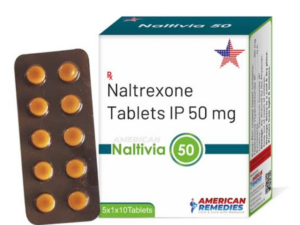
The established US combination product contains naltrexone hydrochloride 8 mg and bupropion hydrochloride 90 mg in an extended-release tablet. The strength, release formulation, and manufacturer of your specific product have not been confirmed. Do not assume that every naltrexone–bupropion combination has the same formulation.
This combination carries a boxed warning concerning suicidal thoughts and behaviors associated with antidepressant medicines. It must not be used with opioids, in patients with seizure disorders, or in several other contraindicated situations.
What Are Naltrexone & Bupropion Tablets?
Naltrexone & Bupropion Tablets are a combination prescription medicine used for chronic weight management in eligible adults.
The medicine contains two active ingredients that act on different pathways in the central nervous system.
Naltrexone is an opioid receptor antagonist. It blocks opioid receptors involved in various neurological signaling processes.
Bupropion is an aminoketone medicine that affects norepinephrine and dopamine signaling.
Together, these ingredients influence brain pathways associated with appetite regulation and food-related reward.
The combination may help reduce food intake and support weight loss when used alongside a reduced-calorie diet and increased physical activity.
It is intended for long-term weight management rather than immediate or rapid weight reduction.
The medicine is not a substitute for dietary changes, regular physical activity, and ongoing medical care.
Treatment effectiveness varies, and some patients may not achieve a clinically meaningful weight reduction.
The prescriber should evaluate treatment response and discontinue the medicine when the expected benefit is not achieved.
Common Reasons for Prescribing Naltrexone & Bupropion
- Chronic weight management
- Obesity treatment
- Weight management alongside a reduced-calorie diet
- Weight management alongside physical activity
- Appetite regulation
- Reduction of food-related reward in some patients
- Support for long-term weight reduction
- Management of obesity-related health risks
- Comprehensive medical weight management programs
Important: Naltrexone–bupropion is not approved as a stand-alone treatment for depression, alcohol use disorder, or opioid use disorder. Its individual ingredients have separate medical uses, but those indications should not be attributed automatically to the combination product.
How Do Naltrexone & Bupropion Tablets Work?
1. Act on Central Appetite Pathways
The combination affects neurological pathways involved in appetite regulation.
2. Influence Hypothalamic Signaling
Bupropion stimulates pathways involving pro-opiomelanocortin (POMC) neurons in the hypothalamus.
3. Support Appetite Suppression
Activation of these pathways may contribute to reduced food intake.
4. Block Opioid Receptors
Naltrexone blocks opioid receptors, including receptors involved in feedback signaling.
5. Modify POMC Feedback
Naltrexone may reduce opioid-mediated inhibitory feedback on POMC neurons.
6. Influence Food Reward
The combination may affect brain pathways associated with the rewarding properties of food.
7. Help Reduce Food Intake
Some patients experience reduced appetite or improved control over eating.
8. Support Calorie Reduction
Reduced food intake may help patients follow a calorie-controlled eating plan.
9. Contribute to Gradual Weight Loss
Weight reduction generally develops over weeks or months rather than immediately.
10. Support Long-Term Weight Management
Continued treatment may help maintain weight management benefits in patients who respond and tolerate therapy.
Important: The exact mechanism by which the combination produces weight loss is not fully established. It does not directly dissolve body fat or guarantee weight reduction.
Uses of Naltrexone & Bupropion Tablets
1. Chronic Weight Management
The primary use is long-term weight management in eligible adults.
2. Obesity Treatment
The US reference product is indicated for adults with an initial body mass index (BMI) of 30 kg/m² or greater.
3. Appetite Regulation
The medicine may help reduce appetite in some patients.
4. Food Reward Modulation
It may reduce the reinforcing effects of eating through central nervous system pathways.
5. Reduced-Calorie Diet Support
Treatment is intended to accompany a reduced-calorie diet.
6. Physical Activity-Based Weight Management
It may be incorporated into a program that includes increased physical activity
7. Weight Management in Adults With Dyslipidemia
It may be considered for eligible patients with weight-related lipid abnormalities.
8. Weight Management in Adults With Controlled Hypertension
Some patients with controlled hypertension may be eligible, but blood pressure and heart rate must be monitored.
Important: Naltrexone–bupropion is not approved for cosmetic weight loss in people who do not meet the relevant prescribing criteria.
Naltrexone & Bupropion Dosage and Administration
The following regimen applies specifically to the US reference extended-release formulation containing naltrexone HCl 8 mg and bupropion HCl 90 mg per tablet.
It must not be applied automatically to other strengths or formulations.
Standard Reference Dose Titration
| Treatment Period | Morning | Evening |
|---|---|---|
| Week 1 | 1 tablet | None |
| Week 2 | 1 tablet | 1 tablet |
| Week 3 | 2 tablets | 1 tablet |
| Week 4 onward | 2 tablets | 2 tablets |
The usual maintenance regimen is four extended-release tablets daily, providing a total of naltrexone HCl 32 mg and bupropion HCl 360 mg.
Certain patients, including those with renal or hepatic impairment or relevant drug interactions, may require lower maximum doses or may not be suitable for treatment.
How to Take Naltrexone & Bupropion Tablets
- Take the medicine only as prescribed.
- Confirm the exact strength and formulation.
- Follow the prescribed dose-escalation schedule.
- Swallow extended-release tablets whole.
- Do not crush, chew, or divide extended-release tablets.
- Avoid taking the tablets with a high-fat meal.
- Do not exceed the prescribed daily dose.
- Do not combine with other bupropion-containing medicines.
- Do not take with opioid-containing medicines.
- Inform the prescriber about seizure history.
- Monitor blood pressure and heart rate as advised.
- Report significant mood changes.
- Follow a reduced-calorie diet.
- Maintain recommended physical activity.
- Attend follow-up appointments.
- Inform healthcare professionals about all current medicines.
- Report persistent nausea or vomiting.
- Avoid taking extra tablets after a missed dose.
- Follow the prescriber’s treatment response assessment.
- Store the medicine securely.
Can Naltrexone & Bupropion Be Taken With Food?
Yes, the reference extended-release tablets may be taken with food.
However, high-fat meals should be avoided because they can increase drug exposure and potentially increase the risk of adverse effects, including seizures.
What If a Dose Is Missed?
Skip the missed dose and take the next dose at the usual scheduled time.
Do not take additional tablets to make up for a missed dose.
How Long Should Treatment Continue?
Treatment duration depends on clinical response and tolerability.
Under US labeling, the prescriber should evaluate weight loss after 12 weeks at the maintenance dose. If the patient has not lost at least 5% of baseline body weight, the medicine should be discontinued because meaningful sustained weight loss is unlikely.
How Long Do Naltrexone & Bupropion Tablets Take to Work?
Some patients may notice appetite-related changes during the initial weeks.
Meaningful weight reduction generally develops over several weeks or months.
Clinical response depends on the patient’s starting weight, diet, activity, adherence, and other factors.
The medicine does not produce immediate weight loss.
Common Side Effects
Possible side effects include:
- Nausea
- Constipation
- Headache
- Vomiting
- Dizziness
- Insomnia
- Dry mouth
- Diarrhea
- Anxiety
- Abdominal discomfort
- Increased sweating
- Tremor
- Fatigue
- Changes in taste
Nausea is among the most frequently reported adverse effects.
Potentially Harmful Effects & Serious Health Risks
1. Suicidal Thoughts and Behaviors
Bupropion-containing medicines carry a boxed warning concerning increased suicidal thoughts and behaviors in children, adolescents, and young adults.
The combination is not approved for pediatric use.
2. Seizures
Bupropion can cause seizures. Risk increases with excessive doses and certain medical conditions or interacting medicines.
3. Increased Blood Pressure
The combination may increase blood pressure.
4. Increased Heart Rate
Some patients experience an elevated resting heart rate.
5. Opioid Withdrawal
Naltrexone may precipitate severe withdrawal in patients who are physically dependent on opioids.
6. Opioid Overdose Risk
Attempting to overcome naltrexone’s opioid blockade with high opioid doses can cause fatal overdose.
7. Increased Opioid Sensitivity
After stopping naltrexone, patients may be more sensitive to opioids, increasing overdose risk.
8. Liver Injury
Naltrexone-containing treatment may cause liver-related complications.
9. Mania or Hypomania
Bupropion may trigger manic or hypomanic episodes in susceptible patients.
10. Psychiatric Symptoms
Anxiety, agitation, depression, and other psychiatric changes may occur.
11. Angle-Closure Glaucoma
Bupropion may trigger angle-closure glaucoma in susceptible individuals.
12. Severe Allergic Reactions
Serious hypersensitivity reactions may occur.
13. Hypoglycemia
Weight loss and reduced food intake may increase hypoglycemia risk in patients using insulin or insulin secretagogues.
14. Serious Drug Interactions
Certain medicines can increase seizure risk or alter bupropion exposure.
15. Pregnancy-Related Risks
Weight-loss treatment should be discontinued when pregnancy is recognized.
Emergency warning: Seek urgent medical attention for seizures, suicidal thoughts, severe allergic reactions, chest pain, severe opioid withdrawal, or symptoms of a serious overdose.
Contraindications & Safety Precautions
1. Uncontrolled Hypertension
Do not use the reference combination in patients with uncontrolled high blood pressure.
2. Seizure Disorders
The medicine is contraindicated in patients with a seizure disorder.
3. Eating Disorders
It is contraindicated in patients with current or previous anorexia nervosa or bulimia.
4. Chronic Opioid Use
Patients receiving chronic opioid therapy must not use naltrexone–bupropion.
5. Acute Opioid Withdrawal
The combination must not be initiated during opioid withdrawal.
6. Other Bupropion-Containing Medicines
Do not combine with other products containing bupropion.
7. Monoamine Oxidase Inhibitors
Concurrent MAOI use is contraindicated. A separation period of at least 14 days is generally required.
8. Abrupt Alcohol or Sedative Withdrawal
The medicine is contraindicated during abrupt discontinuation of alcohol, benzodiazepines, barbiturates, or antiepileptic medicines in relevant circumstances because of seizure risk.
9. Pregnancy
The combination is contraindicated during pregnancy.
10. Breastfeeding
Breastfeeding is not recommended during treatment because the ingredients can pass into breast milk.
11. Liver Disease
Patients with hepatic impairment require individualized dosing assessment, and severe impairment may make treatment inappropriate.
12. Kidney Disease
Patients with renal impairment may require dose limitations. The reference formulation is not recommended in end-stage renal disease.
13. Bipolar Disorder
Patients with bipolar disorder require careful assessment because bupropion can precipitate mania.
14. Depression and Suicidality
Monitor for worsening depression, suicidal thoughts, and unusual behavioral changes.
15. Diabetes
Blood glucose monitoring may be necessary, especially when insulin or sulfonylureas are used.
16. Cardiovascular Conditions
Blood pressure, heart rate, and cardiovascular history should be reviewed.
17. Glaucoma
Patients susceptible to angle-closure glaucoma require caution.
18. Opioid-Free Interval
Before initiating treatment, patients previously using opioids generally require an appropriate opioid-free interval, often at least 7–10 days for short-acting opioids and potentially longer after methadone or buprenorphine.
19. Drug Interactions
Important interactions include:
- Opioid Analgesics: Effects may be blocked, and withdrawal may be precipitated.
- MAO Inhibitors: Contraindicated.
- Other Bupropion Products: Contraindicated.
- Medicines That Lower Seizure Threshold: May increase seizure risk.
- CYP2B6 Inhibitors: May increase bupropion exposure and require dose limitations.
- CYP2B6 Inducers: May reduce bupropion exposure.
- CYP2D6 Substrates: Bupropion may increase concentrations of certain medicines.
- Insulin and Sulfonylureas: Hypoglycemia risk may increase as weight decreases.
- Alcohol: May worsen certain adverse effects and requires medical assessment.
20. Medical Monitoring
Healthcare professionals may monitor:
- Body weight
- Body mass index
- Weight-loss response
- Blood pressure
- Heart rate
- Mood changes
- Suicidal thoughts
- Seizure risk
- Liver function when indicated
- Kidney function when indicated
- Blood glucose in patients with diabetes
- Medication interactions
- Opioid exposure
- Treatment adherence
- Adverse effects
- Continued suitability for treatment
Advantages
- Combines two complementary active ingredients.
- Prescription option for chronic weight management.
- Acts on appetite-related brain pathways.
- Influences food reward signaling.
- May reduce food intake.
- May support clinically meaningful weight loss.
- Oral administration.
- Can complement a reduced-calorie diet.
- Can complement increased physical activity.
- May help eligible adults with obesity.
- Provides a non-injectable weight management option.
- Can be used in a structured long-term treatment program.
Disadvantages / Limitations
- May cause nausea.
- May cause constipation.
- May cause headache.
- May cause insomnia.
- May cause dizziness.
- May cause vomiting.
- May increase blood pressure.
- May increase heart rate.
- Carries a seizure risk.
- Carries a suicidality warning.
- May cause psychiatric symptoms.
- May cause liver-related adverse effects.
- Cannot be combined with opioid medicines.
- May precipitate opioid withdrawal.
- Requires gradual dose escalation.
- Extended-release tablets must not be crushed.
- High-fat meals should be avoided.
- Not suitable during pregnancy.
- Not suitable for patients with certain eating disorders.
- Not suitable for patients with seizure disorders.
- Requires ongoing medical monitoring.
- Does not guarantee weight loss.
- Not appropriate for every patient with obesity.
- Requires a prescription.
Important Notes
Generic Name: Naltrexone Hydrochloride + Bupropion Hydrochloride.
Product Name: Naltrexone & Bupropion Tablets.
Reference Strength: 8 mg / 90 mg extended-release.
Drug Class: Opioid Receptor Antagonist + Aminoketone.
Therapeutic Category: Prescription Weight Management.
Primary Use: Chronic weight management in eligible adults.
Mechanism: Central appetite and food reward pathway modulation.
Administration Route: Oral.
Reference Brand: Contrave.
Common Maintenance Dose: Two reference extended-release tablets twice daily, following titration.
Food Precaution: Avoid high-fat meals.
Major Warning: Suicidal thoughts and behaviors, seizures, and opioid-related complications.
Common Side Effects: Nausea, constipation, headache, and insomnia.
Pregnancy: Contraindicated.
Breastfeeding: Not recommended.
Opioid Use: Contraindicated during chronic opioid treatment or opioid dependence.
Monitoring: Weight response, blood pressure, heart rate, mood, and adverse effects.
Prescription Status: Prescription Medicine.
Storage: Follow manufacturer instructions.
Frequently Asked Questions
1 What are the active ingredients?
The active ingredients are naltrexone hydrochloride and bupropion hydrochloride.
2. What is the reference brand name?
Contrave is the reference US brand.
3. How does the combination work?
It influences central nervous system pathways associated with appetite regulation and food-related reward.
4. Can Naltrexone & Bupropion help with weight loss?
Yes. It may support weight reduction when combined with dietary changes and physical activity.
5. Is this medicine an appetite suppressant?
It affects appetite-related pathways, but its mechanism is more complex than simple appetite suppression.
6. What is the standard tablet strength?
The US reference extended-release tablet contains naltrexone HCl 8 mg and bupropion HCl 90 mg.
7. How often is the medicine taken?
The reference formulation is gradually increased to a maintenance regimen of two tablets twice daily when appropriate.
8. Can it be taken with food?
Yes, but high-fat meals should be avoided.
Reviews
There are no reviews yet.