
















Regorafenib carries a boxed warning for severe and potentially fatal liver toxicity. It can also cause serious bleeding, hypertension, heart-related complications, gastrointestinal perforation, and severe skin reactions. Treatment requires supervision by an oncology specialist and regular clinical monitoring.
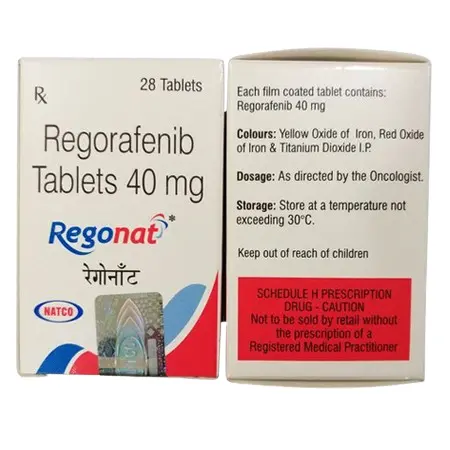
Regorafenib 40 mg is a recognized tablet strength. The 40 mg strength refers to the amount of medicine in each tablet and should not be confused with the commonly used 160 mg daily treatment regimen. Confirm the manufacturer, brand, pack size, and local regulatory approval before publishing.
What Is Regorafenib 40 mg?
Regorafenib 40 mg is an oral targeted anticancer medicine belonging to a group of drugs known as multikinase inhibitors.
It is used to treat certain advanced cancers in patients who have previously received specified anticancer treatments.
Regorafenib works by blocking several protein kinases involved in cancer cell signaling, tumor blood vessel formation, and tumor progression.
Cancer cells depend on complex molecular pathways to grow, divide, survive, and spread.
Some tumors also stimulate the development of new blood vessels to obtain oxygen and nutrients.
Regorafenib interferes with several of these processes.
It inhibits multiple kinase targets, including VEGFR1, VEGFR2, VEGFR3, TIE2, KIT, RET, RAF family kinases, and other signaling proteins.
This broad mechanism can slow tumor progression in selected patients.
Regorafenib is not conventional cytotoxic chemotherapy. It is a targeted systemic anticancer therapy.
However, targeted therapy can still produce serious adverse effects and requires careful monitoring.
Common Reasons for Prescribing Regorafenib 40 mg
- Previously treated metastatic colorectal cancer
- Advanced gastrointestinal stromal tumors after specific prior therapies
- Previously treated hepatocellular carcinoma
- Disease progression following established anticancer treatment
- Management of selected advanced or metastatic solid tumors
- Oncology-directed later-line targeted therapy
- Treatment when approved standard options have been exhausted or are unsuitable
Important: Regorafenib is not appropriate for every patient with these cancers. Eligibility depends on the diagnosis, previous treatments, liver function, general health, and local prescribing criteria.
How Does Regorafenib 40 mg Work?
1. Inhibits Multiple Protein Kinases
Regorafenib blocks several enzymes involved in tumor cell signaling and blood vessel formation.
2. Targets VEGF Receptor Signaling
It inhibits vascular endothelial growth factor receptors, including VEGFR1, VEGFR2, and VEGFR3.
3. Reduces Tumor Angiogenesis
Blocking VEGF signaling can reduce the formation of new blood vessels that support tumor growth.
4. Inhibits TIE2 Signaling
Regorafenib inhibits TIE2, another kinase involved in vascular signaling and angiogenesis.
5. Interferes With RAF Signaling
It inhibits selected RAF kinases involved in cellular growth and survival pathways.
6. Targets KIT Signaling
KIT inhibition contributes to regorafenib activity against certain gastrointestinal stromal tumors.
7. Inhibits RET Signaling
Regorafenib can interfere with RET-associated signaling pathways.
8. Affects Tumor Microenvironment Signaling
The medicine inhibits additional kinases involved in interactions between tumor cells and surrounding tissues.
9. May Slow Cancer Progression
By targeting multiple signaling pathways, regorafenib may delay disease progression in selected patients.
10. Supports Later-Line Cancer Treatment
Regorafenib may offer an additional treatment option after certain previously prescribed anticancer therapies.
Important: Regorafenib does not guarantee tumor shrinkage or a cure. Treatment response varies considerably between patients.
Uses of Regorafenib 40 mg
1. Metastatic Colorectal Cancer
Regorafenib is used in selected adults with metastatic colorectal cancer who have previously received appropriate standard therapies.
These may include fluoropyrimidine-, oxaliplatin-, and irinotecan-based chemotherapy, anti-VEGF therapy, and anti-EGFR therapy when indicated.
The exact eligibility requirements depend on local approval and clinical guidelines.
2. Gastrointestinal Stromal Tumors (GIST)
Regorafenib is used in selected patients with locally advanced, unresectable, or metastatic gastrointestinal stromal tumors.
It is commonly considered after treatment with imatinib and sunitinib.
3. Hepatocellular Carcinoma
Regorafenib is approved for selected patients with hepatocellular carcinoma who have previously received sorafenib.
Liver function and treatment tolerance are important considerations.
4. Previously Treated Advanced Cancer
Regorafenib may be considered when the disease progresses after specified standard treatments.
5. Tumor Angiogenesis Inhibition
Regorafenib interferes with blood vessel signaling that supports tumor development.
6. Tumor Growth Signaling Inhibition
It inhibits kinase pathways involved in cancer cell proliferation and survival.
7. Later-Line Oncology Treatment
Regorafenib may be used as a later-line therapy for certain advanced cancers.
8. Disease Progression Management
The goal of treatment is generally to delay disease progression and, in selected settings, improve survival outcomes.
9. Specialist-Directed Targeted Therapy
Treatment decisions are made by oncology specialists based on the cancer type, previous treatment history, and patient condition.
10. Clinical Research
Regorafenib has been investigated in other malignancies, but investigational uses should not be presented as established approved indications.
Important: Regorafenib should not be marketed as a treatment for all cancers or as a guaranteed cure for colorectal cancer, liver cancer, or GIST.
Regorafenib 40 mg Dosage and Administration
Regorafenib dosing must be determined by an oncology specialist.
General Dosage Information
| Dosage Information | Details |
|---|---|
| Active Ingredient | Regorafenib |
| Tablet Strength | 40 mg |
| Commonly Labeled Adult Dose | 160 mg once daily |
| Number of 40 mg Tablets at 160 mg | 4 tablets |
| Treatment Schedule | Once daily for 21 days, followed by 7 days without treatment |
| Cycle Duration | 28 days |
| Administration Route | Oral |
| Food Instructions | Take after a low-fat meal |
| Dose Adjustments | May be required for toxicity or individual tolerance |
| Treatment Duration | Until disease progression or unacceptable toxicity, as determined by the oncologist |
| Medical Supervision | Mandatory |
Important: The commonly labeled 160 mg dose is a reference regimen, not an instruction to self-administer four tablets. Some patients may receive lower starting doses or dose modifications under specialist supervision.
How to Take Regorafenib 40 mg Tablets
- Take Regorafenib only as prescribed by an oncology specialist.
- Confirm the prescribed dose and treatment cycle.
- Take the medicine at approximately the same time each day.
- Take the tablets after a low-fat meal.
- Swallow tablets whole with water.
- Do not crush, split, or chew the tablets.
- Follow the prescribed 21-day treatment and 7-day rest schedule when applicable.
- Do not increase the dose independently.
- Do not restart treatment after an interruption without medical instructions.
- Attend scheduled blood tests and oncology appointments.
- Monitor blood pressure as instructed.
- Report unusual symptoms promptly.
- Avoid starting new medicines or supplements without checking for interactions.
- Follow the prescribed dose modification plan if adverse effects occur.
Should Regorafenib Be Taken With Food?
Yes.
Regorafenib is generally taken after a low-fat meal containing fewer than 600 calories and less than 30% of calories from fat.
A high-fat meal may alter drug exposure and should not replace the recommended administration instructions.
What If a Dose Is Missed?
If a dose is missed, it may be taken later on the same day when remembered.
Do not take two doses on the same day to compensate for a missed dose.
If the missed dose is not remembered until the following day, resume the prescribed schedule.
What If Vomiting Occurs After Taking Regorafenib?
Do not take an additional dose to replace a dose lost through vomiting.
Contact the oncology team for guidance if vomiting persists.
Can Regorafenib Be Stopped Suddenly?
Treatment interruption or discontinuation may be necessary because of serious toxicity.
However, patients should not independently modify the treatment schedule without discussing it with their oncology team, except when emergency medical attention is required.
How Long Does Regorafenib 40 mg Take to Work?
Regorafenib begins affecting kinase signaling after administration, but clinical anticancer effects cannot be assessed immediately.
Treatment response is usually evaluated over multiple weeks or treatment cycles.
Oncologists may use:
- CT scans
- MRI scans
- Physical examinations
- Liver function tests
- Blood tests
- Tumor markers when appropriate
- Assessment of symptoms
- Evaluation of treatment-related toxicity
The primary benefit may be stabilization of disease or delayed progression rather than visible tumor shrinkage.
Common Side Effects
Possible side effects include:
- Hand-foot skin reaction
- Fatigue
- Diarrhea
- Reduced appetite
- Weight loss
- High blood pressure
- Mouth inflammation
- Hoarseness
- Nausea
- Abdominal discomfort
- Skin rash
- Dry skin
- Weakness
- Fever
- Increased liver enzymes
Patients should report new or worsening side effects to their oncology team.
Potentially Harmful Effects & Serious Health Risks
1. Severe Liver Toxicity
Regorafenib can cause serious liver injury, including fatal liver failure.
Liver function must be monitored before and during treatment.
2. Severe Hand-Foot Skin Reaction
Painful redness, swelling, peeling, or blistering may develop on the palms and soles.
3. Severe Hypertension
Regorafenib can cause significant increases in blood pressure.
4. Serious Bleeding
The medicine may increase the risk of severe or potentially fatal bleeding.
5. Gastrointestinal Perforation
Rare but serious perforation of the stomach or intestinal wall may occur.
6. Gastrointestinal Fistula
Abnormal connections between gastrointestinal structures may develop.
7. Cardiac Ischemia
Regorafenib may increase the risk of reduced blood supply to the heart and heart attack.
8. Heart Failure
Cardiac complications may occur in susceptible patients.
9. Severe Infections
Serious infections have been reported during treatment.
10. Reversible Posterior Leukoencephalopathy Syndrome
This rare neurological complication, also called posterior reversible encephalopathy syndrome, may cause headache, confusion, seizures, and visual disturbances.
11. Impaired Wound Healing
Regorafenib can interfere with normal wound healing.
12. Severe Skin Reactions
Severe dermatologic reactions, including Stevens-Johnson syndrome and toxic epidermal necrolysis, have been reported.
13. Electrolyte Abnormalities
Treatment may cause changes in phosphate, calcium, and other electrolyte levels.
14. Kidney-Related Complications
Proteinuria and other renal abnormalities may occur.
15. Fetal Harm
Regorafenib can cause harm to an unborn baby.
16. Severe Diarrhea and Dehydration
Persistent diarrhea may lead to dehydration and electrolyte disturbances.
17. Drug-Induced Liver Failure
Severe hepatic toxicity may require permanent treatment discontinuation.
Emergency warning: Seek immediate medical attention for yellowing of the skin or eyes, dark urine, severe abdominal pain, vomiting blood, black stools, chest pain, severe headache with confusion, seizures, or severe skin blistering.
Contraindications & Safety Precautions
1. Hypersensitivity
Do not use Regorafenib if a serious hypersensitivity reaction to the medicine or formulation ingredients has occurred.
2. Liver Disease
Patients with existing liver impairment require careful assessment because Regorafenib can cause severe hepatotoxicity.
3. Liver Function Monitoring
Liver function tests should be performed before treatment.
During the first two months, liver tests are generally monitored at least every two weeks, followed by at least monthly monitoring or more frequently when clinically indicated.
4. Hypertension
Blood pressure should be controlled before treatment begins.
5. Cardiovascular Disease
Patients with coronary artery disease, heart failure, or other significant cardiovascular conditions may require additional monitoring.
6. Bleeding Disorders
Regorafenib may increase the risk of bleeding.
7. Gastrointestinal Disorders
Patients with conditions that increase the risk of gastrointestinal perforation or bleeding require careful assessment.
8. Recent Surgery
Regorafenib may impair wound healing.
It is generally withheld for at least two weeks before elective surgery, with postoperative resumption based on adequate wound healing and medical judgment.
9. Active Infections
Serious infections should be evaluated and treated appropriately.
10. Hand-Foot Skin Reaction
Patients should monitor for painful redness, swelling, or blistering of the hands and feet.
11. Pregnancy
Regorafenib can cause fetal harm.
Pregnancy should be avoided during treatment.
12. Contraception
Patients who can become pregnant should use effective contraception during treatment and for at least two months after the final dose.
Male patients with partners who can become pregnant should also use effective contraception during treatment and for at least two months after the final dose.
13. Breastfeeding
Breastfeeding is not recommended during treatment and for at least two weeks after the final dose.
14. Fertility
Regorafenib may impair fertility in males and females.
15. Pediatric Use
Safety and effectiveness in pediatric patients have not been established for the standard approved indications.
16. Older Adults
Older patients may require careful monitoring based on overall health and treatment tolerance.
17. Drug Interactions
Potentially important interactions include:
- Rifampin: A strong CYP3A4 inducer that may reduce Regorafenib exposure.
- Carbamazepine: May alter Regorafenib concentrations.
- Phenytoin: May reduce drug exposure.
- Ketoconazole: A strong CYP3A4 inhibitor that may alter Regorafenib and metabolite exposure.
- Clarithromycin: May affect CYP3A4-mediated drug metabolism.
- Warfarin: Requires careful monitoring because of bleeding risk and potential interaction.
- Rosuvastatin: Regorafenib may increase exposure through transporter inhibition.
- Other BCRP Substrates: May require monitoring or dose adjustment.
- St. John’s Wort: May reduce Regorafenib exposure and should be avoided.
18. Grapefruit Products
Patients should discuss grapefruit consumption with their oncology team because grapefruit can affect CYP3A4-mediated drug metabolism.
19. Herbal Supplements
Herbal products and supplements should be reviewed for potential interactions.
20. Medical Monitoring
Healthcare professionals may monitor:
- Liver function
- Blood pressure
- Complete blood count
- Electrolytes
- Kidney function
- Skin reactions
- Bleeding symptoms
- Cardiovascular symptoms
- Nutritional status
- Weight changes
- Diarrhea and dehydration
- Signs of infection
- Tumor response
- Treatment adherence
- Need for dose reduction or interruption
Advantages
- Oral targeted anticancer treatment.
- Multikinase inhibition.
- Antiangiogenic activity.
- Approved for selected advanced cancers.
- May delay disease progression.
- May provide benefit after previous therapies.
- Established role in later-line metastatic colorectal cancer treatment.
- Treatment option for selected advanced GIST.
- Treatment option for selected previously treated hepatocellular carcinoma.
- Defined treatment-cycle schedule.
- Available as 40 mg tablets.
- Dose modifications may be used to manage toxicity.
Disadvantages / Limitations
- Can cause severe liver toxicity.
- Carries a boxed warning for hepatotoxicity.
- May cause severe hand-foot skin reactions.
- May cause hypertension.
- May cause serious bleeding.
- May cause gastrointestinal perforation.
- May cause cardiac ischemia.
- May impair wound healing.
- May cause severe diarrhea.
- May cause fatigue.
- May cause reduced appetite.
- May cause weight loss.
- May cause mouth inflammation.
- May cause severe skin reactions.
- Requires regular blood tests.
- Requires blood pressure monitoring.
- May interact with several medicines.
- Can cause fetal harm.
- Not appropriate for every cancer type.
- Does not guarantee tumor shrinkage.
- Does not cure advanced cancer.
- Requires oncology specialist supervision.
Important Notes
Generic Name: Regorafenib.
Product Name: Regorafenib 40 mg Tablets.
Strength: 40 mg per tablet.
Drug Class: Multikinase Inhibitor.
Therapeutic Category: Oncology / Targeted Anticancer Medicine.
Primary Uses: Metastatic colorectal cancer, GIST, and hepatocellular carcinoma in selected previously treated patients.
Mechanism: Inhibition of multiple kinases involved in tumor signaling and angiogenesis.
Administration Route: Oral.
Reference Brand: Stivarga.
Commonly Labeled Dose: 160 mg once daily for 21 days of a 28-day cycle.
Food Instructions: Take after a low-fat meal.
Major Warning: Severe and potentially fatal liver toxicity.
Common Side Effects: Hand-foot skin reaction, fatigue, diarrhea, and hypertension.
Serious Risks: Liver failure, bleeding, gastrointestinal perforation, cardiac ischemia, and severe skin reactions.
Pregnancy: Can cause fetal harm.
Breastfeeding: Not recommended during treatment or for at least two weeks afterward.
Monitoring: Liver function, blood pressure, blood tests, skin reactions, and tumor response.
Prescription Status: Prescription-Only Anticancer Medicine.
Storage: Follow manufacturer instructions and protect tablets from moisture.
Frequently Asked Questions
1. What is Regorafenib 40 mg used for?
Regorafenib is used to treat selected patients with metastatic colorectal cancer, advanced gastrointestinal stromal tumors, and hepatocellular carcinoma after specified prior treatments.
2. What is the generic name of Stivarga?
The generic name is Regorafenib.
3. Is Regorafenib chemotherapy?
Regorafenib is a targeted anticancer medicine known as a multikinase inhibitor, rather than conventional cytotoxic chemotherapy.
4. How does Regorafenib work?
It blocks multiple protein kinases involved in tumor growth, blood vessel formation, and cancer progression.
5. Is Regorafenib used for colorectal cancer?
Yes. It is approved for selected patients with previously treated metastatic colorectal cancer.
6. Is Regorafenib used for liver cancer?
Yes. It may be used for selected patients with hepatocellular carcinoma who have previously received sorafenib.
7. Is Regorafenib used for GIST?
Yes. It is used for selected advanced gastrointestinal stromal tumors after previous treatment with imatinib and sunitinib.
8. What is the usual Regorafenib dose?
The commonly labeled adult regimen is 160 mg once daily for 21 days, followed by seven days without treatment. The oncologist may adjust the regimen.
9. How many Regorafenib 40 mg tablets make 160 mg?
Four 40 mg tablets contain 160 mg of Regorafenib. This calculation does not establish an individual prescription.


Kevin (verified owner) –
Improved my overall wellness, fewer colds and viral infections.
John (verified owner) –
Viral Care keeps me healthy and energized all day.