















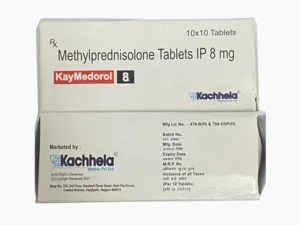
This description is based on the supplied identification, Kaymedorol 4 mg (Methylprednisolone). Confirm the active ingredient, manufacturer, tablet formulation, pack size, and country-specific regulatory approval before publishing.
Kaymedorol contains methylprednisolone, a systemic corticosteroid that reduces inflammation and suppresses immune activity. It can increase infection risk, raise blood glucose, affect mood, and suppress natural cortisol production. Long-term treatment must not be stopped abruptly without medical guidance.
What Is Kaymedorol 4 mg?
Kaymedorol 4 mg is an oral corticosteroid medicine containing methylprednisolone, a synthetic glucocorticoid used to manage selected inflammatory, allergic, and autoimmune conditions.
Methylprednisolone works by reducing inflammatory responses and modifying immune system activity.
It helps control symptoms such as swelling, redness, inflammation-related pain, and allergic reactions.
Healthcare professionals may prescribe methylprednisolone for conditions involving the joints, skin, respiratory system, kidneys, blood, and other organs.
It is also used in selected immune-mediated disorders where excessive immune activity contributes to tissue inflammation.
The 4 mg tablet strength allows prescribers to construct individualized treatment regimens, including certain lower-dose schedules and gradual dose reductions when clinically appropriate.
However, 4 mg refers to the amount of methylprednisolone in each tablet and does not establish a universally safe or appropriate daily dose.
Common Reasons for Prescribing Kaymedorol 4 mg
- Severe allergic conditions
- Rheumatoid arthritis
- Selected asthma exacerbations
- Certain inflammatory skin conditions
- Systemic lupus erythematosus
- Selected autoimmune disorders
- Certain inflammatory bowel disease flare-ups
- Selected hematological disorders
- Certain kidney-related inflammatory conditions
- Other corticosteroid-responsive diseases
Important: Kaymedorol is not an antibiotic, antifungal, antiviral, or conventional painkiller. It controls inflammation but does not directly eliminate infectious organisms.
How Does Kaymedorol 4 mg Work?
1. Activates Glucocorticoid Receptors
Methylprednisolone enters cells and binds to intracellular glucocorticoid receptors.
2. Modifies Inflammatory Gene Expression
The activated receptor complex influences the expression of genes involved in inflammation and immune responses.
3. Reduces Inflammatory Mediators
Methylprednisolone suppresses the activity and production of several inflammatory signaling molecules.
4. Suppresses Excessive Immune Activity
It reduces selected immune-cell responses involved in autoimmune and inflammatory conditions.
5. Helps Reduce Swelling
By suppressing inflammation, methylprednisolone may reduce tissue swelling.
6. Relieves Inflammation-Related Symptoms
It may help control redness, tenderness, pain, and other symptoms associated with corticosteroid-responsive conditions.
7. Helps Manage Immune-Mediated Disease Activity
In selected autoimmune disorders, methylprednisolone can reduce inflammation caused by abnormal immune responses.
Important: Methylprednisolone may control symptoms and disease activity without curing the underlying condition.
Uses of Kaymedorol 4 mg
1. Severe Allergic Conditions
Kaymedorol may be prescribed for selected severe allergic conditions when systemic corticosteroid treatment is appropriate.
It is not a substitute for epinephrine in anaphylaxis.
2. Rheumatoid Arthritis
Methylprednisolone may help reduce joint inflammation, swelling, and discomfort.
It is often used for short-term symptom control or as part of a specialist-directed treatment plan.
3. Asthma Exacerbations
Systemic corticosteroids may be prescribed for certain asthma exacerbations to reduce airway inflammation.
Kaymedorol does not provide immediate bronchodilation and is not a rescue inhaler.
4. Systemic Lupus Erythematosus
Methylprednisolone may be used to manage selected inflammatory manifestations of lupus.
5. Inflammatory Skin Disorders
It may be prescribed for certain severe dermatological conditions requiring systemic corticosteroid therapy.
6. Inflammatory Bowel Disease
Methylprednisolone may be used during selected inflammatory bowel disease flare-ups.
Systemic corticosteroids are generally not appropriate for long-term maintenance therapy.
7. Selected Blood Disorders
It may be prescribed for certain immune-mediated hematological disorders.
8. Kidney-Related Inflammatory Disorders
Methylprednisolone may be used in selected immune-mediated kidney conditions under specialist supervision.
9. Autoimmune Disorders
It may help suppress harmful inflammation in certain autoimmune diseases.
10. Selected Respiratory Inflammatory Conditions
Methylprednisolone may be prescribed for specific inflammatory respiratory disorders when clinically indicated.
11. Certain Neurological Inflammatory Conditions
Systemic corticosteroids may be used in selected neurological inflammatory conditions, although these often require specialized dosing or different formulations.
12. Other Corticosteroid-Responsive Conditions
Healthcare professionals may prescribe methylprednisolone for additional approved indications according to the relevant clinical guidelines.
Important: Not every patient with these conditions requires systemic corticosteroids. Treatment depends on the diagnosis, severity, and individual risk-benefit assessment.
Kaymedorol 4 mg Dosage and Administration
The appropriate methylprednisolone dose varies according to the condition, disease severity, patient response, and treatment duration.
General Reference Dosage
| Dosage Information | Details |
|---|---|
| Tablet Strength | 4 mg |
| Active Ingredient | Methylprednisolone |
| Administration Route | Oral |
| Adult Dosage | Individualized according to diagnosis and response |
| Reference Initial Daily Dose | Some methylprednisolone labels describe 4–48 mg daily for selected conditions; other diseases require different regimens |
| Treatment Frequency | Once daily or divided doses, as prescribed |
| Treatment Duration | Short-term or longer treatment depending on the condition |
| Dose Reduction | May require gradual tapering after prolonged or sufficiently suppressive treatment |
| Pediatric Dosage | Individualized according to age, body weight, and diagnosis |
Important: The reference dose range is not a self-medication recommendation. A 4 mg tablet may be used as part of a regimen requiring one or multiple tablets, but the exact schedule must be prescribed.
General Administration Instructions
- Take Kaymedorol exactly as prescribed.
- Swallow the tablet with water.
- Take it with food or milk if advised to reduce stomach irritation.
- Follow the prescribed timing.
- Morning dosing may be preferred for certain once-daily regimens.
- Do not increase or decrease the dose without medical advice.
- Do not stop prolonged treatment abruptly.
- Inform your healthcare professional about other medicines.
- Monitor for signs of infection and significant adverse effects.
- Attend recommended follow-up appointments.
Can Kaymedorol 4 mg Be Taken With Food?
Taking methylprednisolone with food or milk may help reduce gastrointestinal discomfort.
Follow the prescriber’s instructions.
Can Kaymedorol Be Taken in the Morning?
Morning administration is often preferred for certain once-daily corticosteroid regimens.
However, dosing time depends on the prescribed schedule.
What If a Dose Is Missed?
Take the missed dose when remembered unless it is nearly time for the next dose.
Do not take a double dose.
Patients following a tapering schedule should contact their healthcare professional for specific instructions.
Can Kaymedorol 4 mg Be Used for Tapering?
A 4 mg tablet may be used in some clinician-directed corticosteroid tapering regimens.
However, the need for tapering and the rate of dose reduction depend on treatment duration, cumulative exposure, disease activity, and adrenal suppression risk.
Patients should not create their own tapering schedules.
Can Kaymedorol Be Stopped Suddenly?
Abrupt discontinuation after prolonged or sufficiently suppressive corticosteroid treatment may cause adrenal insufficiency or recurrence of the underlying disease.
Some short courses do not require tapering, but this decision must be based on the individual treatment history.
How Long Does Kaymedorol 4 mg Take to Work?
Methylprednisolone begins producing pharmacological effects after absorption.
Some inflammatory symptoms may improve within hours to a few days.
Other conditions may require longer treatment before meaningful improvement is observed.
The response depends on the diagnosis, severity, prescribed dose, and individual patient factors.
Kaymedorol is not intended to provide immediate relief during life-threatening allergic reactions or sudden breathing emergencies.
Common Side Effects
Possible side effects include:
- Increased appetite
- Difficulty sleeping
- Nausea
- Stomach irritation
- Indigestion
- Increased sweating
- Mood changes
- Restlessness
- Headache
- Fluid retention
- Increased blood glucose
- Weight gain
- Acne
- Increased blood pressure
Even relatively low doses may cause adverse effects, particularly with prolonged use or in susceptible patients.
Potentially Harmful Effects & Serious Health Risks
1. Increased Infection Risk
Methylprednisolone suppresses immune activity and may increase susceptibility to infections.
2. Masking of Infection Symptoms
Corticosteroids may reduce fever and other inflammatory signs, making infections harder to recognize.
3. Adrenal Suppression
Prolonged corticosteroid treatment may suppress the body’s natural cortisol production.
4. Adrenal Insufficiency After Withdrawal
Abrupt withdrawal following significant adrenal suppression may cause weakness, low blood pressure, vomiting, and potentially life-threatening adrenal crisis.
5. Elevated Blood Glucose
Methylprednisolone may cause hyperglycemia or worsen existing diabetes.
6. High Blood Pressure and Fluid Retention
Systemic corticosteroids may contribute to fluid retention and increased blood pressure.
7. Gastrointestinal Ulceration and Bleeding
Corticosteroids may increase gastrointestinal complications, particularly in patients with additional risk factors or when combined with certain medicines.
8. Osteoporosis
Long-term use may reduce bone mineral density and increase fracture risk.
9. Mood and Psychiatric Changes
Methylprednisolone may cause insomnia, anxiety, irritability, depression, mania, or rarely psychosis.
10. Eye Complications
Prolonged corticosteroid use may contribute to cataracts and glaucoma.
11. Cushingoid Features
Long-term exposure may cause central weight gain, rounded facial appearance, and other Cushingoid changes.
12. Muscle Weakness
Prolonged treatment may contribute to steroid-related muscle weakness.
13. Bone and Joint Complications
Long-term corticosteroid use may increase the risk of osteonecrosis.
14. Severe Allergic Reactions
Rare hypersensitivity reactions to methylprednisolone or formulation ingredients may occur.
Emergency warning: Seek urgent medical attention for severe infection symptoms, black or bloody stools, sudden vision changes, severe psychiatric symptoms, serious allergic reactions, or symptoms suggesting adrenal crisis.
Contraindications & Safety Precautions
1. Allergy to Methylprednisolone
Do not take Kaymedorol if allergic to methylprednisolone or another formulation ingredient.
2. Systemic Fungal Infections
Systemic corticosteroids are generally contraindicated in patients with systemic fungal infections unless a specialist determines that an exception is necessary.
3. Active Infections
Inform the prescriber about current bacterial, viral, fungal, or parasitic infections.
4. Tuberculosis
Patients with active or latent tuberculosis require careful medical assessment because corticosteroids may increase infection-related risks.
5. Strongyloides Infection
Corticosteroids can trigger life-threatening Strongyloides hyperinfection in infected patients.
6. Diabetes
Blood glucose monitoring and treatment adjustments may be necessary.
7. High Blood Pressure
Monitor blood pressure during treatment.
8. Heart Failure
Fluid retention may worsen certain cardiovascular conditions.
9. Osteoporosis
Long-term corticosteroid therapy may increase fracture risk.
10. Peptic Ulcer Disease
Patients with a history of ulcers or gastrointestinal bleeding should inform their prescriber.
11. Glaucoma and Cataracts
Long-term treatment may require eye examinations.
12. Psychiatric Conditions
Patients with significant psychiatric histories should be monitored for mood and behavioral changes.
13. Liver Disease
Liver disease may affect corticosteroid metabolism and treatment requirements.
14. Kidney Disease
Patients with kidney disease may require monitoring of fluid balance, blood pressure, and other relevant factors.
15. Pregnancy
Use during pregnancy requires individualized assessment of maternal benefits and fetal risks.
16. Breastfeeding
Methylprednisolone passes into breast milk. Recommendations depend on the dose, duration, and clinical circumstances.
17. Children
Prolonged corticosteroid treatment may affect growth and requires monitoring.
18. Older Adults
Older adults may be more vulnerable to osteoporosis, diabetes-related complications, infections, and other corticosteroid adverse effects.
19. Vaccinations
Live vaccines may be contraindicated during immunosuppressive corticosteroid treatment.
20. Drug Interactions
Potentially important interactions include:
- NSAIDs: May increase gastrointestinal ulceration and bleeding risk.
- Warfarin: Anticoagulant effects may change; INR monitoring may be necessary.
- Diabetes Medicines: Glucose-lowering treatment may require adjustment.
- Rifampicin: May reduce methylprednisolone exposure.
- Certain Antifungals: Strong CYP3A4 inhibitors may increase corticosteroid exposure.
- Clarithromycin: May increase methylprednisolone exposure.
- Certain Anticonvulsants: May alter corticosteroid metabolism.
- Diuretics: May increase potassium-related disturbances.
- Other Immunosuppressants: May increase infection risk.
- Live Vaccines: May be unsafe during immunosuppressive treatment.
21. Medical Monitoring
Healthcare professionals may monitor:
- Blood pressure
- Blood glucose
- Body weight
- Fluid retention
- Infection symptoms
- Electrolytes when indicated
- Mood and sleep changes
- Bone health during prolonged treatment
- Eye health
- Adrenal suppression risk
- Growth in children
- Gastrointestinal complications
- Treatment response
- Need for dose adjustment or tapering
Advantages
- Established systemic anti-inflammatory medicine.
- Suppresses excessive immune responses.
- May reduce swelling.
- May relieve inflammation-related pain.
- Useful in selected allergic conditions.
- Used in certain autoimmune disorders.
- May help manage inflammatory arthritis.
- Used in selected respiratory exacerbations.
- Available in oral tablet form.
- 4 mg strength supports individualized dosing.
- May be used in clinician-directed tapering regimens.
- Extensive clinical experience with methylprednisolone.
Disadvantages / Limitations
- Increases susceptibility to infection.
- May mask infection symptoms.
- May increase blood glucose.
- May increase blood pressure.
- May cause fluid retention.
- May increase appetite.
- May cause weight gain.
- May cause insomnia.
- May cause mood changes.
- May cause stomach irritation.
- May increase gastrointestinal bleeding risk in susceptible patients.
- Long-term use may cause osteoporosis.
- May cause cataracts or glaucoma.
- May cause adrenal suppression.
- May require gradual withdrawal.
- May cause muscle weakness.
- May affect growth in children.
- Requires caution during pregnancy.
- May interact with multiple medicines.
- Not suitable for unsupervised long-term treatment.
Important Notes
Generic Name: Methylprednisolone.
Brand Name: Kaymedorol.
Strength: 4 mg.
Drug Class: Systemic Corticosteroid / Glucocorticoid.
Therapeutic Category: Anti-inflammatory and Immunosuppressive Medicine.
Primary Uses: Selected inflammatory, allergic, and autoimmune conditions.
Mechanism: Glucocorticoid receptor activation and suppression of inflammatory and immune responses.
Administration Route: Oral.
Dosage: Individualized according to diagnosis and treatment response.
Major Warning: Infection risk, hyperglycemia, adrenal suppression, and systemic corticosteroid complications.
Withdrawal Warning: Do not abruptly stop prolonged or sufficiently suppressive treatment.
Pregnancy Warning: Requires individualized medical assessment.
Pediatric Warning: Prolonged treatment may affect growth.
Prescription Status: Prescription Medicine.
Storage: Follow manufacturer instructions.
Frequently Asked Questions
1. What is Kaymedorol 4 mg used for?
Kaymedorol 4 mg contains methylprednisolone, which is used to treat selected inflammatory, allergic, and autoimmune conditions.
2. What is the generic name of Kaymedorol 4 mg?
The generic name is methylprednisolone.
3. Is Kaymedorol 4 mg a steroid?
Yes. It contains methylprednisolone, a systemic glucocorticoid corticosteroid.
4. Is Kaymedorol 4 mg a painkiller?
It is not a conventional painkiller. It may reduce pain associated with certain inflammatory conditions by suppressing inflammation.
5. Can Kaymedorol 4 mg treat allergies?
It may be prescribed for selected severe allergic conditions, but it does not replace emergency epinephrine for anaphylaxis.
6. Can Kaymedorol 4 mg treat rheumatoid arthritis?
It may help control inflammation in selected rheumatoid arthritis treatment plans.
7. Can Kaymedorol 4 mg be used for asthma?
It may be prescribed as part of treatment for certain asthma exacerbations, but it is not a rescue bronchodilator.
8. Can Kaymedorol treat autoimmune diseases?
Yes. Methylprednisolone is used for selected autoimmune conditions when systemic corticosteroid therapy is appropriate.


Reviews
There are no reviews yet.