


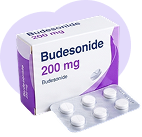







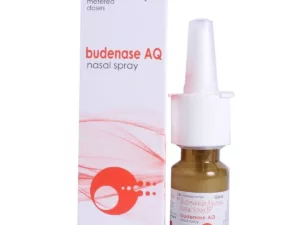
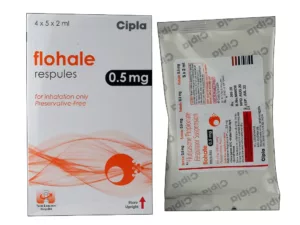
Budesonide nebuliser suspensions are available in different strengths and concentrations. A product labeled 1 mg may contain 1 mg of budesonide in a specified volume, such as 2 mL, but this must be verified against the actual packaging. Do not confuse 1 mg per respule with 1 mg/mL.
Budesonide is an inhaled corticosteroid used to control airway inflammation. It is not a rescue bronchodilator and must not be relied upon for immediate relief during an acute asthma attack.
What Are Budesonide 1 mg Respules?
Budesonide 1 mg Respules contain budesonide, an inhaled corticosteroid medicine used for the maintenance management of bronchial asthma and selected inflammatory respiratory conditions.
Asthma is a chronic respiratory disease characterized by inflammation, swelling, and increased sensitivity of the airways.
Inflamed airways may become narrowed and produce symptoms such as wheezing, coughing, chest tightness, and breathing difficulty.
Budesonide helps reduce inflammation in the bronchial passages, making the airways less reactive to asthma triggers.
The medicine is supplied as a liquid suspension in single-dose containers called respules.
A compatible nebuliser converts the suspension into an inhalable aerosol.
This allows budesonide to reach the respiratory airways during normal breathing.
Nebulised administration may be particularly useful for patients who cannot effectively use certain handheld inhalation devices.
Budesonide is not a bronchodilator and does not directly relax airway muscles.
Instead, it provides anti-inflammatory treatment that helps control asthma symptoms over time.
Common Reasons for Prescribing Budesonide 1 mg Respules
- Maintenance treatment of bronchial asthma
- Persistent asthma management
- Long-term airway inflammation control
- Prevention of recurrent asthma symptoms
- Reduction of asthma exacerbations
- Control of asthma-related wheezing
- Management of asthma-related coughing
- Reduction of nighttime asthma symptoms
- Nebulised corticosteroid therapy
- Supportive management of airway hyperresponsiveness
- Respiratory treatment when handheld inhalers are unsuitable
- Selected specialist-directed inflammatory airway conditions
Important: Budesonide Respules are not antibiotics, rescue bronchodilators, or treatments for all causes of coughing and breathlessness.
How Do Budesonide 1 mg Respules Work?
1. Deliver Budesonide to the Respiratory Airways
A compatible nebuliser converts the suspension into an aerosol that can be inhaled into the lungs.
2. Activate Glucocorticoid Receptors
Budesonide binds to intracellular glucocorticoid receptors in airway cells.
3. Suppress Inflammatory Mediators
The medicine reduces the production and activity of substances involved in airway inflammation.
4. Reduce Airway Swelling
Budesonide helps decrease inflammation-related swelling of the bronchial lining.
5. Reduce Airway Hyperresponsiveness
Regular treatment can reduce excessive airway sensitivity to allergens and other triggers.
6. Help Control Mucus-Related Symptoms
Reducing inflammation may help limit excessive mucus production associated with asthma.
7. Prevent Asthma Exacerbations
Consistent inhaled corticosteroid therapy can reduce the risk of asthma flare-ups.
8. Improve Long-Term Asthma Control
Regular use may reduce asthma symptoms and the frequency of rescue medication use.
9. Provide Local Anti-Inflammatory Action
Nebulised budesonide acts primarily in the respiratory tract, although some systemic absorption occurs.
10. Support Maintenance Respiratory Treatment
Budesonide can be incorporated into an individualized asthma management plan.
Important: Budesonide works gradually and does not provide immediate bronchodilation during an acute asthma attack.
Uses of Budesonide 1 mg Respules
1. Bronchial Asthma
Budesonide is used as maintenance treatment to control inflammation associated with bronchial asthma.
2. Persistent Asthma
It helps manage ongoing airway inflammation in patients with persistent asthma.
3. Prevention of Asthma Exacerbations
Regular treatment may reduce the frequency of asthma flare-ups.
4. Asthma-Related Wheezing
Improved control of inflammation may reduce recurrent wheezing.
5. Asthma-Related Cough
Budesonide may reduce coughing caused by asthma-related airway inflammation.
6. Nighttime Asthma Symptoms
Effective maintenance treatment may reduce nighttime coughing, wheezing, and breathlessness.
7. Airway Inflammation Control
Budesonide suppresses inflammatory processes within the bronchial airways.
8. Airway Hyperresponsiveness
Regular treatment may reduce excessive sensitivity to asthma triggers.
9. Long-Term Asthma Management
Budesonide supports ongoing asthma control when used as prescribed.
10. Nebulised Corticosteroid Therapy
Nebulised delivery may be appropriate for patients who require this administration method.
11. Reduced Rescue Medication Use
Effective asthma control may reduce the frequency of rescue bronchodilator use.
12. Croup in Selected Formulations
Nebulised budesonide is used for croup in some countries and clinical settings.
However, this indication is formulation-specific and may involve different dosing protocols. It should not be presented as an approved indication unless confirmed for the exact product.
Important: Budesonide Respules should not be marketed as a cure for asthma, a treatment for bacterial infections, or a substitute for emergency respiratory care.
Budesonide 1 mg Respules Dosage and Administration
The appropriate dose depends on the patient’s age, asthma severity, previous corticosteroid treatment, clinical response, and the exact product formulation.
General Dosage Information
| Dosage Information | Details |
|---|---|
| Active Ingredient | Budesonide |
| Listed Strength | 1 mg |
| Exact Concentration | Verify mg/mL and total respule volume |
| Dosage Form | Nebuliser Suspension |
| Administration Route | Nebulised inhalation |
| Treatment Type | Maintenance / Controller Therapy |
| Dose per Administration | As prescribed |
| Administration Frequency | According to the prescribed regimen |
| Treatment Duration | Determined by the healthcare professional |
| Pediatric Use | Depends on approved age range and dose |
| Emergency Asthma Relief | Not suitable |
| Medical Supervision | Required |
Important: A 1 mg respule does not necessarily represent the correct dose for every patient. The prescribed amount and frequency must be individualized.
How to Use Budesonide 1 mg Respules
- Wash and dry your hands before handling the respule.
- Confirm the medicine name, strength, and expiry date.
- Check that the respule is intact.
- Prepare the compatible nebuliser according to its instructions.
- Gently shake or resuspend the medicine if directed by the product label.
- Open the respule carefully.
- Transfer the prescribed amount into the nebuliser medication chamber.
- Do not mix with other medicines unless compatibility has been confirmed.
- Attach the appropriate mouthpiece or face mask.
- Sit upright during nebulisation.
- Breathe normally through the mouthpiece or mask.
- Continue until the prescribed nebulisation session is complete.
- Turn off the nebuliser.
- Rinse the mouth with water and spit it out after treatment.
- Wash the face after use if a face mask was used.
- Clean and dry the nebuliser components according to the device instructions.
- Dispose of unused medication according to the product labeling.
Can Budesonide Respules Be Swallowed?
No.
Budesonide Respules are intended for nebulised inhalation and must not be swallowed or injected.
Can Budesonide Respules Be Used During an Asthma Attack?
Budesonide alone is not a rapid-acting bronchodilator.
Patients experiencing sudden bronchospasm should follow their asthma action plan and use the prescribed rescue treatment.
Can Budesonide Respules Be Mixed With Other Nebuliser Medicines?
Do not mix Budesonide with other nebuliser medicines unless the prescribing clinician or pharmacist confirms compatibility.
What If a Dose Is Missed?
Use the missed dose when remembered unless it is nearly time for the next scheduled dose.
If the next dose is due soon, skip the missed dose.
Do not double the dose.
Can Budesonide Respules Be Stopped Suddenly?
Do not independently discontinue prescribed asthma controller therapy.
Stopping treatment may worsen asthma control.
Patients transitioning from systemic corticosteroids may require additional medical supervision.
How Long Do Budesonide 1 mg Respules Take to Work?
Budesonide begins producing anti-inflammatory effects after inhalation, but symptom relief is not immediate.
Some improvement may occur within several days.
More consistent asthma control may develop over one to several weeks of regular treatment.
The response depends on asthma severity, adherence, nebuliser technique, and the prescribed regimen.
Regular use is important even when symptoms improve.
Common Side Effects
Possible side effects include:
- Oral thrush
- Hoarseness
- Voice changes
- Throat irritation
- Mild coughing during nebulisation
- Sore throat
- Dry mouth
- Unpleasant taste
- Headache
- Mouth discomfort
- Throat dryness
- Mild respiratory irritation
Rinsing the mouth and spitting out the water after nebulisation can help reduce the risk of oral candidiasis.
Potentially Harmful Effects & Serious Health Risks
1. Oral Candidiasis
Budesonide may increase the risk of fungal infection in the mouth and throat.
2. Hoarseness and Voice Changes
Inhaled corticosteroids may cause dysphonia.
3. Paradoxical Bronchospasm
Rarely, inhalation may cause sudden worsening of wheezing or breathing difficulty.
4. Adrenal Suppression
Prolonged high-dose corticosteroid exposure may suppress normal adrenal hormone production.
5. Growth Effects in Children
Long-term inhaled corticosteroid therapy may affect growth velocity.
6. Reduced Bone Mineral Density
Prolonged exposure to higher corticosteroid doses may contribute to reduced bone density.
7. Osteoporosis
Patients with additional risk factors may be more susceptible to corticosteroid-associated bone complications.
8. Cataracts
Long-term corticosteroid exposure may increase the risk of cataracts.
9. Glaucoma
Inhaled corticosteroids may contribute to increased eye pressure in susceptible patients.
10. Increased Susceptibility to Infections
Corticosteroids can influence immune responses, particularly when systemic exposure is increased.
11. Systemic Corticosteroid Effects
High doses or prolonged exposure may occasionally cause Cushingoid features and other systemic corticosteroid complications.
12. Serious Allergic Reactions
Rare hypersensitivity reactions may occur.
13. Drug Interaction-Related Toxicity
Certain medicines may increase systemic budesonide exposure.
14. Inadequate Medicine Delivery
Incorrect nebuliser technique or an incompatible device may result in insufficient treatment.
15. Facial or Skin Irritation
Use of a face mask may cause irritation if medication remains on the skin.
Emergency warning: Seek immediate medical attention for severe breathing difficulty, sudden worsening of wheezing after nebulisation, facial or throat swelling, or signs of a serious allergic reaction.
Contraindications & Safety Precautions
1. Hypersensitivity to Budesonide
Do not use the medicine if allergic to budesonide or any formulation ingredient.
2. Acute Asthma Attacks
Budesonide should not be used as the sole treatment for an acute asthma attack.
3. Status Asthmaticus
Severe or life-threatening asthma requires emergency treatment.
4. Respiratory Infections
Patients with active respiratory infections may require additional assessment and treatment.
5. Tuberculosis
Patients with active or previous tuberculosis should inform their healthcare professional.
6. Fungal Infections
Inhaled corticosteroids may increase the risk of local fungal infections.
7. Oral Thrush
Patients who develop oral candidiasis may require antifungal treatment and a review of nebuliser technique.
8. Adrenal Disorders
Patients with adrenal suppression or prolonged previous systemic corticosteroid use require careful monitoring.
9. Liver Disease
Severe liver impairment may increase systemic budesonide exposure.
10. Osteoporosis
Patients with low bone mineral density may require additional monitoring during prolonged treatment.
11. Glaucoma and Cataracts
Patients with eye disorders should report visual changes.
12. Pregnancy
Maintaining good asthma control during pregnancy is important.
Budesonide has substantial clinical experience during pregnancy, but treatment should follow medical advice.
13. Breastfeeding
Inhaled budesonide is generally considered compatible with breastfeeding at recommended doses, subject to individual medical assessment.
14. Children
Pediatric use depends on the approved age range and prescribed dose.
Growth should be monitored during long-term treatment.
15. Older Adults
Older patients may require additional monitoring for bone health and eye complications.
16. Nebuliser Compatibility
Use only a nebuliser compatible with the prescribed formulation.
17. Drug Interactions
Potentially important interactions include:
- Ketoconazole: May increase systemic budesonide exposure.
- Itraconazole: May increase budesonide concentrations.
- Ritonavir: May increase systemic corticosteroid exposure.
- Cobicistat-Containing Medicines: May increase corticosteroid exposure.
- Other Strong CYP3A4 Inhibitors: May increase the risk of systemic corticosteroid effects.
- Other Corticosteroids: May increase cumulative corticosteroid exposure.
18. Correct Nebuliser Technique
Incorrect technique may reduce medicine delivery and compromise asthma control.
19. Infection Prevention
Nebuliser equipment should be cleaned and maintained according to the manufacturer’s instructions.
20. Medical Monitoring
Healthcare professionals may monitor:
- Asthma symptom frequency
- Nighttime symptoms
- Rescue inhaler use
- Lung function
- Asthma exacerbations
- Nebuliser technique
- Oral thrush
- Hoarseness
- Growth in children
- Bone health when indicated
- Eye symptoms
- Adrenal function when clinically indicated
- Treatment adherence
- Need for dose adjustment
Advantages
- Inhaled corticosteroid therapy.
- Direct delivery to the respiratory airways.
- Helps control airway inflammation.
- Supports long-term asthma management.
- May reduce recurrent asthma symptoms.
- May reduce nighttime asthma symptoms.
- May prevent asthma exacerbations.
- May improve overall asthma control.
- May reduce reliance on rescue bronchodilators.
- Nebulised inhalation delivery.
- Suitable for selected patients requiring nebuliser treatment.
- Established anti-inflammatory mechanism.
- Supports individualized maintenance treatment.
Disadvantages / Limitations
- Does not provide immediate asthma relief.
- Requires a compatible nebuliser.
- Requires correct nebuliser technique.
- May cause oral thrush.
- May cause hoarseness.
- May cause throat irritation.
- May cause coughing during nebulisation.
- May cause paradoxical bronchospasm.
- High-dose exposure may cause adrenal suppression.
- Long-term use may affect growth velocity in children.
- Long-term exposure may affect bone health.
- May increase cataract or glaucoma risk.
- May interact with strong CYP3A4 inhibitors.
- Requires proper nebuliser cleaning.
- May require monitoring during prolonged treatment.
- Does not cure asthma permanently.
- Cannot replace emergency reliever treatment.
- Exact concentration and respule volume must be verified.
Important Notes
Generic Name: Budesonide.
Product Name: Budesonide 1 mg Respules.
Listed Strength: 1 mg; verify total drug content and concentration.
Drug Class: Inhaled Corticosteroid.
Therapeutic Category: Respiratory Medicine / Asthma Controller.
Primary Use: Maintenance treatment of bronchial asthma.
Mechanism: Suppression of inflammatory activity in the airways.
Administration Route: Nebulised Inhalation.
Dosage Form: Nebuliser Suspension / Respules.
Device: Compatible Nebuliser.
Major Warning: Not suitable for immediate relief during an acute asthma attack.
Common Side Effects: Oral thrush, hoarseness, and throat irritation.
Serious Risks: Adrenal suppression, paradoxical bronchospasm, and systemic corticosteroid effects.
Pregnancy: Use according to medical assessment.
Breastfeeding: Generally compatible at recommended inhaled doses.
Pediatric Use: Follow age-specific product labeling.
Monitoring: Asthma control, nebuliser technique, oral health, and systemic corticosteroid effects when indicated.
Prescription Status: Prescription Medicine.
Storage: Follow manufacturer instructions.
Frequently Asked Questions
1. What are Budesonide 1 mg Respules used for?
Budesonide 1 mg Respules are used for maintenance treatment of bronchial asthma and control of airway inflammation.
2. What is the generic name of Budesonide Respules?
The generic name is budesonide.
3. Is Budesonide a steroid medicine?
Yes. Budesonide is an inhaled corticosteroid.
4. How do Budesonide Respules work?
They reduce inflammatory activity in the respiratory airways, helping control asthma symptoms over time.
5. Can Budesonide Respules be swallowed?
No. Respules are intended for nebulised inhalation and must not be swallowed.
6. Do Budesonide Respules require a nebuliser?
Yes. A compatible nebuliser is required for administration.
7. Can Budesonide Respules provide immediate asthma relief?
No. Budesonide is a controller medicine and does not provide rapid bronchodilation.
8. Can Budesonide help reduce wheezing?
Yes. Regular treatment may reduce wheezing associated with asthma-related inflammation.
9. Can Budesonide help with asthma-related coughing?
Yes. It may reduce coughing caused by persistent airway inflammation.

Reviews
There are no reviews yet.