



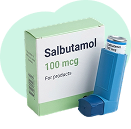







Asthalin Inhaler provides rapid relief of bronchospasm but does not treat the underlying chronic airway inflammation associated with asthma. Frequent reliance on salbutamol may indicate poor asthma control and requires medical review.
What Is Asthalin Inhaler?
Asthalin Inhaler 100 mcg contains salbutamol sulphate, a short-acting bronchodilator used to relieve symptoms caused by reversible narrowing of the airways.
Salbutamol belongs to the short-acting beta-2 adrenergic agonist class of medicines.
It works by stimulating beta-2 receptors in the smooth muscles surrounding the airways.
This causes the airway muscles to relax, allowing the breathing passages to widen.
As a result, airflow improves and symptoms such as wheezing, coughing associated with bronchospasm, chest tightness, and shortness of breath may decrease.
Asthalin Inhaler is commonly prescribed for patients with asthma and other respiratory conditions involving reversible bronchospasm.
It may also be prescribed to prevent exercise-induced bronchoconstriction.
Asthalin is considered a reliever medicine because it generally begins working within minutes.
However, it does not replace inhaled corticosteroid-containing treatment for asthma.
The inhaler delivers a measured dose of medicine directly into the respiratory tract through oral inhalation.
Correct inhaler technique is important for effective medicine delivery.
Common Reasons for Prescribing Asthalin Inhaler
- Relief of reversible bronchospasm
- Asthma-related wheezing
- Shortness of breath caused by airway narrowing
- Chest tightness associated with bronchospasm
- Exercise-induced bronchoconstriction prevention
- Rapid bronchodilation
- Relief of intermittent asthma symptoms
- Selected COPD-related bronchospasm
- Respiratory symptom management
- Bronchodilator therapy within an asthma treatment plan
How Does Asthalin Inhaler Work?
1. Activates Beta-2 Adrenergic Receptors
Salbutamol binds to beta-2 receptors in bronchial smooth muscle.
2. Stimulates Adenylyl Cyclase
Beta-2 receptor activation stimulates intracellular signaling through adenylyl cyclase.
3. Increases Cyclic AMP
This process increases cyclic adenosine monophosphate (cAMP) within airway smooth muscle cells.
4. Relaxes Airway Muscles
Increased cAMP promotes relaxation of bronchial smooth muscle.
5. Reduces Bronchospasm
Relaxation of airway muscles helps reverse bronchospasm.
6. Improves Airflow
Opening narrowed airways allows air to move more freely into and out of the lungs.
7. Relieves Wheezing
Improved airflow may reduce wheezing caused by bronchoconstriction.
8. Reduces Chest Tightness
Bronchodilation can relieve chest tightness associated with reversible airway narrowing.
9. Improves Breathing Comfort
Relief of bronchospasm may make breathing easier.
10. Provides Short-Acting Bronchodilation
Salbutamol generally begins working within minutes, with effects commonly lasting approximately four to six hours.
Important: Salbutamol relieves bronchospasm but does not directly treat chronic airway inflammation.
Uses of Asthalin Inhaler
1. Asthma-Related Bronchospasm
Asthalin Inhaler is used to relieve reversible airway narrowing associated with asthma.
2. Wheezing Relief
Salbutamol may reduce wheezing caused by bronchoconstriction.
3. Shortness of Breath
It may improve breathlessness associated with reversible bronchospasm.
4. Chest Tightness
Bronchodilation may relieve chest tightness caused by airway narrowing.
5. Exercise-Induced Bronchoconstriction
Asthalin may be prescribed before physical activity to prevent exercise-related bronchoconstriction.
6. Reversible Airway Obstruction
The medicine helps improve airflow in patients with reversible airway narrowing.
7. Selected COPD-Related Bronchospasm
Short-acting bronchodilators may be used for symptom relief in selected patients with COPD.
8. Intermittent Bronchospasm
Asthalin may be used according to a prescribed plan for intermittent bronchospasm.
9. Respiratory Symptom Relief
It may help reduce symptoms associated with reversible bronchoconstriction.
10. Bronchodilator Treatment
Asthalin can form part of a broader respiratory treatment regimen.
Important: Asthalin Inhaler does not cure asthma or COPD. The approved indications depend on the product’s current labeling.
Asthalin Inhaler Dosage and Administration
The appropriate dose depends on age, diagnosis, symptom severity, treatment response, and the prescribed asthma action plan.
General Dosage Information
| Dosage Information | Details |
|---|---|
| Active Ingredient | Salbutamol Sulphate |
| Common Strength | 100 mcg per actuation |
| Dosage Form | Metered-Dose Inhaler |
| Administration Route | Oral Inhalation |
| Common Adult Relief Dose | 1–2 inhalations when prescribed |
| Exercise-Related Use | Often prescribed before exercise |
| Dosing Frequency | As directed by a healthcare professional |
| Maximum Daily Dose | Follow the product-specific prescription and labeling |
| Treatment Duration | Depends on the condition |
| Medical Supervision | Required |
The dosing information above is general and should not replace individualized prescribing instructions.
How to Use Asthalin Inhaler
- Remove the mouthpiece cap.
- Check that the mouthpiece is clean.
- Shake the inhaler well.
- Prime the inhaler if required by the manufacturer’s instructions.
- Sit or stand upright.
- Breathe out gently, away from the inhaler.
- Place the mouthpiece between your lips.
- Seal your lips around the mouthpiece.
- Begin breathing in slowly and deeply.
- Press the canister once while continuing to inhale.
- Continue inhaling deeply.
- Remove the inhaler from your mouth.
- Hold your breath for approximately 10 seconds, if comfortable.
- Breathe out slowly.
- If another puff is prescribed, wait as directed and repeat.
- Replace the mouthpiece cap.
- Clean the inhaler according to manufacturer instructions.
- Check the dose counter if the device has one.
- Use a spacer if recommended by your healthcare professional.
- Follow the prescribed treatment schedule.
Important: Correct coordination between pressing the inhaler and breathing in is essential. A spacer can help some patients use a metered-dose inhaler more effectively.
What If a Dose Is Missed?
If Asthalin is prescribed on a regular schedule, use the missed dose when remembered unless the next scheduled dose is approaching.
Do not double the dose.
If prescribed only when needed, follow the prescribed symptom-relief plan.
Can Asthalin Inhaler Be Used Daily?
Some patients may receive scheduled bronchodilator treatment.
However, frequent or increasing use of salbutamol for asthma symptoms can indicate inadequate asthma control.
Patients should seek medical review rather than increasing use independently.
Can Asthalin Inhaler Be Used During an Asthma Attack?
Salbutamol is a rapid-acting bronchodilator used for relief of bronchospasm.
Follow the prescribed asthma action plan.
Severe or worsening breathing difficulty requires urgent medical attention, particularly if the prescribed reliever does not provide adequate improvement.
How Long Does Asthalin Inhaler Take to Work?
Inhaled salbutamol generally begins producing bronchodilation within approximately five minutes.
Its effects commonly last four to six hours.
The response varies depending on the severity of bronchospasm, inhaler technique, and individual clinical circumstances.
If symptoms do not improve as expected or relief becomes shorter than usual, seek medical assessment.
Common Side Effects
Possible side effects include:
- Tremor
- Shaking hands
- Headache
- Nervousness
- Palpitations
- Increased heart rate
- Muscle cramps
- Throat irritation
- Cough
- Dizziness
- Restlessness
- Mild nausea
Some side effects are dose-related and may become more noticeable with excessive use.
Potentially Harmful Effects & Serious Health Risks
1. Tachycardia
Salbutamol may cause an increased heart rate.
2. Palpitations
Some patients experience a noticeable or irregular heartbeat.
3. Hypokalemia
High doses of beta-2 agonists can lower blood potassium levels.
4. Cardiac Arrhythmias
Excessive use may increase the risk of abnormal heart rhythms in susceptible patients.
5. Paradoxical Bronchospasm
Rarely, breathing may worsen immediately after inhalation.
6. Chest Pain
Cardiovascular stimulation may contribute to chest discomfort in susceptible patients.
7. Hyperglycemia
Salbutamol may temporarily increase blood glucose levels.
8. Lactic Acidosis
High-dose beta-2 agonist treatment may contribute to elevated lactate levels.
9. Severe Allergic Reactions
Rare hypersensitivity reactions may occur.
10. Poor Asthma Control
Frequent reliance on salbutamol without adequate anti-inflammatory treatment may increase the risk of severe asthma exacerbations.
Emergency warning: Seek urgent medical attention for severe breathlessness, blue lips, chest pain, fainting, or symptoms that worsen despite prescribed reliever treatment.
Contraindications & Safety Precautions
1. Hypersensitivity
Do not use Asthalin Inhaler if allergic to salbutamol or any formulation component.
2. Heart Disease
Patients with cardiovascular disease require caution because salbutamol may increase heart rate.
3. Arrhythmias
Patients with abnormal heart rhythms should inform their prescriber.
4. Hypertension
Blood pressure monitoring may be appropriate in certain patients.
5. Hyperthyroidism
Salbutamol may increase symptoms such as tremor and palpitations.
6. Diabetes
Blood glucose monitoring may be necessary in some patients.
7. Hypokalemia
Patients at risk of low potassium require appropriate assessment.
8. Seizure Disorders
Use cautiously in patients with relevant neurological conditions.
9. Pregnancy
Inhaled salbutamol may be used during pregnancy when clinically indicated. Maintaining asthma control is important for maternal and fetal health.
10. Breastfeeding
Inhaled salbutamol is generally considered compatible with breastfeeding at usual therapeutic doses.
11. Children
Pediatric use depends on age, product approval, prescribed dose, and inhaler technique.
12. Older Adults
Older patients with cardiovascular conditions may require additional monitoring.
13. Excessive Use
Do not exceed the prescribed dose or frequency.
14. Inhaler Technique
Incorrect inhaler technique can reduce medicine delivery and treatment effectiveness.
15. Spacer Use
A spacer may improve delivery in patients who have difficulty coordinating inhalation and actuation.
16. Drug Interactions
Potentially important interactions include:
- Nonselective Beta-Blockers: May reduce bronchodilator effectiveness and provoke bronchospasm.
- Other Sympathomimetic Medicines: May increase cardiovascular side effects.
- Certain Diuretics: May increase the risk of hypokalemia.
- Digoxin: Electrolyte changes may require monitoring.
- MAO Inhibitors: May increase cardiovascular effects.
- Tricyclic Antidepressants: May increase cardiovascular effects.
- Other Bronchodilators: Combined treatment should follow the prescribed plan.
17. Medical Monitoring
Healthcare professionals may monitor:
- Frequency of asthma symptoms
- Reliever medicine use
- Wheezing
- Shortness of breath
- Chest tightness
- Lung function
- Heart rate
- Blood pressure
- Inhaler technique
- Treatment response
- Potassium levels when indicated
- Asthma exacerbation frequency
- Need for inhaled corticosteroid-containing treatment
- Overall respiratory control
Advantages
- Short-acting bronchodilator
- Relaxes airway smooth muscle
- Helps relieve reversible bronchospasm
- May reduce wheezing
- May relieve chest tightness
- Supports improved airflow
- Rapid onset of action
- Portable inhaler device
- Metered-dose delivery
- Commonly available in 100 mcg strength
- May prevent exercise-induced bronchoconstriction
- Can be incorporated into asthma treatment plans
Disadvantages / Limitations
- Does not treat underlying chronic airway inflammation
- Does not cure asthma
- Does not cure COPD
- May cause tremor
- May cause palpitations
- May increase heart rate
- May cause nervousness
- May cause headache
- May lower potassium at high doses
- May affect blood glucose
- Excessive use may cause cardiovascular complications
- Requires correct inhaler technique
- May require a spacer
- Frequent use may indicate poor asthma control
- Requires medical supervision
- Requires a prescription
Important Notes
Generic Name: Salbutamol.
Brand Name: Asthalin.
Product Name: Asthalin Inhaler 100 mcg.
Common Strength: 100 mcg per actuation.
Drug Class: Short-Acting Beta-2 Adrenergic Agonist.
Therapeutic Category: Bronchodilator / Respiratory Medicine.
Primary Use: Relief of reversible bronchospasm.
Administration: Oral inhalation using a metered-dose inhaler.
Mechanism: Beta-2 receptor activation and airway smooth muscle relaxation.
Onset: Generally within minutes.
Duration: Commonly four to six hours.
Common Side Effects: Tremor, headache, nervousness, and palpitations.
Serious Risks: Tachycardia, hypokalemia, arrhythmias, and paradoxical bronchospasm.
Pregnancy: May be used when clinically indicated.
Breastfeeding: Generally compatible with usual inhaled doses.
Monitoring: Symptom frequency, reliever use, inhaler technique, and cardiovascular effects when indicated.
Prescription Status: Prescription Medicine.
Frequently Asked Questions
1. What is Asthalin Inhaler used for?
Asthalin Inhaler is used to relieve reversible bronchospasm associated with asthma and selected other respiratory conditions.
2. What is the generic name of Asthalin Inhaler?
The generic name is salbutamol, also known as albuterol.
3. Is Asthalin Inhaler a steroid?
No. Asthalin contains salbutamol, a short-acting beta-2 agonist bronchodilator.
4. How does Asthalin Inhaler work?
It relaxes airway smooth muscles, helping open narrowed airways.
5. Can Asthalin Inhaler relieve wheezing?
Yes. It may relieve wheezing caused by reversible bronchospasm.
6. How quickly does Asthalin Inhaler work?
Inhaled salbutamol generally begins working within minutes.
7. How long does Asthalin Inhaler last?
Its bronchodilator effects commonly last approximately four to six hours.
8. Can Asthalin Inhaler be used every day?
Use depends on the prescription. Frequent reliance on salbutamol for asthma symptoms requires medical review.
9. Can Asthalin Inhaler be used before exercise?
Yes. It may be prescribed before exercise to prevent exercise-induced bronchoconstriction.
10. Can Asthalin Inhaler cause a fast heartbeat?
Yes. Tachycardia and palpitations are recognized side effects.
Reviews
There are no reviews yet.