





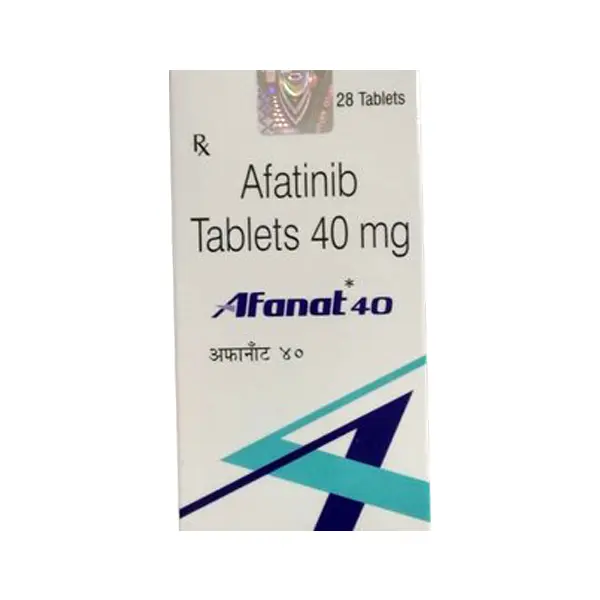
Afatinib 40 mg
Want to order in bulk / B2B price?
Ships in plain packaging with a tracking number. Delivery time for this product: 6 to 15 days. Free shipping on orders above $299.
Damaged, missing or only part of your order arrived? Choose a new package or a full refund.
Call +1 251-332-4105 or email [email protected].
Share
Product verification: This description covers afatinib 40 mg tablets. Confirm the manufacturer, formulation, pack size, regulatory status, and country-specific approved indications before publishing.
Important Safety Warning: Afatinib is a prescription targeted anticancer medicine that can cause severe diarrhea, dehydration, kidney injury, serious skin reactions, interstitial lung disease, liver injury, eye complications, and fetal harm. Treatment requires specialist oncology supervision.
What Is Afatinib 40 mg?
Afatinib 40 mg is an oral targeted anticancer medicine belonging to the tyrosine kinase inhibitor class.
It is used to treat selected forms of non-small cell lung cancer, particularly tumors with susceptible mutations in the epidermal growth factor receptor (EGFR) gene.
Afatinib is an irreversible inhibitor of the ErbB receptor family, which includes EGFR (ErbB1), HER2 (ErbB2), and HER4 (ErbB4).
These receptors participate in signaling pathways that regulate cell growth, proliferation, and survival.
Certain EGFR mutations cause abnormal signaling that promotes cancer cell growth.
Afatinib blocks these signaling pathways and may slow tumor progression in patients whose cancers are sensitive to the medicine.
Unlike conventional cytotoxic chemotherapy, afatinib is a molecularly targeted therapy.
The 40 mg strength is the usual recommended starting dose for adults with certain approved indications, although the oncologist may prescribe a different dose based on kidney function, tolerability, and individual clinical circumstances.
Common Reasons for Prescribing Afatinib 40 mg
- EGFR mutation-positive non-small cell lung cancer
- Selected metastatic NSCLC with susceptible EGFR mutations
- EGFR exon 19 deletion-positive lung cancer
- EGFR exon 21 L858R mutation-positive lung cancer
- Certain uncommon EGFR mutation-positive lung cancers
- Selected metastatic squamous NSCLC after platinum-based chemotherapy
- Molecularly guided lung cancer treatment
- Specialist-directed targeted anticancer therapy
Important: Afatinib is not suitable for every lung cancer. Molecular testing and clinical assessment are important when selecting EGFR-targeted treatment.
How Does Afatinib 40 mg Work?
1. Targets the ErbB Receptor Family
Afatinib acts on several members of the ErbB family of receptor tyrosine kinases.
These include EGFR, HER2, and HER4.
2. Irreversibly Blocks Tyrosine Kinase Activity
Afatinib forms covalent bonds with its target receptors, causing irreversible inhibition of their kinase activity.
3. Inhibits Abnormal EGFR Signaling
Certain EGFR mutations activate signaling pathways that encourage cancer cell proliferation.
Afatinib inhibits signaling through susceptible mutant EGFR receptors.
4. Reduces Cancer Cell Proliferation
Blocking ErbB signaling can reduce the ability of susceptible tumor cells to multiply.
5. Interferes With Cancer Cell Survival
Afatinib disrupts pathways involved in cancer cell survival and may promote cell death.
6. Helps Control Tumor Growth
In responsive tumors, afatinib may reduce tumor size or delay disease progression.
7. Provides Molecularly Targeted Treatment
Afatinib is selected according to the tumor’s molecular characteristics and the patient’s clinical circumstances.
8. Supports Disease Management
When effective and tolerated, afatinib may help control metastatic NSCLC over time.
Important: Afatinib is not effective against every EGFR mutation. Some resistance mutations and molecular alterations require different treatment approaches.
Uses of Afatinib 40 mg
1. EGFR Mutation-Positive Non-Small Cell Lung Cancer
Afatinib is used in selected patients with EGFR mutation-positive NSCLC.
Its effectiveness depends on the specific mutation and clinical setting.
2. Metastatic Non-Small Cell Lung Cancer
Afatinib has approved indications in certain jurisdictions for metastatic NSCLC with susceptible EGFR mutations.
3. EGFR Exon 19 Deletion-Positive NSCLC
Certain EGFR exon 19 deletions are associated with sensitivity to EGFR tyrosine kinase inhibitors, including afatinib.
4. EGFR L858R Mutation-Positive NSCLC
Afatinib may be used for selected patients whose tumors contain the EGFR exon 21 L858R substitution.
5. Selected Uncommon EGFR Mutations
Afatinib has demonstrated activity against certain uncommon EGFR mutations, including G719X, L861Q, and S768I.
The exact molecular findings should be reviewed by an oncology specialist.
6. Previously Treated Metastatic Squamous NSCLC
In the United States, afatinib is approved for metastatic squamous NSCLC that has progressed after platinum-based chemotherapy.
Its clinical role depends on treatment history and available alternatives.
7. Molecularly Guided Cancer Therapy
Afatinib may be selected based on molecular testing results and current treatment recommendations.
8. Disease Progression Control
In responsive patients, afatinib may delay cancer progression.
9. Tumor Burden Reduction
Afatinib may reduce tumor size in certain susceptible cancers.
10. Long-Term Targeted Treatment
Patients who benefit from and tolerate afatinib may continue treatment until disease progression or unacceptable toxicity.
Important: Modern EGFR-targeted treatment options have evolved, and other agents may be preferred for many patients depending on the mutation and treatment setting.
Afatinib 40 mg Dosage and Administration
Afatinib dosing must be determined by an oncology specialist.
General Dosage Information
| Dosage Information | Details |
|---|---|
| Tablet Strength | 40 mg |
| Active Ingredient | Afatinib |
| Administration Route | Oral |
| Usual Adult Starting Dose | 40 mg once daily for certain approved indications |
| Administration Frequency | Once daily |
| Food Instructions | Take on an empty stomach |
| Treatment Duration | Until disease progression or unacceptable toxicity, as directed |
| Dose Adjustments | Based on adverse reactions, kidney function, and other clinical factors |
| Reduced Dose Strengths | 30 mg and 20 mg tablets may be used when appropriate |
| Medical Supervision | Required throughout treatment |
Important: Although 40 mg once daily is a common starting regimen, it is not appropriate for every patient. Severe kidney impairment or treatment-related toxicity may require a different dose.
General Administration Instructions
- Take afatinib exactly as prescribed by the oncologist.
- Take the medicine at approximately the same time each day.
- Swallow the tablet whole with water.
- Take it on an empty stomach.
- Avoid eating for at least 3 hours before and 1 hour after taking the dose.
- Do not crush or chew the tablet.
- Do not increase or reduce the dose independently.
- Report diarrhea promptly.
- Monitor for new breathing difficulties.
- Report severe skin reactions or painful mouth sores.
- Attend scheduled medical appointments and laboratory tests.
- Inform the healthcare team about other medicines and supplements.
Should Afatinib 40 mg Be Taken With Food?
Afatinib should generally be taken on an empty stomach.
Food can reduce afatinib exposure.
The reference instructions recommend avoiding food for at least 3 hours before and 1 hour after the dose.
What If a Dose Is Missed?
According to reference afatinib prescribing information, a missed dose may be taken if the next scheduled dose is more than 12 hours away.
If the next dose is within 12 hours, skip the missed dose.
Do not take two doses together.
What If Too Much Afatinib Is Taken?
Contact the oncology team or seek urgent medical advice.
An overdose may increase the risk of severe gastrointestinal and other adverse effects.
Can Afatinib Be Stopped Suddenly?
Do not independently stop or change the treatment.
The oncology team may interrupt, reduce, or discontinue afatinib because of adverse effects, disease progression, or other clinical considerations.
How Long Does Afatinib 40 mg Take to Work?
Afatinib begins inhibiting its molecular targets after absorption.
However, measurable treatment responses usually require time.
An oncologist may evaluate the response using imaging studies and clinical assessments after several weeks of treatment.
The time required depends on the tumor’s mutation profile, disease burden, and individual response.
Some patients may notice improvement in cancer-related symptoms before formal imaging confirms a response.
However, symptom improvement alone does not establish treatment effectiveness.
Common Side Effects
Possible side effects include:
- Diarrhea
- Acne-like skin rash
- Dry skin
- Itching
- Mouth sores
- Stomatitis
- Reduced appetite
- Nausea
- Vomiting
- Nail inflammation
- Paronychia
- Fatigue
- Weight loss
- Nosebleeds
- Abdominal discomfort
Diarrhea and skin reactions are particularly important adverse effects of afatinib.
Potentially Harmful Effects & Serious Health Risks
1. Severe Diarrhea
Afatinib can cause severe or persistent diarrhea.
This may lead to dehydration, electrolyte abnormalities, and hospitalization.
2. Dehydration
Significant fluid loss from diarrhea or vomiting can cause dehydration.
3. Acute Kidney Injury
Severe dehydration may contribute to acute kidney injury.
4. Severe Skin Reactions
Afatinib may cause serious skin reactions, including severe acneiform rash and blistering.
5. Interstitial Lung Disease
Afatinib can cause interstitial lung disease or pneumonitis, which may be life-threatening.
6. Liver Injury
Afatinib may cause elevated liver enzymes and serious liver injury.
7. Severe Stomatitis
Painful mouth ulcers and inflammation may interfere with eating and drinking.
8. Eye Complications
Keratitis and other ocular complications may occur.
9. Cardiac Dysfunction
Decreased left ventricular ejection fraction has been reported.
10. Electrolyte Disturbances
Severe diarrhea and dehydration may cause electrolyte imbalances.
11. Severe Nail Inflammation
Paronychia may cause painful swelling or infection around the nails.
12. Fetal Harm
Afatinib may harm an unborn baby.
13. Treatment-Related Toxicity
Severe adverse reactions may require dose interruption, reduction, or permanent discontinuation.
14. Serious Hypersensitivity
Allergic reactions may occur.
Emergency warning: Seek urgent medical assessment for new or worsening shortness of breath, severe persistent diarrhea, dehydration, blistering skin reactions, severe eye pain, or symptoms of liver injury.
Contraindications & Safety Precautions
1. Hypersensitivity to Afatinib
Patients with known hypersensitivity to afatinib or its ingredients require specialist assessment and should not continue the medicine after a serious allergic reaction.
2. Severe Diarrhea
Report diarrhea promptly because dehydration and kidney complications may develop.
3. Dehydration Risk
Maintain adequate hydration according to medical instructions.
4. Kidney Disease
Kidney function should be assessed before treatment and monitored when appropriate.
5. Severe Renal Impairment
Patients with severe kidney impairment may require a reduced starting dose.
6. Liver Disease
Patients with liver impairment require appropriate monitoring.
7. Interstitial Lung Disease
New cough, fever, or worsening breathlessness may indicate serious pulmonary toxicity.
8. Skin Disorders
Report severe or worsening rash, blistering, or painful skin changes.
9. Sun Exposure
Sun exposure may worsen certain afatinib-associated skin reactions.
Appropriate sun protection may be recommended.
10. Eye Problems
Report eye pain, redness, light sensitivity, excessive tearing, or vision changes.
11. Heart Disease
Patients with cardiac disease may require additional monitoring.
12. Pregnancy
Afatinib can cause fetal harm.
Patients who are pregnant or planning pregnancy should discuss treatment risks with their oncology specialist.
13. Contraception
Patients who can become pregnant should use effective contraception during treatment and for the period specified in the approved product labeling after the final dose.
14. Breastfeeding
Breastfeeding is not recommended during treatment and for the period specified by the applicable product label after treatment.
15. Children
The safety and effectiveness of afatinib have not been established for routine pediatric use.
16. Older Adults
Older adults may require closer monitoring because of adverse effects and coexisting medical conditions.
17. Drug Interactions
Potentially important interactions include:
- P-glycoprotein (P-gp) Inhibitors: May increase afatinib exposure.
- P-gp Inducers: May reduce afatinib exposure.
- Rifampicin: May reduce afatinib concentrations.
- Certain Antifungals: Some may affect afatinib exposure through transporter interactions.
- Certain Antibiotics: Some may affect drug transporter activity.
- Other Anticancer Medicines: Require specialist review.
- Herbal Supplements: May affect drug exposure or tolerability.
18. Food Interactions
Afatinib should be taken on an empty stomach according to the product instructions.
19. Medical Monitoring
Healthcare professionals may monitor:
- Kidney function
- Liver function
- Electrolytes
- Diarrhea severity
- Hydration status
- Skin reactions
- Mouth inflammation
- Eye symptoms
- Pulmonary symptoms
- Cardiac function when indicated
- Body weight
- Treatment response
- Imaging findings
- Need for dose reduction or interruption
Advantages
- Oral targeted anticancer therapy.
- Irreversible ErbB family inhibition.
- Activity against selected EGFR-mutated NSCLC.
- Used in certain metastatic lung cancer treatment regimens.
- Activity against some uncommon EGFR mutations.
- May help delay disease progression in responsive tumors.
- May reduce tumor burden.
- Does not require intravenous administration.
- Once-daily administration.
- 40 mg is a standard starting strength for certain approved indications.
- Established clinical evidence for selected indications.
- May be continued while clinically effective and tolerable.
Disadvantages / Limitations
- Not effective against every lung cancer.
- Requires molecular testing for many indications.
- May cause severe diarrhea.
- May cause dehydration.
- May cause kidney injury.
- May cause severe skin rash.
- May cause mouth ulcers.
- May cause nail inflammation.
- May cause reduced appetite.
- May cause weight loss.
- May cause liver injury.
- May cause interstitial lung disease.
- May cause eye complications.
- May affect cardiac function.
- Can harm an unborn baby.
- Requires oncology monitoring.
- May interact with certain medicines.
- Must be taken on an empty stomach.
- May require dose reduction.
- Resistance to treatment can develop.
- Newer targeted therapies may be preferred in certain settings.
Important Notes
Generic Name: Afatinib.
Strength: 40 mg.
Drug Class: Tyrosine Kinase Inhibitor.
Therapeutic Category: Targeted Anticancer Medicine.
Primary Use: Selected EGFR mutation-positive NSCLC.
Additional Use: Selected previously treated metastatic squamous NSCLC.
Mechanism: Irreversible inhibition of ErbB receptor tyrosine kinases.
Administration Route: Oral.
Usual Adult Starting Dose: 40 mg once daily for certain approved indications.
Food Instructions: Take on an empty stomach.
Major Warning: Severe diarrhea, dehydration, skin reactions, interstitial lung disease, liver injury, and fetal harm.
Pregnancy Warning: Can cause fetal harm.
Breastfeeding Warning: Not recommended during treatment.
Monitoring: Kidney function, liver function, hydration, adverse effects, and treatment response.
Prescription Status: Prescription-Only Anticancer Medicine.
Storage: Follow manufacturer instructions.
Frequently Asked Questions
1. What is Afatinib 40 mg used for?
Afatinib 40 mg is a targeted anticancer medicine used in selected treatment regimens for non-small cell lung cancer, particularly tumors with susceptible EGFR mutations.
2. Is Afatinib a chemotherapy medicine?
Afatinib is a targeted anticancer medicine, not conventional cytotoxic chemotherapy.
3. How does Afatinib work?
It irreversibly inhibits certain ErbB family receptor tyrosine kinases, reducing growth and survival signaling in susceptible cancer cells.
4. Can Afatinib treat lung cancer?
Yes. It is used for selected forms of non-small cell lung cancer.
5. Does Afatinib work for every EGFR mutation?
No. Its effectiveness depends on the specific mutation, and some mutations are resistant.
6. Is Afatinib 40 mg the standard starting dose?
Yes. A common starting dose for certain approved adult indications is 40 mg once daily, although individual adjustments may be required.
7. How should Afatinib 40 mg be taken?
Take it orally according to the oncologist’s instructions, generally once daily on an empty stomach.
8. Can Afatinib be taken with food?
Afatinib should generally be taken at least 3 hours after food and at least 1 hour before the next meal.
9. Can Afatinib cause diarrhea?
Yes. Diarrhea is a common and potentially serious adverse effect.
10. Can Afatinib cause skin rash?
Yes. Acne-like rash and other skin reactions are common.
| Product Details | Information |
|---|---|
| Product Name | Afatinib 40 mg |
| Generic Name | Afatinib |
| Active Ingredient | Afatinib (commonly supplied as afatinib dimaleate) |
| Strength | 40 mg |
| Dosage Form | Film-Coated Oral Tablet |
| Drug Class | Tyrosine Kinase Inhibitor (TKI) |
| Therapeutic Category | Targeted Anticancer Medicine |
| Primary Use | Selected EGFR mutation-positive non-small cell lung cancer (NSCLC) |
| Additional Use | Selected previously treated metastatic squamous NSCLC |
| Mechanism of Action | Irreversible inhibition of ErbB family receptor tyrosine kinases |
| Administration Route | Oral |
| Reference Brands | Gilotrif / Giotrif |
| Manufacturer | Varies by brand; verify product packaging |
| Pack Size | Verify from product packaging |
| Prescription Status | Prescription-Only Anticancer Medicine |
| Storage | Follow manufacturer instructions; generally store at controlled room temperature, protected from moisture |
| Pack sizes | 28 tablets, 56 tablets, 84 tablets |
2 reviews for Afatinib 40 mg
Related products
-
ANTI CANCER, BLOOD CANCER, CHLORAMBUCIL, LIFE SAVING
Rated 4.50 out of 5$150.00 – $405.00Price range: $150.00 through $405.00 Choose Pack This product has multiple variants. The options may be chosen on the product page -
ANTI CANCER, BLOOD CANCER, CHLORAMBUCIL, LIFE SAVING
Rated 5.00 out of 5$120.00 – $315.00Price range: $120.00 through $315.00 Choose Pack This product has multiple variants. The options may be chosen on the product page -
ANTI CANCER, LIFE SAVING, LUNG CANCER
Rated 4.50 out of 5$380.00 – $1,020.00Price range: $380.00 through $1,020.00 Choose Pack This product has multiple variants. The options may be chosen on the product page -
AMOXICILLIN, ANTI CANCER, BIRDFLU & HMPV VIRUS, IVERMECTIN
Rated 5.00 out of 5$98.00 – $1,301.00Price range: $98.00 through $1,301.00 Choose Pack This product has multiple variants. The options may be chosen on the product page
Kevin (verified owner) –
Super effective, haven’t caught any colds since starting this.
Patrick (verified owner) –
Viral Care is a game-changer for my immune support.