




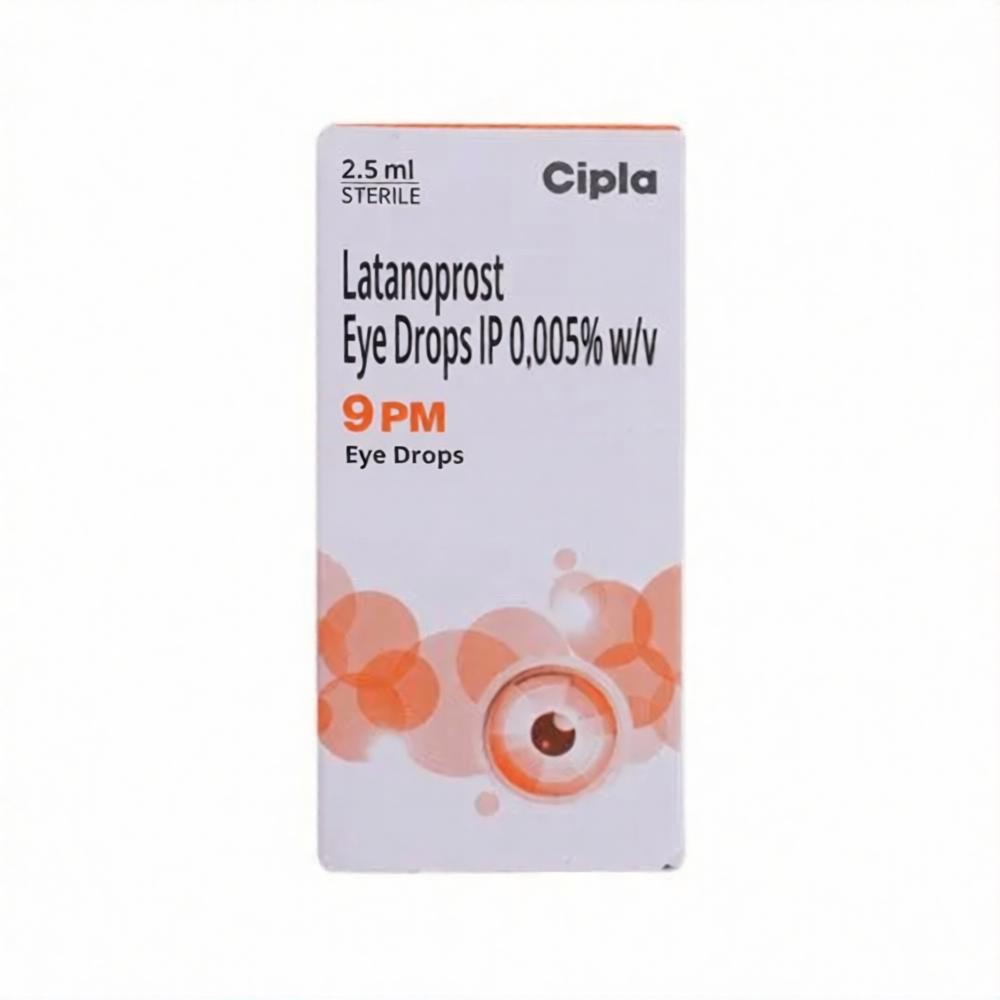
What Is 9 PM Eye Drop?
9 PM Eye Drop contains latanoprost 0.005%, an ophthalmic medicine used to reduce elevated intraocular pressure (IOP) in patients with open-angle glaucoma or ocular hypertension.
Glaucoma is a group of eye conditions that can damage the optic nerve, often associated with increased pressure inside the eye. If left untreated, glaucoma may cause progressive and irreversible vision loss.
9 PM Eye Drop helps lower eye pressure and reduce the risk of further optic nerve damage. It does not reverse vision loss that has already occurred.
How Does 9 PM Eye Drop Work?
Latanoprost belongs to a class of medicines called prostaglandin analogues.
It works by increasing the drainage of aqueous humor, the fluid naturally present inside the eye, primarily through the uveoscleral outflow pathway.
By improving fluid drainage, latanoprost helps lower intraocular pressure and supports long-term glaucoma management.
How to Use 9 PM Eye Drop
- Use the eye drops exactly as prescribed by your ophthalmologist.
- The usual recommended dose is one drop in the affected eye or eyes once daily, preferably in the evening.
- Wash your hands before application.
- Tilt your head backward and gently pull down the lower eyelid.
- Instill one drop into the lower eyelid pocket without touching the dropper tip to the eye or surrounding surfaces.
- Close your eye gently after application.
- Press lightly on the inner corner of the eye for approximately one minute to reduce drainage into the tear duct.
- If using other ophthalmic medicines, separate applications by at least five minutes.
- Remove contact lenses before application and wait at least 15 minutes before reinserting them if the formulation contains benzalkonium chloride.
Important: Do not use latanoprost more than once daily unless specifically directed by your ophthalmologist. More frequent application may reduce its pressure-lowering effectiveness.
Common Side Effects
Possible side effects include:
- Eye redness
- Mild burning or stinging
- Eye irritation
- Itching
- Blurred vision shortly after application
- Increased eyelash length or thickness
- Changes in eyelash pigmentation
- Gradual darkening of the iris
- Darkening of the skin around the eyelids
Some pigmentation changes, particularly iris darkening, may be permanent.
Serious Side Effects
Seek medical attention if you experience:
- Severe eye pain
- Sudden changes in vision
- Significant or persistent eye inflammation
- Severe allergic reactions
- Symptoms of macular edema, such as worsening or distorted central vision
- Signs of an eye infection
Patients with a history of intraocular inflammation, herpetic keratitis, or certain retinal conditions may require additional monitoring.
Contraindications & Precautions
Before using 9 PM Eye Drop, inform your ophthalmologist if you:
- Are allergic to latanoprost or any formulation ingredient.
- Have a history of eye inflammation or uveitis.
- Have experienced herpes simplex keratitis.
- Have undergone cataract surgery or have certain retinal risk factors.
- Have macular edema or are at increased risk of developing it.
- Are pregnant, planning pregnancy, or breastfeeding.
- Are using other prescription eye drops.
Avoid touching the dropper tip to your fingers, eyes, or other surfaces to prevent contamination.
Advantages
- Effectively reduces elevated intraocular pressure.
- Usually requires only once-daily administration.
- Helps manage open-angle glaucoma and ocular hypertension.
- Improves aqueous humor drainage.
- Can support long-term eye-pressure control when used consistently.
- May reduce the risk of further glaucoma-related optic nerve damage.
Disadvantages / Limitations
- May cause redness, irritation, or stinging.
- Can gradually darken the iris.
- May cause permanent changes in eye pigmentation.
- Can increase eyelash growth and thickness.
- Requires regular ophthalmological monitoring.
- Does not cure glaucoma or restore previously lost vision.
- Missing doses may reduce eye-pressure control.
Important Notes
9 PM Eye Drop is a prescription ophthalmic medicine intended for controlling elevated intraocular pressure.
Use it consistently as prescribed, even when no symptoms are present, because glaucoma and ocular hypertension may develop without noticeable discomfort.
Regular eye-pressure measurements and ophthalmological examinations are important for monitoring treatment effectiveness.
Storage: Follow the storage instructions printed on the specific product packaging. Requirements may differ between unopened and opened bottles.
Frequently Asked Questions
What is 9 PM Eye Drop used for?
9 PM Eye Drop is used to lower elevated intraocular pressure in patients with open-angle glaucoma or ocular hypertension.
How often should I use 9 PM Eye Drop?
The usual recommended dosage is one drop in the affected eye or eyes once daily, preferably in the evening, unless your ophthalmologist advises otherwise.
Does 9 PM Eye Drop improve eyesight?
It helps control eye pressure and may reduce the risk of further vision loss. It cannot restore vision already lost due to glaucoma.
Can 9 PM Eye Drop change eye color?
Yes. Latanoprost may gradually increase brown pigmentation in the iris. This change can be permanent.
Can I use 9 PM Eye Drop with other eye medicines?
Yes, if prescribed by your ophthalmologist. Different eye drops should generally be administered at least five minutes apart.
Is 9 PM Eye Drop suitable for long-term use?
Latanoprost is commonly prescribed for long-term eye-pressure management. Regular ophthalmological monitoring is necessary.
Is 9 PM Eye Drop a steroid or hormone?
No. Latanoprost is a synthetic prostaglandin analogue, not a corticosteroid or sex hormone.
Reviews
There are no reviews yet.