

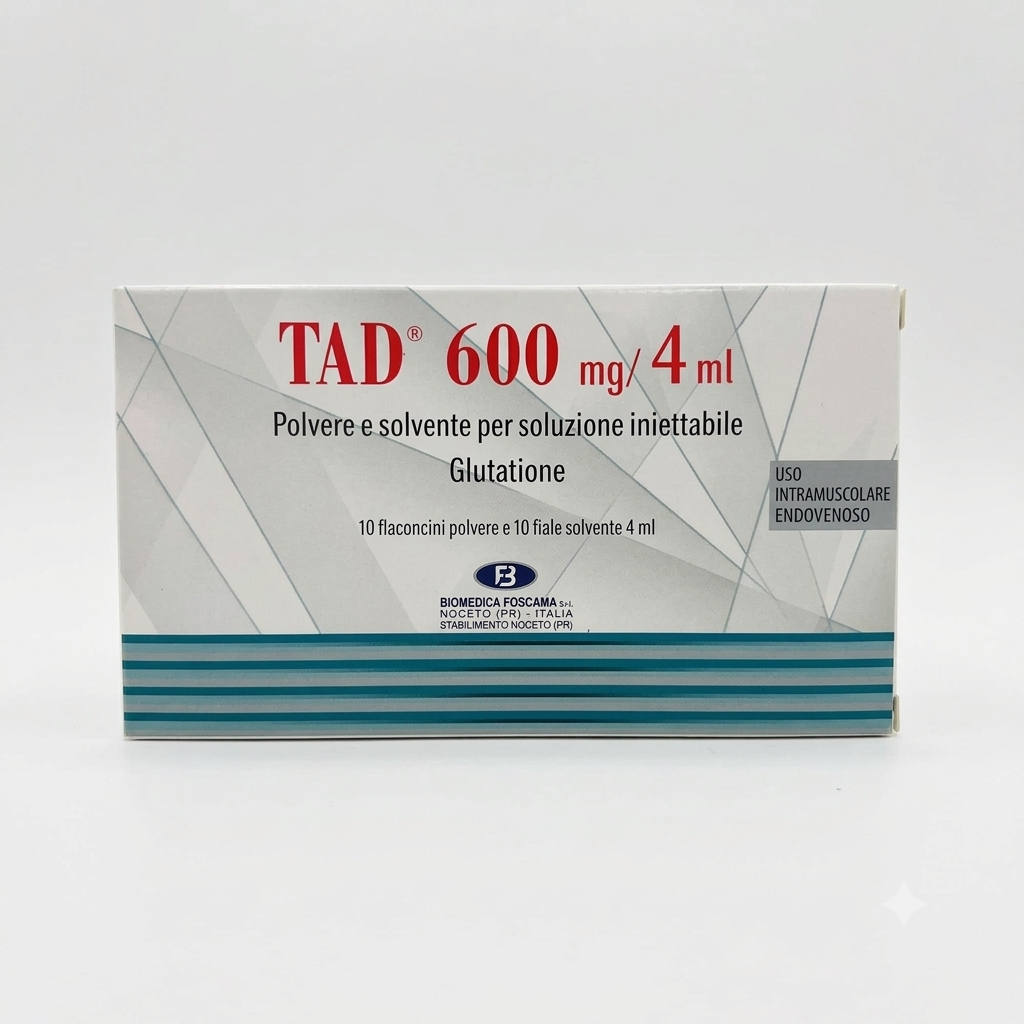
Product verification: TAD 600 is commonly associated with an injectable reduced glutathione formulation. Confirm the manufacturer, supplied solvent, approved indications, and route of administration from the original packaging before publishing.
What Is TAD 600 mg?
TAD 600 mg contains Reduced Glutathione, a naturally occurring antioxidant found in human cells.
Glutathione plays an important role in protecting cells against oxidative stress, maintaining cellular redox balance, and supporting several metabolic and detoxification processes.
It is composed of three amino acids:
- Glutamic acid
- Cysteine
- Glycine
Glutathione helps neutralize reactive oxygen species and supports antioxidant defense systems within the body.
TAD 600 mg is marketed in certain countries as an injectable glutathione preparation for specific medical indications.
Its approved uses depend on the country and product registration. Some formulations have been used in supportive care for chemotherapy-associated neurotoxicity, although the clinical evidence and recommendations differ between treatment settings.
Important: Glutathione injections should not be considered a proven general detoxification treatment, anti-aging therapy, or skin-whitening medicine.
How Does TAD 600 mg Work?
TAD 600 mg contains Reduced Glutathione, also called GSH.
Glutathione participates in several essential cellular processes.
1. Antioxidant Protection
Glutathione helps neutralize reactive oxygen species and other oxidizing compounds.
Through antioxidant enzyme systems, including glutathione peroxidase, it helps protect cellular components from oxidative damage.
2. Cellular Redox Balance
Glutathione helps maintain the balance between reduced and oxidized molecules inside cells.
This balance supports normal cellular function.
3. Detoxification Pathways
Glutathione participates in conjugation reactions involving certain compounds and metabolites.
These reactions are facilitated by enzymes such as glutathione S-transferases and can support the body’s normal processing and elimination of selected substances.
4. Protection of Cellular Components
Glutathione contributes to the protection of proteins, lipids, and other cellular structures against oxidative stress.
5. Role in Immune Function
Glutathione is involved in normal immune-cell function and intracellular signaling.
However, these biological functions do not establish that injected glutathione improves immunity or treats unrelated diseases.
Uses of TAD 600 mg
The medical uses of TAD 600 mg depend on the specific product’s approved labeling.
1. Chemotherapy-Associated Neurotoxicity
Certain injectable glutathione formulations have been used to help reduce neurological toxicity associated with particular chemotherapy medicines.
Evidence of benefit is limited or inconsistent across chemotherapy regimens, and routine use is not universally recommended.
2. Antioxidant Support in Selected Clinical Settings
Glutathione has been investigated in conditions involving oxidative stress.
However, the presence of oxidative stress in a disease does not automatically mean that glutathione injections are an effective treatment.
3. Other Product-Specific Indications
Some countries authorize injectable glutathione for additional clinical indications.
These uses must be confirmed against the local prescribing information.
4. Skin Lightening and Cosmetic Use
Glutathione injections are sometimes promoted for skin brightening or lightening.
However, intravenous glutathione is not an established, approved skin-whitening treatment in the United States, and evidence supporting its cosmetic effectiveness and long-term safety is insufficient.
It should not be marketed as a guaranteed or clinically proven skin-whitening injection.
How to Use TAD 600 mg
TAD 600 mg is an injectable medicine that should be prepared and administered only by a qualified healthcare professional.
- Confirm the prescribed indication and dosage.
- Verify the product’s authenticity and expiry date.
- Inspect the vial and supplied solvent before preparation.
- Reconstitute the powder only with the compatible diluent specified in the official product instructions.
- Follow the approved route and administration procedure.
- Use appropriate aseptic techniques.
- Monitor the patient for adverse reactions.
- Dispose of used injection equipment safely.
Dosage Information: The appropriate dose, frequency, dilution, and duration depend on the indication, product labeling, and patient-specific factors.
A vial containing 600 mg does not establish a standard daily dose.
Important: Do not self-inject TAD 600 mg or use it for unsupervised cosmetic purposes.
Common Side Effects
Reported or possible adverse effects associated with injectable glutathione include:
- Nausea
- Headache
- Mild dizziness
- Injection-site discomfort
- Local irritation
- Skin rash
- Itching
- Gastrointestinal discomfort
- Flushing
The frequency of these reactions is not well established across all glutathione injection products.
Serious Side Effects
Seek immediate medical attention if you experience:
- Difficulty breathing
- Swelling of the face, lips, tongue, or throat
- Severe allergic reactions
- Fainting or severe dizziness
- Persistent vomiting
- Severe skin reactions
- Signs of infection at the injection site
- Fever or chills following injection
- Severe or unexpected symptoms after administration
Important: Intravenous administration introduces additional risks, including infection, contamination, and infusion-related reactions.
Serious adverse events have been reported with some compounded or improperly prepared injectable glutathione products.
Contraindications & Precautions
Before receiving TAD 600 mg, inform your healthcare professional if you:
- Have a known allergy to glutathione or any formulation ingredient.
- Have previously experienced an allergic reaction to injectable medicines.
- Have kidney or liver disease.
- Are receiving chemotherapy.
- Have an active infection.
- Are pregnant or breastfeeding.
- Take prescription medicines or supplements.
- Have a history of severe allergic reactions.
Allergic Reactions: Injectable glutathione may cause hypersensitivity reactions. Emergency medical care may be necessary in severe cases.
Pregnancy and Breastfeeding: Adequate safety data may be unavailable for the intended use. Administration should occur only after medical assessment.
Chemotherapy: Glutathione should not be added to cancer treatment without the treating oncologist’s approval because its effects may depend on the chemotherapy regimen.
Product Quality: Injectable products must be manufactured, stored, and prepared according to appropriate pharmaceutical standards.
Cosmetic Use: Routine IV glutathione for skin whitening is not supported by sufficient high-quality evidence of safety and effectiveness.
Advantages
Potential properties and practical characteristics include:
- Contains reduced glutathione, an endogenous antioxidant.
- Participates in normal cellular antioxidant defense.
- Supports cellular redox balance.
- Involved in glutathione-dependent metabolic pathways.
- Available in an injectable formulation for authorized medical uses.
- May be used in selected specialist treatment protocols where supported by product labeling.
- Provides a defined 600 mg amount per vial.
- Does not contain a corticosteroid or hormone.
These characteristics should not be interpreted as proof of clinical benefit for unapproved indications.
Disadvantages / Limitations
- Requires administration by a qualified healthcare professional.
- May cause allergic or injection-related reactions.
- Carries risks associated with intravenous administration.
- Clinical benefits vary depending on the indication.
- Evidence for cosmetic skin whitening is insufficient.
- Long-term safety of repeated cosmetic injections is not well established.
- Not a substitute for treatment of underlying liver, kidney, or metabolic diseases.
- Not proven to prevent aging.
- Not established as a general immune-boosting treatment.
- Product approval and formulation vary by country.
- Improper preparation or administration may cause serious complications.
Important Notes
TAD 600 mg is an injectable glutathione preparation intended for medically supervised use.
Glutathione is naturally present in the body, but this does not mean that administering additional glutathione by injection is automatically beneficial or risk-free.
The approved indications, recommended dose, and administration method must be verified from the official prescribing information.
Patients receiving chemotherapy should consult their oncology team before using glutathione products.
Do not use unverified injectable products purchased from unauthorized suppliers.
Avoid claims that TAD 600 mg permanently whitens skin, removes toxins from the body, cures liver disease, or prevents aging.
Store the product according to its manufacturer’s instructions and keep it out of reach of children.
Frequently Asked Questions
What is TAD 600 mg used for?
TAD 600 mg contains reduced glutathione, an antioxidant. Its medical indications depend on the specific product’s approved labeling and may include selected specialist uses.
What is the active ingredient in TAD 600 mg?
It contains Reduced Glutathione 600 mg.
How does TAD 600 mg work?
Glutathione participates in antioxidant reactions, helps maintain cellular redox balance, and contributes to certain metabolic processes.
Is TAD 600 mg an injection?
Yes. TAD 600 is commonly supplied as a powder for preparation of an injectable solution. Verify the exact presentation on the package.
Can TAD 600 mg be used for skin whitening?
Injectable glutathione is promoted for skin lightening, but evidence supporting its effectiveness and long-term safety is insufficient. It is not an FDA-approved skin-whitening treatment.
Does TAD 600 mg remove toxins from the body?
Glutathione participates in normal detoxification pathways, but this does not establish that glutathione injections provide general detoxification benefits.
Can TAD 600 mg improve liver health?
Glutathione has biological roles in liver function, but injectable glutathione is not a proven general treatment for liver disease. Medical use must follow an established indication.
Reviews
There are no reviews yet.