
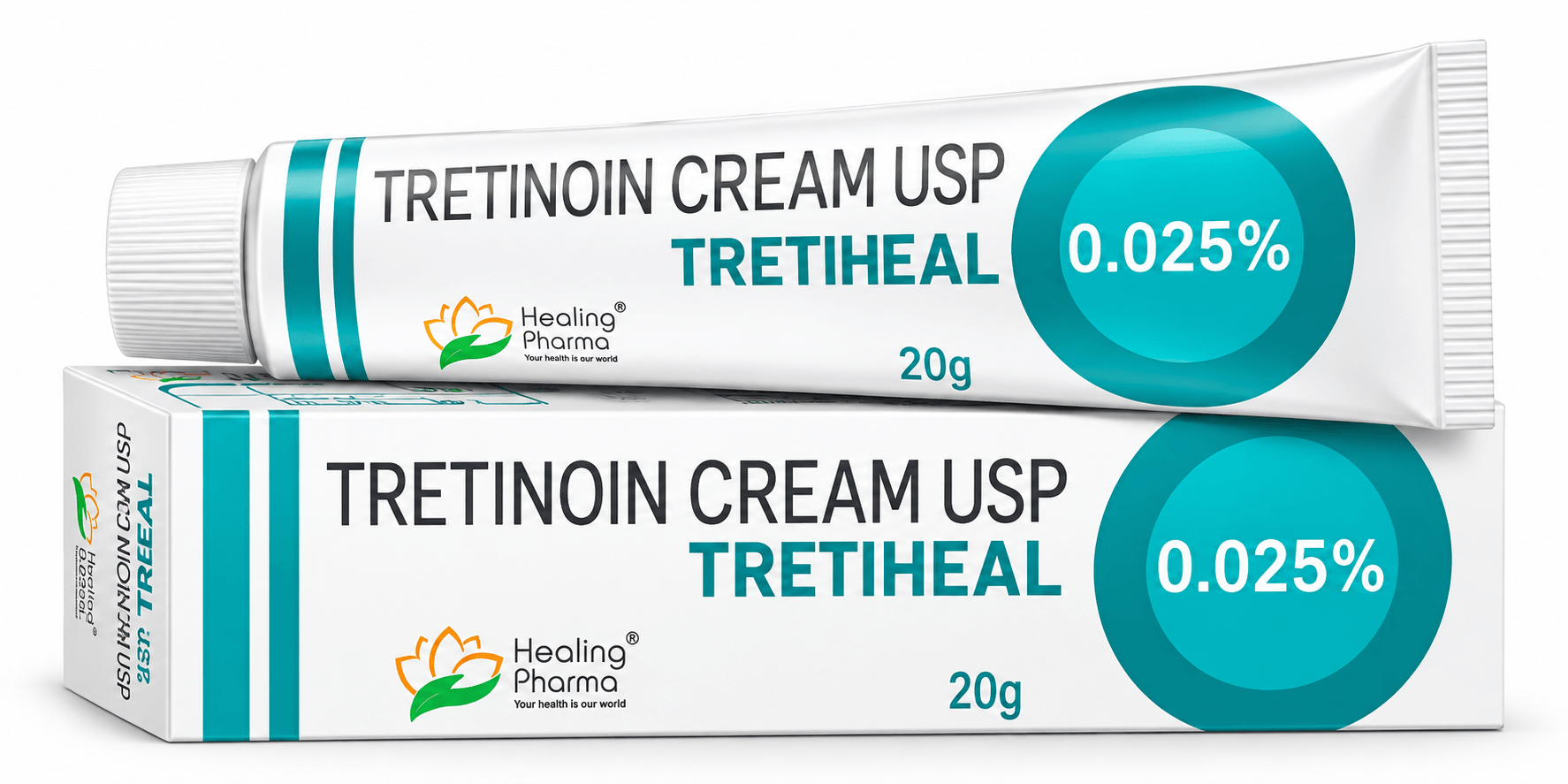

| Product Name | Tretinoin Cream 0.025% |
|---|---|
| Active Ingredient | Tretinoin |
| Strength | 0.025% w/w |
| Dosage Form | Topical Cream |
| Pack Size | 20 g |
| Route of Administration | Topical |
| Therapeutic Class | Topical Retinoid |
| Category | Dermatology / Anti-Acne Treatment |
| Prescription Status | Prescription medicine |
| Packaging | 20 g tube |
What Is Tretinoin Cream 0.025%?
Tretinoin Cream 0.025% is a topical medicine containing tretinoin, a derivative of vitamin A. It is commonly prescribed for the treatment of acne vulgaris and helps improve clogged pores and abnormal shedding of skin cells.
It may also improve the appearance of fine lines, uneven skin texture, and pigmentation when specifically prescribed for these purposes.
How Does Tretinoin Work?
Tretinoin increases the turnover of skin cells and helps prevent dead skin cells from accumulating inside hair follicles. This helps reduce the formation of comedones and other acne lesions.
With continued use, it can also promote smoother skin texture and more even-looking skin.
How to Use Tretinoin Cream 0.025%
- Use only as directed by your doctor or dermatologist.
- Cleanse the affected area gently and allow the skin to dry.
- Apply a thin layer to the affected area, usually in the evening.
- Avoid applying it to the eyes, lips, nostrils, or broken/irritated skin.
- Wash your hands after application.
- Do not apply a larger amount to obtain faster results.
- Use sunscreen and limit unnecessary sun exposure during treatment.
Common Side Effects
Possible side effects include:
- Dryness
- Peeling or flaking
- Redness
- Burning or stinging
- Skin irritation
- Increased sensitivity to sunlight
- Temporary worsening of acne during the early stage of treatment
Serious Side Effects
Contact your healthcare professional if you experience:
- Severe or persistent skin irritation
- Significant swelling
- Blistering or severe burning
- Severe allergic reaction
- Persistent skin inflammation that does not improve
Contraindications & Precautions
Before using tretinoin, inform your doctor if you:
- Have very sensitive, eczema-prone, or severely irritated skin
- Have sunburned skin
- Are using other topical acne or exfoliating products
- Have a history of significant skin reactions
- Are pregnant, planning pregnancy, or breastfeeding
Avoid excessive sunlight and tanning beds because tretinoin can increase skin sensitivity to sunlight.
Advantages
- Helps unclog pores
- Reduces formation of acne lesions
- Promotes skin-cell turnover
- Can improve overall skin texture with continued use
- 0.025% is a commonly used lower-strength formulation
Disadvantages / Limitations
- May cause dryness, peeling, and irritation
- Results generally take several weeks of consistent use
- Skin may initially appear worse before improving
- Increases sensitivity to sunlight
- Incorrect or excessive use can cause significant irritation
Important Notes
Tretinoin is a prescription topical retinoid and should be used according to professional advice. Do not apply more than recommended, as increasing the amount does not make the treatment work faster and may increase irritation.
Use appropriate sun protection throughout treatment.
Frequently Asked Questions
What is Tretinoin Cream 0.025% used for?
It is primarily used as a topical treatment for acne vulgaris and may also be prescribed for certain cosmetic dermatological concerns.
How often should Tretinoin 0.025% be used?
It is commonly applied once daily in the evening, but your dermatologist may recommend a different schedule depending on your skin and treatment response.
Can I use tretinoin during the day?
Tretinoin is generally applied in the evening. Daytime use can increase exposure to sunlight, so follow your dermatologist’s instructions and use sunscreen.
Does tretinoin make acne worse initially?
Some people experience temporary irritation or an apparent worsening of acne during the initial treatment period. Persistent or severe reactions should be discussed with a dermatologist.
Can I use moisturizer with tretinoin?
Yes. A gentle, non-comedogenic moisturizer can help reduce dryness and irritation.
Can tretinoin be used during pregnancy?
Topical tretinoin is generally avoided during pregnancy. Consult your healthcare professional before using it if you are pregnant, planning pregnancy, or could become pregnant.

Reviews
There are no reviews yet.