

| Product Information | Details |
|---|---|
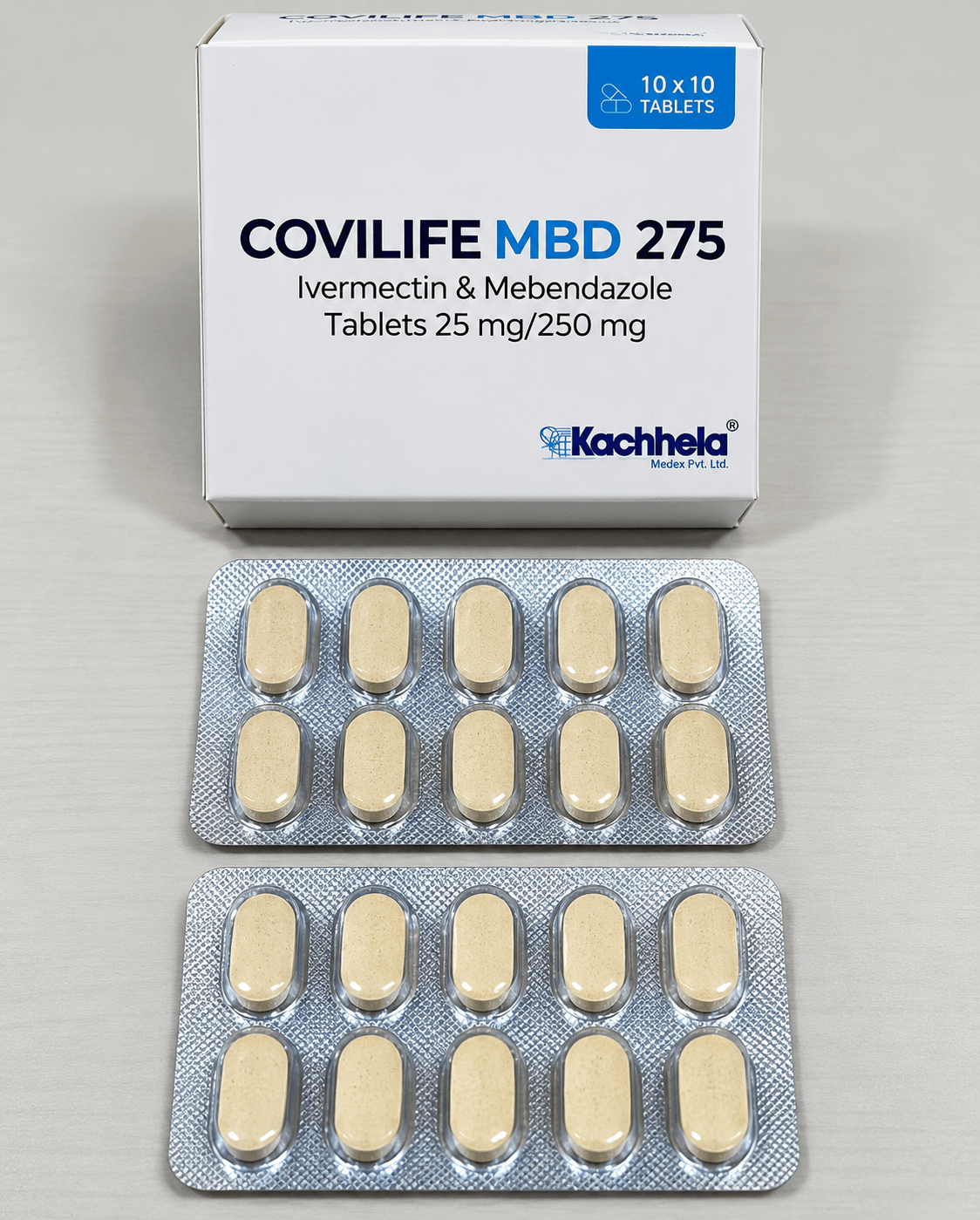
| Active Ingredients (Generic Names): | Ivermectin + Mebendazole |
| Strength: | Ivermectin 25 mg + Mebendazole 250 mg |
| Dosage Form: | Tablet |
| Therapeutic Class: | Anthelmintic / Antiparasitic |
| Category: | Anti-Parasitic / Deworming |
| Route of Administration: | Oral |
What Is Ivermectin 25 mg + Mebendazole 250 mg?
Ivermectin 25 mg + Mebendazole 250 mg is an antiparasitic combination containing two anthelmintic medicines. It is intended to help treat susceptible parasitic worm infections. Ivermectin has activity against certain nematode parasites, including Strongyloides stercoralis and Onchocerca volvulus, while mebendazole is used against several intestinal worms, including roundworm, whipworm, pinworm, and hookworm.
The exact use of this fixed-dose combination should depend on the diagnosis, parasite involved, patient factors, and the product’s approved labeling.
How Does It Work?
Ivermectin works against susceptible parasites by interfering with nerve and muscle signaling, leading to paralysis and elimination of the parasite.
Mebendazole interferes with the parasite’s ability to utilize nutrients, particularly glucose, which eventually leads to depletion of energy and death of susceptible intestinal worms.
Together, the two medicines provide activity against different susceptible parasitic worms.
How to Take Ivermectin 25 mg + Mebendazole 250 mg
- Take the medicine orally exactly as directed by your healthcare professional.
- Swallow the tablet with water unless your product label gives different instructions.
- The appropriate dose and duration depend on the type of parasitic infection being treated.
- Do not take additional doses simply because symptoms have not improved.
- Follow the prescribed treatment schedule and complete the course when instructed.
Important: The strengths listed here should not be interpreted as a universal dosing schedule. Ivermectin dosing can be weight- and infection-dependent, while mebendazole dosing varies according to the parasite being treated.
Common Side Effects
Possible side effects may include:
- Nausea
- Abdominal pain or discomfort
- Diarrhea
- Vomiting
- Dizziness
- Headache
- Loss of appetite
- Skin rash
Mebendazole labeling reports gastrointestinal effects such as abdominal pain, diarrhea, nausea, vomiting, and flatulence among reported adverse reactions.
Serious Side Effects
Serious reactions are uncommon but may include:
- Severe allergic reactions
- Severe skin reactions
- Significant dizziness or neurological symptoms
- Liver-related problems
- Abnormal blood-cell counts, particularly with prolonged or higher-dose mebendazole treatment
Seek medical attention if severe abdominal symptoms, unusual weakness, swelling, difficulty breathing, severe rash, or other concerning symptoms develop.
Advantages
- Combines two antiparasitic medicines with different mechanisms of action.
- Mebendazole has activity against several common intestinal worm infections.
- Ivermectin is effective against certain susceptible nematode infections, including intestinal strongyloidiasis.
- Convenient oral tablet formulation.
- May provide broader anthelmintic coverage than treatment with a single agent in selected situations.
Disadvantages
- Not appropriate for every type of parasite infection.
- The combination may cause gastrointestinal side effects.
- Ivermectin dosing may need to be calculated according to body weight and the specific infection.
- Drug interactions and medical conditions need to be considered before use.
- Mebendazole has important precautions with prolonged/high-dose treatment, including hematologic effects.
- A fixed combination should not be used simply as routine self-treatment without identifying the suspected parasite.
Important Notes
- Prescription/Medical Supervision: Use this combination according to the advice of a qualified healthcare professional.
- Correct Diagnosis: Different parasites require different medicines and treatment schedules.
- Pregnancy: Consult a healthcare professional before use during pregnancy or when planning pregnancy.
- Children: Age and weight restrictions can apply to antiparasitic medicines.
- Drug Interactions: Tell your healthcare professional about all medicines and supplements you are taking.
- Do Not Self-Medicate: Do not use repeated doses for unexplained symptoms without medical evaluation.
Frequently Asked Questions
1. What is Ivermectin 25 mg + Mebendazole 250 mg used for?
It is an antiparasitic combination intended for susceptible worm infections. Mebendazole is used against several intestinal worms, while ivermectin is active against certain nematode parasites.
2. How does Ivermectin + Mebendazole work?
The two medicines act differently against susceptible parasites. Ivermectin interferes with parasite nerve and muscle signaling, while mebendazole interferes with parasite energy and nutrient utilization.
3. How should I take Ivermectin 25 mg + Mebendazole 250 mg?
Take it orally according to the prescription or product instructions. The correct treatment schedule depends on the specific parasitic infection and patient factors.
4. What are the common side effects?
Possible side effects include nausea, abdominal discomfort, diarrhea, vomiting, dizziness, headache, and rash.
5. What are the serious side effects?
Serious reactions can include severe allergic reactions, severe skin reactions, neurological symptoms, liver problems, and blood abnormalities with prolonged or higher-dose mebendazole treatment.
6. Can I take this medicine for any type of worm infection?
No. Different parasites respond differently to antiparasitic medicines. A healthcare professional should determine whether this combination is appropriate for the particular infection.
Reviews
There are no reviews yet.