
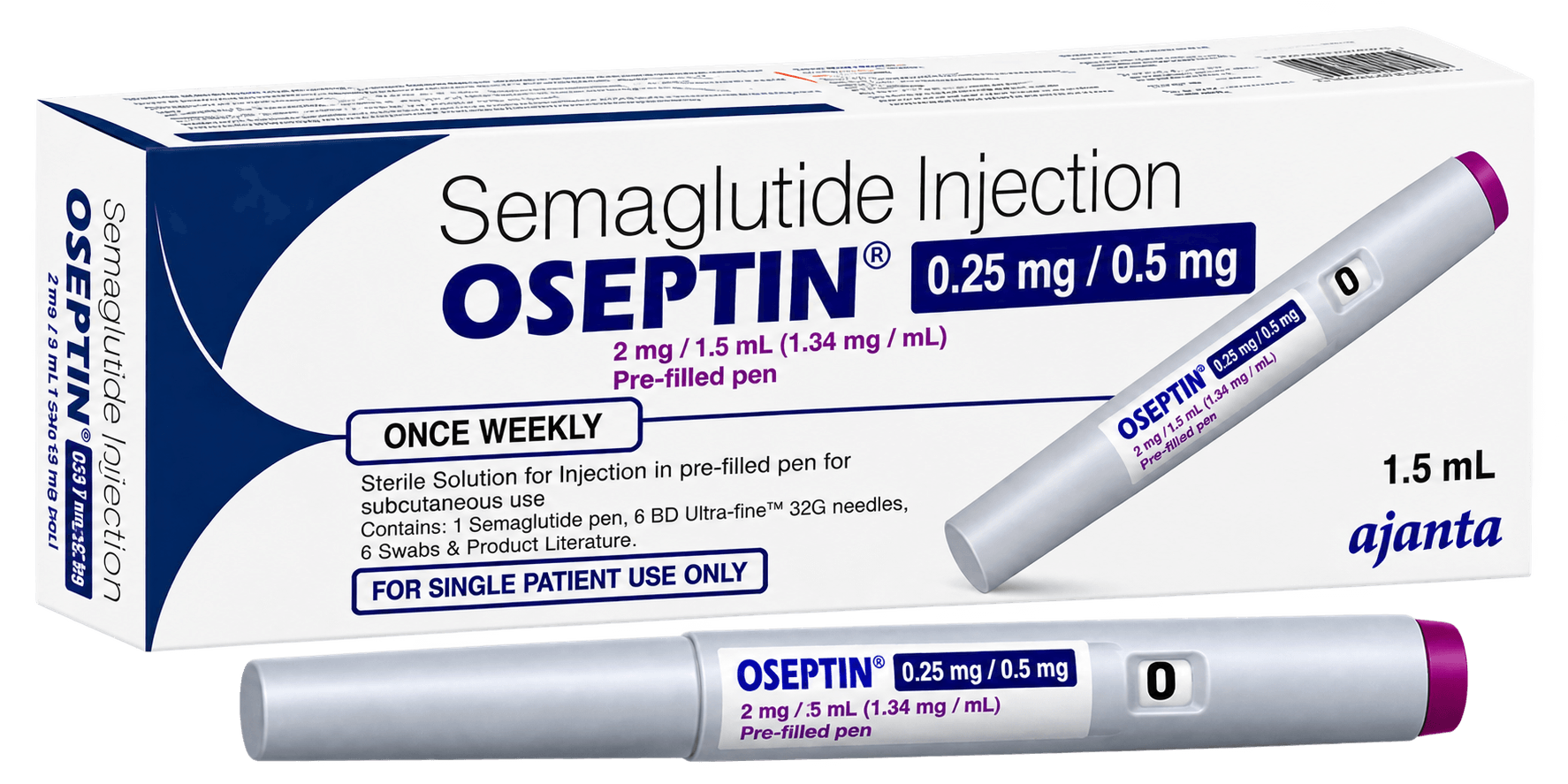


| Active Ingredient (Generic Name): | Semaglutide |
|---|---|
| Packaging: | Injection Pen |
| Strength: | 0.25 mg / 0.5 mg per dose |
| Delivery Time: | 6 To 15 days |
| SKU: | Semaglutide 0.25/0.5 mg |
Semaglutide 0.25/0.5 mg Injection Pen is a prescription injectable medication used to help manage type 2 diabetes mellitus in adults. It contains semaglutide, a glucagon-like peptide-1 (GLP-1) receptor agonist that helps improve blood sugar control. It is administered once weekly by subcutaneous injection.
What Is Semaglutide 0.25/0.5 mg Injection Pen?
Semaglutide 0.25/0.5 mg Injection Pen contains semaglutide and is generally used as the starting and early maintenance dosing regimen for semaglutide treatment.
The usual starting dose is 0.25 mg once weekly for the first 4 weeks. After 4 weeks, the dose is typically increased to 0.5 mg once weekly, as directed by a healthcare professional. The 0.25 mg dose is intended primarily for treatment initiation and dose escalation rather than long-term glycemic control.
How Does It Work?
Semaglutide mimics the action of the natural hormone GLP-1. It works by:
- Stimulating insulin release when blood glucose levels are elevated.
- Reducing glucagon secretion, which helps decrease glucose production by the liver.
- Slowing gastric emptying.
- Helping regulate appetite and food intake.
These actions help improve blood glucose control in adults with type 2 diabetes.
How to Take Semaglutide 0.25/0.5 mg Injection Pen
- Frequency: Semaglutide is generally administered once weekly.
- Starting Dose: The usual starting dose is 0.25 mg once weekly for 4 weeks.
- Dose Increase: After 4 weeks, the dose may be increased to 0.5 mg once weekly, according to the prescribing healthcare professional.
- Administration: Inject subcutaneously into the abdomen, thigh, or upper arm.
- Timing: It can generally be administered at any time of day, with or without meals.
- Important: Follow the instructions supplied with the specific pen and use only as prescribed.
Advantages of Semaglutide 0.25/0.5 mg Injection Pen
- Helps improve blood glucose control in adults with type 2 diabetes.
- Once-weekly administration can be convenient for patients.
- The gradual 0.25 mg to 0.5 mg dose escalation can help the body adjust to treatment.
- The injection pen provides a convenient method of subcutaneous administration.
- May help with appetite regulation and weight reduction as part of semaglutide treatment, although the exact indication depends on the specific semaglutide product.
Disadvantages and Common Side Effects
Gastrointestinal side effects are among the most commonly reported effects of semaglutide. These may include:
- Nausea
- Vomiting
- Diarrhea
- Abdominal pain
- Constipation
- Decreased appetite
These effects can be more noticeable when treatment is started or when the dose is increased.
Serious Side Effects
While serious adverse effects are less common, they may include:
- Pancreatitis (inflammation of the pancreas).
- Diabetic retinopathy complications, particularly in patients with a history of diabetic retinopathy.
- Gallbladder problems, including gallstones or inflammation.
- Hypoglycemia, particularly when semaglutide is used with insulin or insulin-releasing medicines.
- Serious allergic reactions, including swelling or difficulty breathing.
- Severe gastrointestinal reactions may occur in some patients.
Semaglutide also carries a boxed warning regarding the potential risk of thyroid C-cell tumors based on animal studies. It is contraindicated in people with a personal or family history of medullary thyroid carcinoma (MTC) or Multiple Endocrine Neoplasia syndrome type 2 (MEN 2).
Contraindications
Do not use semaglutide if you have:
- A personal or family history of medullary thyroid carcinoma (MTC).
- Multiple Endocrine Neoplasia syndrome type 2 (MEN 2).
- A previous serious allergic reaction to semaglutide or any ingredient in the specific product.
Always inform your healthcare provider about your medical history and all medicines you are taking before starting semaglutide.
Important Notes
- Prescription Use: Semaglutide should be used only under the supervision of a qualified healthcare professional.
- Do Not Share the Pen: The injection pen should never be shared between patients, even if the needle is changed.
- Dose Adjustment: Do not increase or decrease the dose without medical advice.
- Lifestyle: Continue following your prescribed diet, exercise, and diabetes-management plan.
- Regular Monitoring: Blood glucose levels should be monitored according to your healthcare professional’s recommendations.
- Storage: Store the pen according to the storage instructions provided for the specific product.
1. What is Semaglutide 0.25/0.5 mg Injection Pen used for?
Semaglutide 0.25/0.5 mg Injection Pen is a prescription medicine used to help improve blood glucose control in adults with type 2 diabetes mellitus, together with diet and exercise.
2. How does Semaglutide 0.25/0.5 mg work?
Semaglutide is a GLP-1 receptor agonist. It helps:
- Stimulate insulin release when blood glucose is elevated.
- Reduce glucagon secretion.
- Slow gastric emptying.
- Regulate appetite and food intake.
These effects help improve blood glucose control.
3. How do I use Semaglutide 0.25/0.5 mg Injection Pen?
Semaglutide is generally administered once weekly by subcutaneous injection. The usual starting dose is 0.25 mg once weekly for 4 weeks, followed by 0.5 mg once weekly, if prescribed. It can generally be administered at any time of day, with or without meals.
4. What are the common side effects of Semaglutide 0.25/0.5 mg?
Common side effects may include:
- Nausea
- Vomiting
- Diarrhea
- Abdominal pain
- Constipation
- Decreased appetite
5. What are the serious side effects of Semaglutide?
Serious side effects may include pancreatitis, diabetic retinopathy complications, gallbladder problems, hypoglycemia when combined with certain diabetes medicines, severe gastrointestinal reactions, and serious allergic reactions. Seek medical attention if you experience severe or unusual symptoms.
Reviews
There are no reviews yet.