































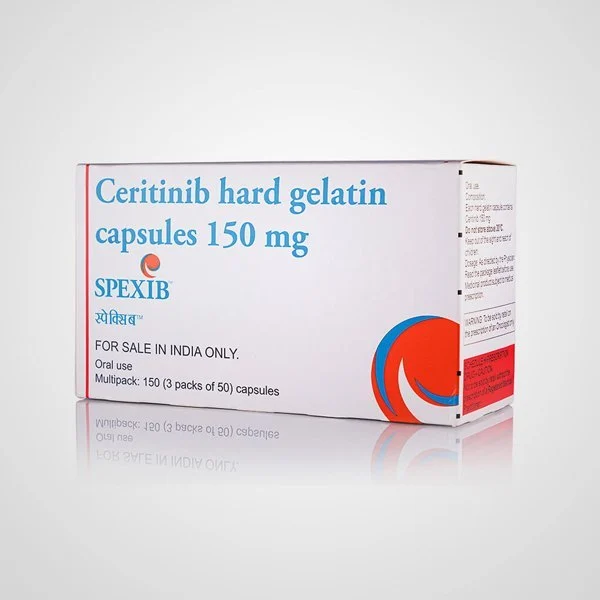
Product verification: Ceritinib 150 mg is commonly supplied as an oral capsule. Verify the manufacturer, dosage form, pack size, and country-specific regulatory status before publishing.
Important Safety Warning: Ceritinib is a prescription anticancer medicine that can cause severe gastrointestinal reactions, liver injury, interstitial lung disease, QT interval prolongation, high blood sugar, pancreatitis, and fetal harm. Treatment requires specialist oncology supervision and appropriate laboratory monitoring.
What Is Ceritinib 150 mg?
Ceritinib 150 mg is an oral targeted anticancer medicine belonging to the tyrosine kinase inhibitor class.
It is used to treat selected patients with anaplastic lymphoma kinase-positive (ALK-positive) metastatic non-small cell lung cancer.
ALK-positive lung cancer contains a genetic alteration that produces abnormal ALK signaling, encouraging cancer cell growth and survival.
Ceritinib works by inhibiting ALK tyrosine kinase activity and disrupting signaling pathways that promote tumor cell proliferation.
Unlike conventional cytotoxic chemotherapy, ceritinib is a molecularly targeted therapy.
The 150 mg strength refers to the amount of ceritinib contained in each capsule.
It does not mean that one capsule is the standard daily treatment dose.
For the reference Zykadia formulation, the recommended adult regimen is 450 mg once daily with food, equivalent to three 150 mg capsules, unless the oncologist prescribes a different regimen.
Ceritinib has demonstrated clinical activity in ALK-positive NSCLC, including selected patients previously treated with other ALK inhibitors.
However, newer ALK-targeted medicines are often preferred in current treatment pathways because of differences in efficacy, central nervous system activity, and tolerability.
Common Reasons for Prescribing Ceritinib 150 mg
- ALK-positive metastatic non-small cell lung cancer
- Molecularly confirmed ALK-rearranged NSCLC
- Targeted therapy for selected lung cancer patients
- Selected patients previously treated with other ALK inhibitors
- Oncology-directed management of metastatic NSCLC
- Tumor growth control in susceptible cancers
- Individualized targeted anticancer treatment
Important: Ceritinib is not appropriate for all lung cancers. ALK testing is essential before treatment for its established NSCLC indication.
How Does Ceritinib 150 mg Work?
1. Targets Anaplastic Lymphoma Kinase
Ceritinib inhibits ALK, a receptor tyrosine kinase that can become abnormally activated in certain cancers.
2. Blocks Abnormal ALK Signaling
ALK gene rearrangements can produce abnormal fusion proteins that promote cancer cell growth.
Ceritinib inhibits the kinase activity of susceptible ALK fusion proteins.
3. Inhibits Cancer Cell Proliferation
By blocking ALK signaling, ceritinib can interfere with pathways that support tumor cell multiplication.
4. Disrupts Cell Survival Pathways
ALK inhibition can affect downstream signaling pathways involved in cancer cell survival.
5. Promotes Cancer Cell Death
In susceptible ALK-positive cancer cells, inhibition of abnormal signaling may contribute to cell death.
6. Helps Reduce Tumor Growth
Ceritinib may reduce tumor size or slow disease progression in responsive patients.
7. Provides Molecularly Targeted Therapy
Treatment selection is based on identifying the relevant molecular abnormality.
8. Supports Disease Control
When effective and tolerated, ceritinib may help control metastatic ALK-positive NSCLC.
Important: Not all ALK resistance mutations respond equally to ceritinib. Molecular findings and previous treatment history influence the selection of ALK inhibitors.
Uses of Ceritinib 150 mg
1. ALK-Positive Non-Small Cell Lung Cancer
Ceritinib is used to treat selected patients with ALK-positive NSCLC.
2. Metastatic ALK-Positive NSCLC
The established indication for the reference medicine includes metastatic ALK-positive non-small cell lung cancer.
3. Molecularly Targeted Lung Cancer Treatment
Ceritinib may be selected when tumor testing confirms an ALK alteration and the oncology team considers it appropriate.
4. Previously Treated ALK-Positive NSCLC
Ceritinib has demonstrated activity in certain patients previously treated with other ALK-targeted therapies.
The effectiveness depends on the resistance mechanism and prior treatment history.
5. Tumor Growth Control
Ceritinib may help slow tumor growth in susceptible ALK-positive cancers.
6. Reduction of Tumor Burden
Some patients experience measurable tumor shrinkage during treatment.
7. Disease Progression Management
Ceritinib may delay disease progression in responsive patients.
8. Selected Patients With Brain Metastases
Ceritinib has demonstrated intracranial activity in some patients with ALK-positive NSCLC.
However, its suitability for brain metastases depends on the clinical setting, and other ALK inhibitors may be preferred.
9. Alternative Targeted Treatment
An oncologist may consider ceritinib when other treatment options are unsuitable or unavailable.
10. Long-Term Oncology Management
Treatment may continue while the medicine remains effective and adverse effects are manageable.
Important: Ceritinib is not a universal lung cancer medicine and should not be promoted as a cure for metastatic NSCLC.
Ceritinib 150 mg Dosage and Administration
Ceritinib must be prescribed and monitored by an oncology specialist.
General Dosage Information
| Dosage Information | Details |
|---|---|
| Capsule Strength | 150 mg |
| Active Ingredient | Ceritinib |
| Administration Route | Oral |
| Reference Adult Dose | 450 mg once daily with food |
| Number of 150 mg Capsules | Three capsules for the reference 450 mg regimen |
| Administration Frequency | Once daily |
| Food Instructions | Take with food |
| Treatment Duration | Until disease progression or unacceptable toxicity, as directed |
| Dose Adjustments | Based on adverse effects, organ function, and drug interactions |
| Medical Supervision | Required throughout treatment |
Important: The 450 mg once-daily regimen with food is based on reference Zykadia prescribing information. It is not an individualized prescription. The treating oncologist must determine the appropriate dose and any modifications.
General Administration Instructions
- Take ceritinib exactly as prescribed by the oncologist.
- Take the medicine at approximately the same time each day.
- Take ceritinib with food.
- Swallow the capsules whole with water.
- Do not crush, chew, or open the capsules.
- Do not independently increase or reduce the dose.
- Avoid grapefruit and grapefruit juice during treatment.
- Report persistent nausea, vomiting, or diarrhea.
- Report yellowing of the skin or eyes.
- Report new or worsening breathing difficulties.
- Attend scheduled laboratory and medical appointments.
- Inform the oncology team about all other medicines and supplements.
Should Ceritinib 150 mg Be Taken With Food?
Yes.
The reference ceritinib regimen is taken with food.
Food increases ceritinib exposure, and the approved 450 mg regimen with food was established to provide appropriate exposure while improving gastrointestinal tolerability compared with the older 750 mg fasting regimen.
What If a Dose Is Missed?
According to reference prescribing information, a missed dose may be taken if the next scheduled dose is more than 12 hours away.
If the next dose is within 12 hours, skip the missed dose.
Do not double the dose.
What If Vomiting Occurs After a Dose?
Do not take an additional dose to replace the vomited dose.
Take the next dose at the scheduled time unless the oncology team advises otherwise.
What If Too Much Ceritinib Is Taken?
Contact the oncology team or seek urgent medical attention.
An overdose may increase the risk of serious adverse effects.
Can Ceritinib Be Stopped Suddenly?
Do not independently stop or change treatment.
The oncology team may temporarily interrupt, reduce, or discontinue ceritinib because of adverse reactions, disease progression, or other clinical circumstances.
How Long Does Ceritinib 150 mg Take to Work?
Ceritinib begins inhibiting its molecular target after absorption.
However, measurable cancer treatment responses usually require several weeks.
The oncology team may evaluate treatment effectiveness through imaging studies, symptom assessments, and other clinical findings.
The time required depends on tumor characteristics, previous treatments, disease burden, and individual response.
Some patients may notice improvement in cancer-related symptoms before formal imaging confirms a response.
However, symptom improvement alone does not establish treatment effectiveness.
Common Side Effects
Possible side effects include:
- Diarrhea
- Nausea
- Vomiting
- Abdominal pain
- Fatigue
- Reduced appetite
- Weight loss
- Constipation
- Elevated liver enzymes
- Increased blood glucose
- Elevated creatinine
- Rash
Gastrointestinal adverse effects are particularly common with ceritinib.
Potentially Harmful Effects & Serious Health Risks
1. Severe Diarrhea
Ceritinib may cause significant diarrhea that can lead to dehydration and treatment interruption.
2. Severe Nausea and Vomiting
Persistent nausea and vomiting may interfere with food intake and hydration.
3. Dehydration
Fluid loss from gastrointestinal adverse effects may cause dehydration.
4. Liver Injury
Ceritinib can cause serious liver toxicity, including potentially life-threatening liver injury.
5. Interstitial Lung Disease
Ceritinib may cause interstitial lung disease or pneumonitis.
6. QT Interval Prolongation
Ceritinib can prolong the QT interval and may increase the risk of serious heart rhythm abnormalities.
7. Bradycardia
Ceritinib may cause a slow heart rate.
8. Hyperglycemia
Ceritinib may increase blood glucose levels, including in patients with diabetes.
9. Pancreatitis
Ceritinib can cause pancreatitis, which may be serious.
10. Elevated Pancreatic Enzymes
Increased amylase and lipase levels may occur during treatment.
11. Kidney Function Changes
Changes in creatinine and kidney-related laboratory results may occur.
12. Reduced Appetite and Weight Loss
Persistent gastrointestinal adverse effects may contribute to reduced nutritional intake and weight loss.
13. Embryo-Fetal Toxicity
Ceritinib may harm an unborn baby.
14. Drug Interaction-Related Toxicity
Certain medicines can increase ceritinib exposure and the risk of adverse effects.
15. Treatment Discontinuation Due to Toxicity
Severe adverse reactions may require dose interruption, reduction, or permanent discontinuation.
Emergency warning: Seek urgent medical assessment for new or worsening shortness of breath, severe persistent vomiting or diarrhea, fainting, palpitations, severe abdominal pain, jaundice, or symptoms of significant dehydration.
Contraindications & Safety Precautions
1. Hypersensitivity
Patients with a serious allergic reaction to ceritinib or formulation ingredients should not continue treatment without specialist assessment.
2. Liver Disease
Ceritinib can cause liver injury. Patients with liver disease require careful assessment and monitoring.
3. Severe Hepatic Impairment
Patients with severe liver impairment may require dose adjustment according to applicable prescribing information.
4. Gastrointestinal Disorders
Persistent diarrhea, nausea, vomiting, or abdominal pain should be reported promptly.
5. Dehydration Risk
Adequate hydration and early management of gastrointestinal adverse effects are important.
6. Interstitial Lung Disease
New cough, fever, or worsening breathlessness may indicate serious pulmonary toxicity.
7. Heart Rhythm Disorders
Patients with QT prolongation or other rhythm disorders may require additional assessment.
8. Bradycardia
Patients with a slow heart rate or those taking heart rate-lowering medicines require appropriate monitoring.
9. Diabetes
Ceritinib may increase blood glucose levels.
Patients with diabetes may require closer glucose monitoring.
10. Pancreatitis
Severe abdominal pain, especially when accompanied by vomiting, requires prompt medical assessment.
11. Kidney Disease
Kidney function should be monitored when clinically indicated.
12. Pregnancy
Ceritinib can cause fetal harm.
Patients who are pregnant or planning pregnancy should discuss treatment risks with their oncology specialist.
13. Contraception
Patients who can become pregnant should use effective contraception during treatment and for the period specified by the approved product labeling after the final dose.
Patients with partners who can become pregnant should also follow the applicable contraception recommendations.
14. Breastfeeding
Breastfeeding is not recommended during ceritinib treatment and for the period specified by the applicable product labeling after treatment.
15. Children
The safety and effectiveness of ceritinib have not been established for routine pediatric use.
16. Older Adults
Older patients may require additional monitoring because of adverse effects and other medical conditions.
17. Drug Interactions
Potentially important interactions include:
- Strong CYP3A Inhibitors: May increase ceritinib exposure.
- Strong CYP3A Inducers: May reduce ceritinib exposure.
- Ketoconazole: May increase ceritinib concentrations.
- Rifampicin: May reduce ceritinib concentrations.
- Certain Antifungals: May alter ceritinib exposure.
- Certain Antibiotics: May affect ceritinib metabolism.
- QT-Prolonging Medicines: May increase the risk of heart rhythm abnormalities.
- Heart Rate-Lowering Medicines: May increase bradycardia risk.
- Certain CYP3A or CYP2C9 Substrates: Ceritinib may increase their exposure.
- Herbal Supplements: Some may affect ceritinib metabolism.
18. Grapefruit Interaction
Avoid grapefruit and grapefruit juice because they may increase ceritinib exposure.
19. Food Instructions
Ceritinib should be taken with food according to the reference prescribing information.
20. Medical Monitoring
Healthcare professionals may monitor:
- Liver function
- Blood glucose
- Electrolytes
- Kidney function
- Heart rate
- Electrocardiogram (ECG) when indicated
- Amylase and lipase
- Gastrointestinal adverse effects
- Hydration status
- Pulmonary symptoms
- Body weight
- Treatment response
- Imaging findings
- Need for dose adjustment or interruption
Advantages
- Oral targeted anticancer therapy.
- Selective inhibition of ALK signaling.
- Activity against selected ALK-positive NSCLC.
- Used in metastatic lung cancer treatment.
- May help delay disease progression in responsive patients.
- May reduce tumor burden.
- Has demonstrated activity in selected previously treated patients.
- Has demonstrated intracranial activity in some patients.
- Does not require intravenous administration.
- Once-daily administration.
- Established clinical evidence for selected indications.
- May be continued while clinically effective and tolerable.
Disadvantages / Limitations
- Not effective against every lung cancer.
- Requires ALK molecular testing.
- May cause severe diarrhea.
- May cause nausea.
- May cause vomiting.
- May cause abdominal pain.
- May cause dehydration.
- May cause liver injury.
- May cause interstitial lung disease.
- May cause QT interval prolongation.
- May cause bradycardia.
- May cause hyperglycemia.
- May cause pancreatitis.
- May cause elevated pancreatic enzymes.
- May cause reduced appetite.
- May cause weight loss.
- Can harm an unborn baby.
- Requires oncology monitoring.
- May interact with certain medicines.
- Grapefruit must be avoided.
- Resistance to treatment can develop.
- Newer ALK inhibitors may be preferred in many treatment settings.
Important Notes
Generic Name: Ceritinib.
Strength: 150 mg.
Drug Class: Tyrosine Kinase Inhibitor.
Therapeutic Category: Targeted Anticancer Medicine.
Primary Use: ALK-positive metastatic NSCLC.
Molecular Target: Anaplastic Lymphoma Kinase.
Mechanism: Inhibition of ALK tyrosine kinase signaling.
Administration Route: Oral.
Reference Adult Dose: 450 mg once daily with food.
Capsule Strength: 150 mg per capsule.
Food Instructions: Take with food.
Major Warning: Gastrointestinal toxicity, liver injury, interstitial lung disease, QT prolongation, bradycardia, hyperglycemia, pancreatitis, and fetal harm.
Pregnancy Warning: Can cause fetal harm.
Breastfeeding Warning: Not recommended during treatment.
Monitoring: Liver function, blood glucose, electrolytes, cardiac status, pancreatic enzymes, and treatment response.
Prescription Status: Prescription-Only Anticancer Medicine.
Storage: Follow manufacturer instructions.
Frequently Asked Questions
1. What is Ceritinib 150 mg used for?
Ceritinib 150 mg is a targeted anticancer medicine used in selected treatment regimens for ALK-positive metastatic non-small cell lung cancer.
2. Is Ceritinib a chemotherapy medicine?
Ceritinib is a targeted anticancer medicine, not conventional cytotoxic chemotherapy.
3. How does Ceritinib work?
It inhibits ALK tyrosine kinase signaling, interfering with cancer cell growth and survival in susceptible ALK-positive tumors.
4. Can Ceritinib treat lung cancer?
Yes. It is used for selected patients with ALK-positive metastatic NSCLC.
5. Does Ceritinib work for every lung cancer?
No. Its established use depends on the presence of an ALK alteration and other clinical factors.
6. Is Ceritinib 150 mg the standard daily dose?
No. The reference adult regimen is 450 mg once daily with food, equivalent to three 150 mg capsules. The oncologist determines the prescribed dose.
7. How should Ceritinib 150 mg be taken?
Take the prescribed number of capsules orally with food, according to the oncologist’s instructions.
8. Can Ceritinib be taken without food?
The current reference regimen is taken with food. Patients should follow the prescribed product instructions.



Alan (verified owner) –
Viral Care is my shield against seasonal sickness.
Max (verified owner) –
Viral Care is my shield against seasonal sickness.