





















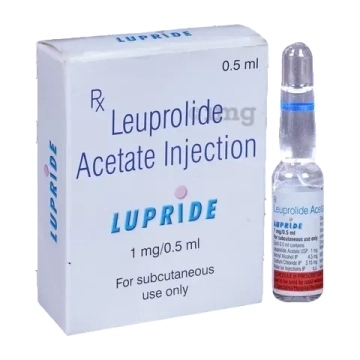
Leuprolide acetate is available in several formulations, including immediate-release injections and long-acting depot preparations. These formulations have different strengths, administration schedules, approved indications, and storage requirements.
A product described only as Leuprolide Acetate 1 mg cannot be assumed to contain 1 mg per vial, 1 mg per mL, or 1 mg per injection. Confirm the complete concentration, dosage form, and brand before publishing or supplying product-specific instructions.
Leuprolide acetate alters reproductive hormone production and may cause an initial hormone surge, hot flashes, bone mineral density loss, mood changes, metabolic changes, and cardiovascular complications. In prostate cancer, the initial testosterone surge may temporarily worsen symptoms. Treatment requires medical supervision.
What Is Leuprolide Acetate 1 mg?
Leuprolide Acetate is a synthetic gonadotropin-releasing hormone (GnRH) agonist used to regulate the production of reproductive hormones.
It acts on the pituitary gland, which controls the release of luteinizing hormone (LH) and follicle-stimulating hormone (FSH).
These hormones stimulate the production of testosterone in the testes and estrogen in the ovaries.
When leuprolide is administered continuously, it initially stimulates reproductive hormone release. Continued exposure subsequently suppresses LH and FSH secretion, reducing the production of sex hormones.
This hormone-suppressing effect is useful in selected medical conditions, including hormone-sensitive prostate cancer, endometriosis, uterine fibroids, and central precocious puberty.
Certain leuprolide protocols are also used in assisted reproductive technology under fertility specialist supervision.
However, the approved indications depend on the exact formulation, and immediate-release products should not be treated as interchangeable with long-acting depot injections.
Common Reasons for Prescribing Leuprolide Acetate
- Hormone-sensitive prostate cancer
- Testosterone suppression in selected oncology regimens
- Endometriosis treatment with approved formulations
- Uterine fibroid management with approved formulations
- Central precocious puberty treatment with pediatric formulations
- Hormonal suppression in selected fertility protocols
- Pituitary hormone regulation under specialist supervision
Important: Leuprolide is a hormone-modulating medicine. It is not conventional cytotoxic chemotherapy, and it does not cure every condition for which it is prescribed.
How Does Leuprolide Acetate Work?
1. Acts on GnRH Receptors
Leuprolide binds to gonadotropin-releasing hormone receptors in the pituitary gland.
2. Initially Stimulates Hormone Release
At the beginning of treatment, leuprolide may temporarily increase LH and FSH secretion.
This can cause a temporary increase in testosterone or estrogen.
3. Produces Pituitary Receptor Downregulation
Continuous exposure reduces the pituitary gland’s responsiveness to GnRH stimulation.
4. Suppresses LH and FSH
Following the initial stimulation phase, continued treatment suppresses gonadotropin secretion.
5. Reduces Testosterone Production
In patients with testes, suppression of LH reduces testosterone production.
6. Reduces Estrogen Production
In patients with functioning ovaries, suppression of gonadotropins can reduce ovarian estrogen production.
7. Helps Control Hormone-Sensitive Conditions
Lower sex hormone levels can help control selected conditions whose activity depends on testosterone or estrogen.
8. Provides Reversible Hormonal Suppression in Many Settings
Hormone production may recover after treatment is discontinued, although the timing and completeness of recovery depend on the individual, formulation, and duration of treatment.
Important: The initial hormone surge and subsequent suppression are clinically significant. Treatment should follow the prescribed specialist protocol.
Uses of Leuprolide Acetate
1. Prostate Cancer
Leuprolide is used in androgen-deprivation therapy for selected patients with prostate cancer.
Lowering testosterone can slow the growth of prostate cancer cells that depend on androgen signaling.
2. Advanced Prostate Cancer
Certain leuprolide formulations are approved for palliative treatment of advanced prostate cancer.
The appropriate formulation and schedule depend on the treatment plan.
3. Testosterone Suppression
Leuprolide may be used when medically indicated to suppress testosterone production.
4. Endometriosis
Approved leuprolide formulations may reduce estrogen production and help relieve endometriosis-associated pain.
5. Uterine Fibroids
Certain formulations may be used with iron therapy for preoperative improvement of anemia associated with uterine fibroids.
The specific indication and duration depend on the approved product label.
6. Central Precocious Puberty
Specially approved pediatric leuprolide formulations are used to suppress premature activation of puberty.
7. Assisted Reproductive Technology
Leuprolide may be used in selected fertility treatment protocols to control pituitary hormone release.
These uses depend on the fertility specialist’s protocol and may be off-label.
8. Prevention of Premature LH Surge
In certain assisted reproduction protocols, leuprolide may help prevent an untimely LH surge.
9. Hormone-Sensitive Disease Management
Leuprolide may be included in specialist-directed treatment plans requiring suppression of gonadal hormone production.
10. Long-Term Hormonal Treatment
Selected patients may receive ongoing leuprolide therapy, with monitoring of hormone levels, treatment response, and adverse effects.
Important: Not every leuprolide formulation is approved for all these indications. The 1 mg presentation must be verified before assigning a specific use.
Leuprolide Acetate 1 mg Dosage and Administration
Leuprolide dosing varies significantly by indication and formulation.
General Dosage Information
| Dosage Information | Details |
|---|---|
| Stated Product Strength | 1 mg; concentration and presentation unverified |
| Active Ingredient | Leuprolide Acetate |
| Administration Route | Subcutaneous or intramuscular, depending on formulation |
| Immediate-Release Products | May require daily administration |
| Depot Products | May be administered at longer intervals |
| Prostate Cancer Reference Regimen | Certain immediate-release products use 1 mg subcutaneously once daily |
| Endometriosis Regimens | Formulation-specific; often use approved depot preparations |
| Fertility Protocols | Individualized by the fertility specialist |
| Pediatric Regimens | Depend on age, weight, indication, and approved formulation |
| Treatment Duration | Depends on the medical condition and treatment response |
| Medical Supervision | Required |
Important: A 1 mg daily subcutaneous regimen is associated with certain immediate-release leuprolide products used for advanced prostate cancer. This does not establish the correct dose for every product labeled 1 mg or for other indications.
General Administration Instructions
- Use leuprolide only as prescribed.
- Confirm the exact product and formulation.
- Follow the prescribed injection route.
- Do not interchange immediate-release and depot products.
- Do not change the dose or injection frequency independently.
- Use appropriate sterile injection techniques.
- Follow product-specific preparation instructions.
- Use the medicine only after receiving proper injection training if home administration is prescribed.
- Rotate injection sites when recommended.
- Follow the exact storage instructions.
- Attend scheduled follow-up appointments.
- Report significant adverse effects promptly.
Is Leuprolide Acetate Given Daily?
Certain immediate-release leuprolide formulations are administered daily.
Long-acting depot formulations are administered at different intervals.
The dosing schedule must be determined from the exact product label and prescription.
Can Leuprolide Be Self-Administered?
Some immediate-release products may be administered at home after appropriate training.
Other formulations require administration by a healthcare professional.
What If a Dose Is Missed?
Contact the prescribing healthcare professional for instructions.
Do not administer an extra dose or change the schedule without medical advice.
Can Leuprolide Be Stopped Suddenly?
Do not independently discontinue treatment.
Stopping treatment may allow hormone levels to recover and may affect disease control.
How Long Does Leuprolide Acetate Take to Work?
Leuprolide initially stimulates reproductive hormone release.
With continued treatment, LH and FSH production become suppressed.
For certain prostate cancer regimens, testosterone generally declines to castrate levels within approximately two to four weeks, although individual responses vary.
In other indications, the time required for clinical improvement depends on the condition, formulation, and treatment protocol.
Hormone measurements and clinical assessments are used to monitor effectiveness.
Common Side Effects
Possible side effects include:
- Hot flashes
- Increased sweating
- Headache
- Fatigue
- Weakness
- Injection-site pain
- Injection-site redness
- Nausea
- Mood changes
- Sleep disturbances
- Reduced libido
- Sexual dysfunction
- Menstrual changes
- Vaginal dryness
- Joint discomfort
- Muscle discomfort
The frequency and type of adverse effects vary according to the patient’s hormonal status, indication, and formulation.
Potentially Harmful Effects & Serious Health Risks
1. Initial Hormone Flare
Leuprolide can temporarily increase sex hormone levels when treatment begins.
In patients with prostate cancer, this may temporarily worsen symptoms.
2. Urinary Obstruction
In certain patients with advanced prostate cancer, the initial testosterone surge may worsen urinary obstruction.
3. Spinal Cord Compression
Patients with vertebral metastases may be at risk of neurological deterioration during the initial hormone flare.
4. Bone Mineral Density Loss
Prolonged suppression of sex hormones can reduce bone mineral density.
5. Osteoporosis
Long-term treatment may increase the risk of osteoporosis and fractures.
6. Cardiovascular Complications
Androgen-deprivation therapy has been associated with cardiovascular risks, including myocardial infarction and stroke.
7. Blood Glucose Changes
Leuprolide may contribute to insulin resistance or worsening glycemic control in some patients.
8. Mood Changes and Depression
Mood disturbances, including depression, have been reported.
9. QT Interval Prolongation
Androgen-deprivation therapy may prolong the QT interval in susceptible patients.
10. Pituitary Apoplexy
Rare cases of pituitary apoplexy have been reported after administration of GnRH agonists.
11. Seizures
Seizures have been reported in patients receiving leuprolide.
12. Severe Allergic Reactions
Serious hypersensitivity reactions, including anaphylaxis, may occur.
13. Fertility Effects
Hormonal suppression can temporarily or sometimes persistently affect reproductive function.
14. Pregnancy-Related Harm
Leuprolide may harm an unborn baby and is generally contraindicated during pregnancy for relevant formulations.
15. Injection-Related Complications
Injection-site reactions or other administration-related problems may occur.
Emergency warning: Seek immediate medical attention for sudden weakness or numbness, loss of bladder control, severe headache with visual changes, chest pain, signs of stroke, seizures, or a serious allergic reaction.
Contraindications & Safety Precautions
1. Hypersensitivity
Do not use leuprolide in patients with known serious hypersensitivity to leuprolide, similar GnRH agonists, or formulation ingredients.
2. Pregnancy
Leuprolide can cause fetal harm.
Pregnancy should be excluded when appropriate before starting treatment.
3. Breastfeeding
Breastfeeding safety depends on the indication and product. Many formulations should not be used during breastfeeding.
4. Hormone Flare Risk
Patients with advanced prostate cancer require assessment for complications related to the initial testosterone surge.
5. Spinal Metastases
Patients with vertebral metastases may require close monitoring during treatment initiation.
6. Urinary Tract Obstruction
Patients with urinary obstruction require careful assessment and monitoring.
7. Osteoporosis
Patients with low bone mineral density may require bone health evaluation.
8. Cardiovascular Disease
Patients with cardiovascular disease or risk factors may require additional monitoring.
9. Diabetes
Blood glucose monitoring may be necessary because androgen-deprivation therapy can worsen glycemic control.
10. Depression
Patients with a history of depression or other mood disorders should report worsening symptoms.
11. Seizure Disorders
Patients with a history of seizures require appropriate clinical assessment.
12. QT Prolongation
Patients with QT prolongation, electrolyte abnormalities, or relevant cardiac conditions may require ECG monitoring.
13. Pituitary Disorders
Patients with known pituitary abnormalities require specialist assessment.
14. Fertility Planning
Discuss reproductive goals before starting treatment because hormonal suppression may affect fertility.
15. Pediatric Use
Pediatric treatment requires an appropriately approved formulation and specialist supervision.
16. Older Adults
Older patients may require additional monitoring for bone, metabolic, and cardiovascular complications.
17. Drug Interactions
Potentially important considerations include:
- QT-Prolonging Medicines: May increase the risk of cardiac rhythm abnormalities.
- Other Hormonal Therapies: May alter hormonal effects or treatment outcomes.
- Antidiabetic Medicines: Glycemic management may need adjustment.
- Medicines Affecting Bone Health: May influence overall fracture risk.
- Other GnRH-Related Treatments: Require specialist coordination.
18. Medical Monitoring
Healthcare professionals may monitor:
- Testosterone levels in prostate cancer
- Prostate-specific antigen (PSA)
- LH and FSH when indicated
- Estradiol when indicated
- Clinical treatment response
- Bone mineral density
- Blood glucose
- Cardiovascular risk factors
- Mood changes
- Injection-site reactions
- Urinary symptoms
- Neurological symptoms
- Electrolytes and ECG when indicated
- Disease-specific imaging or laboratory findings
Advantages
- Established GnRH agonist therapy.
- Effective suppression of gonadal hormone production.
- Used in selected prostate cancer regimens.
- Supports hormonal management of certain gynecological conditions.
- Available in multiple formulations.
- May be used in specialist fertility protocols.
- Can help control hormone-sensitive disease.
- Provides a non-surgical approach to hormonal suppression.
- Hormone levels may recover after treatment discontinuation.
- Established clinical experience in several approved indications.
Disadvantages / Limitations
- Requires medical supervision.
- Injection administration is necessary.
- Different formulations are not interchangeable.
- May cause an initial hormone surge.
- May cause hot flashes.
- May cause fatigue.
- May cause mood changes.
- May cause sexual dysfunction.
- May reduce bone mineral density.
- May increase fracture risk.
- May affect blood glucose.
- May increase cardiovascular risk in some patients.
- May cause injection-site reactions.
- May affect fertility.
- Can harm an unborn baby.
- Requires monitoring during long-term treatment.
- Not suitable for every hormone-sensitive condition.
- Treatment response varies.
- May require additional medicines or supportive treatment.
- Does not cure advanced prostate cancer.
Important Notes
Generic Name: Leuprolide Acetate.
Alternative Generic Name: Leuprorelin Acetate.
Stated Strength: 1 mg; exact presentation requires verification.
Drug Class: Gonadotropin-Releasing Hormone Agonist.
Therapeutic Category: Hormonal Therapy / Endocrine Medicine.
Primary Use: Selected hormone-sensitive prostate cancer regimens.
Additional Uses: Formulation-dependent gynecological, pediatric endocrine, and fertility protocols.
Mechanism: Continuous GnRH receptor stimulation followed by LH and FSH suppression.
Administration Route: Injection; route depends on formulation.
Reference Daily Regimen: Certain immediate-release prostate cancer products use 1 mg subcutaneously daily.
Major Warning: Initial hormone flare, bone density loss, metabolic changes, cardiovascular complications, and fetal harm.
Pregnancy Warning: May cause fetal harm.
Monitoring: Hormone levels, disease response, bone health, and relevant metabolic and cardiovascular parameters.
Prescription Status: Prescription-Only Medicine.
Storage: Product-specific.
Frequently Asked Questions
1. What is Leuprolide Acetate 1 mg used for?
Leuprolide acetate is used in selected hormone-sensitive conditions, including prostate cancer. Other uses depend on the exact formulation and approved indications.
2. Is Leuprolide Acetate a chemotherapy medicine?
No. Leuprolide is a hormonal therapy, not conventional cytotoxic chemotherapy.
3. How does Leuprolide Acetate work?
Continuous administration suppresses LH and FSH secretion after an initial stimulation phase, reducing testosterone or estrogen production.
4. Can Leuprolide Acetate treat prostate cancer?
Yes. It is used in androgen-deprivation therapy for selected patients with prostate cancer.
5. Does Leuprolide cure prostate cancer?
No. It can help control hormone-sensitive prostate cancer but is not a cure for advanced disease.
6. Is Leuprolide Acetate 1 mg given daily?
Certain immediate-release formulations are administered daily, but depot formulations follow different schedules.
7. Is Leuprolide Acetate an injection?
Yes. Leuprolide is commonly supplied as an injectable medicine.
8. Can Leuprolide cause hot flashes?
Yes. Hot flashes are a common effect of hormonal suppression.
9. Can Leuprolide affect bone health?
Yes. Prolonged hormone suppression may reduce bone mineral density and increase fracture risk.
10. Can Leuprolide affect blood sugar?
Yes. Androgen-deprivation therapy may worsen glucose regulation in some patients.


Patrick (verified owner) –
Great defense against seasonal viruses, perfect for daily use.
Phoenix (verified owner) –
Improved my overall wellness, fewer colds and viral infections.