







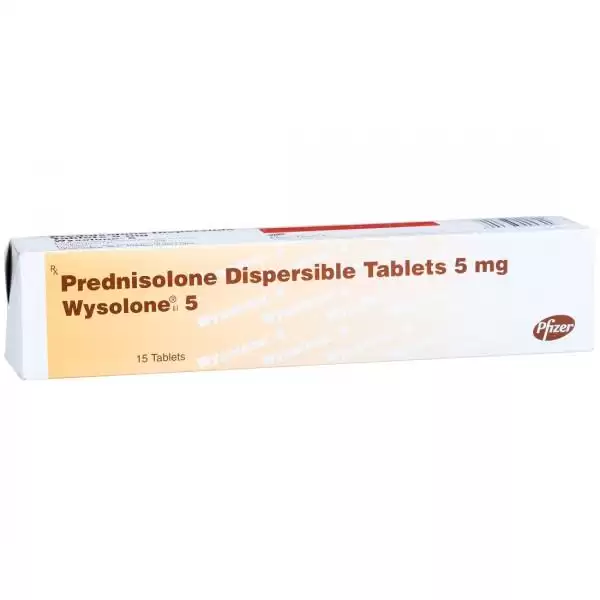
Deltasone is a brand name associated with prednisone, whereas this medicine contains prednisolone. Although the two corticosteroids are closely related and often approximately dose-equivalent, they are not the same active ingredient.
Therefore, Prednisolone Dispersible Tablets 5 mg should not be marketed as “Generic Deltasone.”
Prednisolone is a systemic corticosteroid. It can suppress immune function, increase blood glucose, and cause adrenal suppression. Prolonged treatment should not be stopped abruptly without medical guidance.
What Are Prednisolone Dispersible Tablets 5 mg?
prednisone Dispersible Tablets 5 mg contain prednisolone, a synthetic glucocorticoid medicine used to manage selected inflammatory, allergic, autoimmune, and immune-mediated conditions.
Prednisolone belongs to the systemic corticosteroid class of medicines.
Corticosteroids help regulate inflammation and immune system activity.
Inflammation is a natural protective response to injury, infection, or other harmful stimuli.
However, excessive or persistent inflammation can contribute to tissue damage, pain, swelling, redness, and impaired organ function.
prednisone works by interacting with glucocorticoid receptors inside cells.
This interaction modifies inflammatory gene expression and reduces the production of certain inflammatory signaling molecules.
It also suppresses specific immune responses involved in autoimmune and inflammatory disorders.
prednisone may be prescribed for selected respiratory conditions, inflammatory skin disorders, autoimmune diseases, and certain blood disorders.
The dispersible tablet formulation is designed to be dispersed in water before administration according to the manufacturer’s instructions.
This may be useful for patients who experience difficulty swallowing conventional tablets.
The 5 mg strength may provide flexibility when a clinician needs to prescribe a lower dose or adjust treatment gradually.
However, the appropriate dose depends on the medical condition and the patient’s clinical circumstances.
Common Reasons for Prescribing Prednisolone 5 mg
- Selected allergic and inflammatory conditions
- Rheumatoid arthritis
- Systemic lupus erythematosus
- Autoimmune inflammatory disorders
- Inflammatory skin conditions
- Certain respiratory inflammatory conditions
- Acute asthma exacerbations as part of an appropriately prescribed regimen
- Selected inflammatory bowel disease flare-ups
- Nephrotic syndrome
- Certain hematological disorders
- Selected inflammatory eye conditions
- Corticosteroid dose adjustment or tapering when prescribed
- Other corticosteroid-responsive conditions
How Do Prednisolone Dispersible Tablets 5 mg Work?
1. Absorption Through the Gastrointestinal Tract
After oral administration, prednisone is absorbed into the bloodstream.
2. Binding to Glucocorticoid Receptors
prednisone enters cells and binds to intracellular glucocorticoid receptors.
3. Regulation of Inflammatory Gene Expression
The activated receptor complex modifies the expression of genes involved in inflammation.
4. Reduction of Inflammatory Cytokines
prednisone reduces the production of several inflammatory signaling molecules.
5. Suppression of Excessive Immune Activity
It reduces certain immune responses responsible for inflammation and tissue damage.
6. Reduction of Tissue Swelling
By suppressing inflammatory pathways, prednisolone may reduce swelling.
7. Reduction of Redness and Irritation
It may improve inflammation-related redness and irritation.
8. Control of Allergic Inflammation
Prednisolone can reduce certain inflammatory responses associated with allergic conditions.
9. Reduction of Airway Inflammation
It may help control airway inflammation during selected respiratory exacerbations.
10. Management of Autoimmune Inflammation
Prednisolone suppresses immune-mediated inflammation in selected autoimmune diseases.
11. Improvement of Inflammatory Symptoms
Reduced inflammation may improve pain, stiffness, swelling, and discomfort.
12. Systemic Anti-Inflammatory Effects
Because prednisolone circulates throughout the body, its effects can occur in multiple organ systems.
Important: Systemic activity also increases the potential for adverse effects, especially during prolonged treatment.
Uses of Prednisolone Dispersible Tablets 5 mg
1. Rheumatoid Arthritis
Prednisolone may be used for short-term control of inflammation and symptoms in selected patients with rheumatoid arthritis.
2. Systemic Lupus Erythematosus
It may help suppress immune-mediated inflammation associated with lupus.
3. Severe Allergic Conditions
Prednisolone may be prescribed for selected severe allergic or inflammatory reactions.
It is not a substitute for epinephrine in anaphylaxis.
4. Acute Asthma Exacerbations
Prednisolone may be included in treatment for selected asthma exacerbations.
The required dose is determined by the prescriber and may involve more than one tablet.
5. Inflammatory Skin Disorders
It may be used for selected severe inflammatory skin conditions.
6. Inflammatory Bowel Disease
Prednisolone may be prescribed to induce remission during certain inflammatory bowel disease flare-ups.
It is generally not suitable for long-term maintenance treatment of inflammatory bowel disease.
7. Nephrotic Syndrome
Prednisolone may be used for selected forms of nephrotic syndrome.
8. Autoimmune Hematological Disorders
It may be prescribed for immune thrombocytopenia and certain autoimmune blood disorders.
9. Selected Eye Inflammatory Disorders
Systemic corticosteroids may be used for serious inflammatory eye conditions under specialist supervision.
10. Selected Respiratory Conditions
Prednisolone may be prescribed for certain inflammatory respiratory disorders, including selected COPD exacerbations.
11. Corticosteroid Dose Tapering
The 5 mg tablet strength may be useful in prescribed dose-reduction schedules.
Important: Tapering is not required after every short course. The need for tapering depends on treatment duration, dose, and individual adrenal suppression risk.
12. Other Corticosteroid-Responsive Conditions
Additional uses depend on the diagnosis and specialist treatment plan.
Important: Prednisolone is not a general painkiller, antibiotic, or routine treatment for uncomplicated viral infections.
Prednisolone Dispersible Tablets 5 mg Dosage and Administration
The correct dose depends on the underlying condition, severity, patient age, body weight, treatment response, and previous corticosteroid exposure.
General Dosage Information
| Dosage Information | Details |
|---|---|
| Active Ingredient | Prednisolone |
| Tablet Strength | 5 mg |
| Dosage Form | Dispersible Tablet |
| Administration Route | Oral |
| Adult Dose | Individualized according to indication |
| Pediatric Dose | Based on condition, age, and body weight |
| Frequency | As prescribed |
| Treatment Duration | Short-term or longer-term depending on diagnosis |
| Food Recommendation | Commonly taken with food |
| Tapering Requirement | Depends on dose, duration, and adrenal suppression risk |
| Medical Supervision | Required |
Important: A 5 mg tablet strength does not mean that 5 mg is the appropriate daily dose for every patient.
How to Take Prednisolone 5 mg Dispersible Tablets
- Confirm the prescribed dose.
- Check the product name and strength.
- Read the manufacturer’s administration instructions.
- Place the tablet in the recommended amount of water.
- Allow the tablet to disperse.
- Stir if instructed.
- Drink the prepared dispersion promptly.
- Rinse the container with additional water if directed to ensure the full dose is taken.
- Do not store the prepared mixture unless the manufacturer permits it.
- Take the medicine with food if recommended.
- Follow the prescribed dosing schedule.
- Do not increase the dose independently.
- Do not take extra tablets to accelerate symptom relief.
- Do not share the medicine with another person.
- Do not abruptly stop prolonged treatment.
- Report signs of infection.
- Monitor blood glucose if advised.
- Attend recommended follow-up appointments.
- Follow any prescribed tapering schedule.
- Store the tablets according to the product label.
Can Prednisolone 5 mg Be Taken With Food?
Yes.
Prednisolone is commonly taken with food to reduce gastrointestinal discomfort.
Should Prednisolone Be Taken in the Morning?
For once-daily treatment, morning administration is often preferred because it may better align with the body’s natural cortisol rhythm.
However, some conditions require different schedules.
What If a Dose Is Missed?
Take the missed dose when remembered unless it is nearly time for the next scheduled dose.
Do not double the dose.
Patients following a tapering regimen should contact their prescriber if uncertain.
Can Prednisolone 5 mg Be Used Every Day?
Yes, when prescribed.
Some conditions require daily treatment, but prolonged use requires medical monitoring.
Can Prednisolone 5 mg Be Used for Dose Tapering?
Yes.
The 5 mg strength may be used in a clinician-directed tapering schedule.
The reduction schedule must be individualized.
Can Prednisolone Be Stopped Suddenly?
Abrupt discontinuation after prolonged or sufficiently high-dose treatment may cause adrenal insufficiency.
Follow the prescribed treatment plan.
How Long Does Prednisolone 5 mg Take to Work?
Prednisolone begins producing glucocorticoid effects within hours after administration.
Some inflammatory symptoms may improve within the first day.
Other conditions may require several days or longer before meaningful improvement occurs.
The response depends on the diagnosis, prescribed dose, and individual patient factors.
Important: Symptom improvement does not necessarily mean the underlying condition has been cured.
Common Side Effects
Possible side effects include:
- Increased appetite
- Weight gain
- Stomach discomfort
- Nausea
- Difficulty sleeping
- Mood changes
- Increased sweating
- Fluid retention
- Facial puffiness
- Elevated blood glucose
- Increased blood pressure
- Acne
- Headache
- Restlessness
- Indigestion
Although 5 mg is a lower tablet strength than 10 mg or 20 mg, prolonged treatment can still cause clinically important corticosteroid-related adverse effects.
Potentially Harmful Effects & Serious Health Risks
1. Adrenal Suppression
Prolonged corticosteroid exposure may suppress normal cortisol production.
2. Adrenal Crisis
Abrupt discontinuation after significant adrenal suppression may cause a potentially life-threatening adrenal crisis.
3. Increased Infection Risk
Prednisolone suppresses immune responses and may increase susceptibility to infections.
4. Masking of Infection Symptoms
Corticosteroids may reduce fever and other inflammatory signs.
5. Hyperglycemia
Prednisolone can increase blood glucose levels.
6. Steroid-Induced Diabetes
Prolonged treatment may contribute to diabetes in susceptible patients.
7. Hypertension
Prednisolone may increase blood pressure.
8. Osteoporosis
Long-term treatment can accelerate bone mineral density loss.
9. Bone Fractures
Reduced bone density may increase fracture risk.
10. Gastrointestinal Bleeding
The risk may increase when corticosteroids are combined with NSAIDs.
11. Psychiatric Effects
Mood changes, depression, mania, and psychosis may occur.
12. Cataracts
Long-term corticosteroid treatment may increase cataract risk.
13. Glaucoma
Prednisolone may increase intraocular pressure in susceptible patients.
14. Muscle Weakness
Prolonged treatment may cause steroid-related muscle weakness.
15. Cushingoid Features
Long-term exposure may cause facial rounding, central weight gain, and other changes associated with excess glucocorticoid activity.
16. Skin Thinning
Prednisolone may cause fragile skin, bruising, and delayed wound healing.
17. Growth Suppression in Children
Long-term systemic corticosteroid treatment may affect growth velocity.
18. Electrolyte Disturbances
Prednisolone may contribute to sodium retention and potassium imbalance.
19. Severe Allergic Reactions
Rare hypersensitivity reactions may occur.
20. Corticosteroid Withdrawal Complications
Rapid dose reduction after prolonged treatment may cause withdrawal symptoms, adrenal insufficiency, or recurrence of the underlying disease.
Emergency warning: Seek urgent medical attention for severe weakness with fainting, persistent vomiting accompanied by low blood pressure, serious infection symptoms, gastrointestinal bleeding, severe psychiatric changes, or a serious allergic reaction.
Contraindications & Safety Precautions
1. Hypersensitivity
Do not use prednisolone if allergic to the active ingredient or any formulation component.
2. Systemic Fungal Infections
Systemic corticosteroids are generally contraindicated in systemic fungal infections unless specifically directed by a specialist.
3. Active Infections
Prednisolone may worsen certain infections or mask their symptoms.
4. Tuberculosis
Patients with active or previous tuberculosis require medical assessment.
5. Diabetes
Blood glucose monitoring may be necessary.
6. Hypertension
Blood pressure may require monitoring.
7. Heart Failure
Fluid retention may worsen certain cardiovascular conditions.
8. Osteoporosis
Patients with reduced bone density may require preventive measures and monitoring.
9. Peptic Ulcer Disease
Patients with a history of ulcers or gastrointestinal bleeding require caution.
10. Psychiatric Disorders
Prednisolone may cause or worsen mood disturbances and psychiatric symptoms.
11. Glaucoma and Cataracts
Patients with eye disorders may require monitoring.
12. Liver Disease
Significant liver disease requires individualized assessment.
13. Kidney Disease
Patients with kidney disease may require monitoring of fluid balance and other factors.
14. Pregnancy
Prednisolone may be prescribed during pregnancy when clinically necessary.
Treatment decisions should consider the underlying condition and potential risks.
15. Breastfeeding
Prednisolone is generally considered compatible with breastfeeding at usual doses.
Higher doses may require individualized advice.
16. Children
Pediatric dosing depends on age, weight, and diagnosis.
Growth should be monitored during prolonged treatment.
17. Older Adults
Older patients may be more susceptible to osteoporosis, diabetes, infections, and other corticosteroid-related complications.
18. Vaccinations
Live vaccines may be contraindicated during sufficiently immunosuppressive corticosteroid treatment.
19. Drug Interactions
Potentially important interactions include:
- NSAIDs: May increase gastrointestinal bleeding or ulcer risk.
- Warfarin: Anticoagulant effects may change; INR monitoring may be necessary.
- Diabetes Medicines: Dose adjustments may be required because prednisolone can increase blood glucose.
- Certain Diuretics: May increase the risk of potassium disturbances.
- Rifampicin: May reduce corticosteroid exposure.
- Certain Antiepileptic Medicines: May increase corticosteroid metabolism.
- Strong CYP3A4 Inhibitors: May increase corticosteroid exposure.
- Other Immunosuppressants: May increase infection risk.
- Live Vaccines: May be inappropriate during immunosuppressive treatment.
20. Medical Monitoring
Healthcare professionals may monitor:
- Treatment response
- Blood pressure
- Blood glucose
- Body weight
- Fluid retention
- Signs of infection
- Electrolytes when indicated
- Bone mineral density during prolonged treatment
- Eye health
- Mood and sleep changes
- Gastrointestinal symptoms
- Growth in children
- Muscle strength
- Adrenal function when clinically appropriate
- Medication interactions
- Need for dose reduction or tapering
Advantages
- Established anti-inflammatory action.
- Suppresses excessive immune activity.
- Used for multiple corticosteroid-responsive conditions.
- Oral administration.
- Dispersible formulation.
- May help patients with swallowing difficulties.
- Can provide relatively rapid anti-inflammatory effects.
- Used in selected respiratory exacerbations.
- Used in autoimmune disease management.
- Used for severe inflammatory skin disorders.
- Used in selected hematological disorders.
- Available in 5 mg strength.
- May provide flexibility for prescribed dose adjustments.
- May be used in clinician-directed tapering schedules.
- Suitable for short treatment courses when prescribed.
Disadvantages / Limitations
- May suppress immune function.
- May increase infection risk.
- May raise blood glucose.
- May increase blood pressure.
- May cause weight gain.
- May increase appetite.
- May cause insomnia.
- May cause mood changes.
- May cause fluid retention.
- May cause stomach discomfort.
- May increase osteoporosis risk.
- May cause muscle weakness.
- May cause skin thinning.
- May increase cataract risk.
- May increase glaucoma risk.
- May cause adrenal suppression.
- Abrupt discontinuation after prolonged treatment may be dangerous.
- May interact with several medicines.
- Requires monitoring during prolonged treatment.
- Does not cure every inflammatory or autoimmune condition.
- Requires a prescription.
Important Notes
Generic Name: Prednisolone.
Product Name: Prednisolone Dispersible Tablets 5 mg.
Strength: 5 mg.
Drug Class: Systemic Corticosteroid / Glucocorticoid.
Therapeutic Category: Anti-Inflammatory / Immunosuppressant.
Primary Uses: Selected inflammatory, allergic, and autoimmune conditions.
Mechanism: Suppression of inflammatory signaling and immune activity.
Administration Route: Oral.
Dosage Form: Dispersible Tablet.
Related Medicine: Prednisone.
Brand Clarification: Deltasone contains prednisone, not prednisolone.
Dose Flexibility: The 5 mg strength may be useful for individualized treatment and tapering schedules.
Major Warning: Do not abruptly stop prolonged corticosteroid treatment.
Common Side Effects: Increased appetite, insomnia, mood changes, and stomach discomfort.
Serious Risks: Adrenal suppression, infections, hyperglycemia, osteoporosis, and psychiatric complications.
Pregnancy: Use when clinically appropriate after medical assessment.
Breastfeeding: Generally compatible at usual doses.
Pediatric Use: Requires individualized dosing.
Monitoring: Blood glucose, blood pressure, infection symptoms, bone health, and treatment response.
Prescription Status: Prescription Medicine.
Storage: Follow manufacturer instructions.
Frequently Asked Questions
1. What are Prednisolone Dispersible Tablets 5 mg used for?
Prednisolone 5 mg is used to treat selected inflammatory, allergic, autoimmune, and immune-mediated conditions.
2. What is the generic name of Prednisolone Dispersible Tablets 5 mg?
The generic name is prednisolone.
3. Is prednisolone a steroid medicine?
Yes. Prednisolone is a systemic glucocorticoid corticosteroid.
4. How does prednisolone work?
Prednisolone reduces inflammatory signaling and suppresses excessive immune activity.
5. Is prednisolone the same as prednisone?
No. Prednisone and prednisolone are closely related corticosteroids, but they are different active ingredients.
6. Is prednisolone a generic version of Deltasone?
No. Deltasone is a brand of prednisone, not prednisolone.
7. Can prednisolone 5 mg help during an asthma exacerbation?
Yes. Prednisolone may be prescribed as part of treatment for selected asthma exacerbations. The required dose depends on the clinical situation.

Robert (verified owner) –
Improved my overall wellness, worth every penny.
Zohar (verified owner) –
As someone who deals with joint pain, this medicine has worked wonders for me. My mobility has improved, and I no longer feel stiff when I wake up. It’s been a relief, and I’m so grateful!
Mason (verified owner) –
I appreciate that this product is gentle on my stomach yet provides noticeable results. My digestion has improved, and I feel more vibrant and energized throughout the day. It’s now part of my daily routine.
Nicholas (verified owner) –
This product not only improved my skin but also gave me a noticeable energy boost. It’s amazing how something natural can make such a big difference. I highly recommend it for anyone wanting a natural health boost.