






Apixaban can cause serious or potentially fatal bleeding. Do not stop taking it without consulting the prescribing healthcare professional, because premature discontinuation can increase the risk of blood clots and stroke.
What Are Apixaban Tablets 2.5 mg?
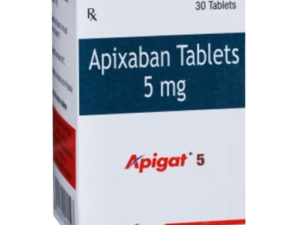
Apixaban Tablets 2.5 mg contain apixaban, an oral anticoagulant that helps prevent harmful blood clots from forming or growing.
Apixaban belongs to a class of medicines called direct oral anticoagulants (DOACs).
It works by selectively inhibiting Factor Xa, an enzyme involved in the blood coagulation process.
Factor Xa plays an important role in generating thrombin, a protein that helps convert fibrinogen into fibrin during clot formation.
By inhibiting Factor Xa, apixaban reduces thrombin generation and decreases the formation of fibrin-rich blood clots.
Apixaban is commonly prescribed to reduce the risk of stroke and systemic embolism in eligible patients with nonvalvular atrial fibrillation.
It is also used for the treatment of deep vein thrombosis (DVT) and pulmonary embolism (PE), prevention of recurrent DVT and PE, and prevention of venous thromboembolism following certain orthopedic surgeries.
The 2.5 mg strength has specific dosing roles depending on the indication.
For example, it may be used for certain patients with nonvalvular atrial fibrillation who meet established dose-reduction criteria.
It may also be used for prevention of blood clots following hip or knee replacement surgery or for reducing the risk of recurrent DVT or PE after completion of an initial treatment period.
Important: Apixaban 2.5 mg is not the standard starting dose for treating an acute DVT or PE. The appropriate strength and dosing schedule depend on the clinical indication.
Common Reasons for Prescribing Apixaban 2.5 mg
- Stroke risk reduction in eligible patients with nonvalvular atrial fibrillation
- Prevention of systemic embolism
- Prevention of venous thromboembolism after hip replacement surgery
- Prevention of venous thromboembolism after knee replacement surgery
- Reduction of recurrent deep vein thrombosis risk
- Reduction of recurrent pulmonary embolism risk
- Extended anticoagulant treatment after initial DVT or PE therapy
- Long-term prevention of selected thromboembolic complications
How Do Apixaban Tablets 2.5 mg Work?
1. Inhibition of Factor Xa
Apixaban selectively inhibits activated coagulation Factor X, commonly known as Factor Xa.
2. Reduction of Thrombin Generation
Factor Xa is involved in converting prothrombin into thrombin.
Inhibiting Factor Xa reduces thrombin generation.
3. Reduced Fibrin Formation
Thrombin converts fibrinogen into fibrin, which forms the structural framework of blood clots.
By reducing thrombin generation, apixaban decreases fibrin formation.
4. Prevention of Harmful Clot Formation
Apixaban reduces the likelihood of certain harmful blood clots developing.
5. Reduction of Clot Extension
Anticoagulation helps prevent existing clots from growing while the body’s natural processes gradually break them down.
6. Stroke Risk Reduction
In eligible patients with nonvalvular atrial fibrillation, apixaban helps reduce the risk of clot-related stroke and systemic embolism.
7. Prevention of Postoperative Blood Clots
Following certain orthopedic surgeries, apixaban helps reduce the risk of venous thromboembolism.
8. Prevention of Recurrent DVT
Extended anticoagulation may reduce the risk of another deep vein thrombosis.
9. Prevention of Recurrent Pulmonary Embolism
Apixaban may reduce the risk of recurrent pulmonary embolism after completion of initial anticoagulant treatment.
10. Predictable Anticoagulant Activity
Apixaban generally provides predictable anticoagulant effects without routine INR monitoring.
Important: Apixaban does not directly dissolve an existing blood clot. It reduces further clot formation and extension while the body naturally breaks down the clot.
Uses of Apixaban Tablets 2.5 mg
1. Stroke Prevention in Nonvalvular Atrial Fibrillation
Apixaban reduces the risk of stroke and systemic embolism in eligible patients with nonvalvular atrial fibrillation.
The 2.5 mg twice-daily dose is generally reserved for patients who meet specific dose-reduction criteria.
2. Prevention of Systemic Embolism
Apixaban helps reduce the risk of blood clots traveling through the bloodstream and blocking arteries elsewhere in the body.
3. Prevention of DVT After Hip Replacement
Apixaban 2.5 mg may be prescribed after hip replacement surgery to prevent postoperative venous thromboembolism.
4. Prevention of DVT After Knee Replacement
It may be prescribed following knee replacement surgery to reduce the risk of postoperative blood clots.
5. Prevention of Recurrent DVT
After completion of initial anticoagulant treatment, apixaban 2.5 mg may be prescribed to reduce the risk of recurrent deep vein thrombosis.
6. Prevention of Recurrent Pulmonary Embolism
Extended treatment with apixaban may reduce the risk of another pulmonary embolism.
7. Extended Anticoagulant Therapy
Selected patients may require continued anticoagulation after initial treatment for DVT or PE.
8. Long-Term Thromboembolic Risk Reduction
Apixaban may be used for ongoing prevention of certain clot-related complications when clinically appropriate.
Important: The 2.5 mg strength is not interchangeable with the 5 mg strength without medical assessment.
Apixaban Tablets 2.5 mg Dosage and Administration
The appropriate dose depends on the patient’s condition, age, body weight, kidney function, interacting medicines, and bleeding risk.
General Dosage Information
| Clinical Indication | Common Adult Dosing Information |
|---|---|
| Nonvalvular Atrial Fibrillation | 5 mg twice daily is the usual dose; 2.5 mg twice daily is used when specific reduction criteria are met |
| Dose Reduction in Atrial Fibrillation | Generally 2.5 mg twice daily when at least two criteria are present: age 80 years or older, body weight 60 kg or less, or serum creatinine 1.5 mg/dL or higher |
| After Hip Replacement Surgery | 2.5 mg twice daily, commonly for 35 days |
| After Knee Replacement Surgery | 2.5 mg twice daily, commonly for 12 days |
| Acute DVT or PE Treatment | Usually 10 mg twice daily for 7 days, followed by 5 mg twice daily; 2.5 mg is not the standard initial treatment dose |
| Reduction of Recurrent DVT or PE | 2.5 mg twice daily after at least 6 months of initial anticoagulant treatment |
| Administration Route | Oral |
| Food Requirements | With or without food |
These are general adult dosing schedules from commonly used prescribing information, not individualized instructions. Kidney function, drug interactions, and regional product labeling may require different decisions.
How to Take Apixaban Tablets 2.5 mg
- Take the medicine exactly as prescribed.
- Swallow the tablet with water.
- Take it with or without food.
- Follow the prescribed twice-daily schedule when applicable.
- Try to take doses at consistent times.
- Do not change the dose independently.
- Do not stop treatment without medical advice.
- Inform your healthcare professional about all other medicines.
- Attend recommended follow-up appointments.
- Watch for unusual bleeding or bruising.
- Inform dentists and surgeons that you take apixaban.
- Avoid taking additional anticoagulants unless prescribed.
- Follow instructions before planned medical procedures.
- Keep the medicine out of children’s reach.
- Store according to the product label.
What If a Dose Is Missed?
Take the missed dose as soon as remembered on the same day.
Resume the usual twice-daily schedule.
Do not double the dose to make up for a missed tablet.
If uncertain about the timing, contact your pharmacist or prescribing clinician.
Can Apixaban 2.5 mg Be Taken Daily?
Yes. Apixaban is often prescribed for ongoing anticoagulant treatment.
The duration depends on the medical indication and the patient’s clotting and bleeding risks.
Can Apixaban Be Stopped Suddenly?
Do not stop apixaban without medical advice.
Premature discontinuation can increase the risk of thrombotic events, including stroke.
How Long Does Apixaban Take to Work?
Apixaban is absorbed after oral administration and generally reaches peak blood concentrations approximately three to four hours after dosing.
Its anticoagulant effect begins as the medicine is absorbed.
The elimination half-life is approximately 12 hours in many adults.
Consistent dosing is important to maintain anticoagulant protection.
The duration of treatment varies depending on the clinical indication.
Common Side Effects
Possible side effects include:
- Easy bruising
- Minor bleeding
- Nosebleeds
- Bleeding gums
- Prolonged bleeding from small cuts
- Nausea
- Anemia
- Heavier menstrual bleeding
- Blood in the urine
- Gastrointestinal discomfort
Not every patient experiences these effects.
Important: Any unexpected or persistent bleeding should be assessed by a healthcare professional.
Potentially Harmful Effects & Serious Health Risks
1. Major Bleeding
Apixaban may cause serious bleeding that requires hospitalization or emergency treatment.
2. Gastrointestinal Bleeding
Bleeding may occur in the stomach or intestines.
Warning signs include black stools, bloody stools, or vomiting blood.
3. Intracranial Hemorrhage
Bleeding inside the skull is a serious medical emergency.
Symptoms may include sudden severe headache, weakness, confusion, or loss of consciousness.
4. Internal Bleeding
Bleeding may occur in internal organs or tissues.
5. Severe Anemia
Significant blood loss may cause anemia, weakness, dizziness, or fatigue.
6. Spinal or Epidural Hematoma
Patients receiving spinal anesthesia or undergoing spinal puncture may develop a spinal or epidural hematoma.
This can potentially cause long-term or permanent paralysis.
7. Increased Thrombotic Risk After Discontinuation
Stopping apixaban prematurely may increase the risk of stroke or other thrombotic events.
8. Severe Allergic Reactions
Rare hypersensitivity reactions may occur.
9. Increased Bleeding With Drug Interactions
Certain medicines can increase apixaban exposure or independently increase bleeding risk.
10. Traumatic Bleeding
Falls, accidents, or head injuries may cause dangerous bleeding in patients taking anticoagulants.
Emergency warning: Seek immediate medical attention for uncontrolled bleeding, vomiting blood, black stools, sudden severe headache, fainting, new neurological symptoms, or any significant head injury.
Contraindications & Safety Precautions
1. Active Pathological Bleeding
Apixaban is contraindicated in patients with active pathological bleeding.
2. Severe Hypersensitivity
Do not use apixaban if there is a history of serious hypersensitivity to the medicine.
3. Kidney Disease
Kidney function should be assessed because renal impairment can influence anticoagulant treatment decisions.
4. Liver Disease
Patients with significant liver disease or liver-associated coagulopathy require careful assessment.
5. Bleeding Disorders
Patients with conditions that increase bleeding risk require individualized medical evaluation.
6. Gastrointestinal Ulcers
Active or recent gastrointestinal ulcers may increase bleeding risk.
7. Recent Surgery
Surgical procedures can increase bleeding risk and may require temporary interruption under medical guidance.
8. Spinal Anesthesia
Spinal or epidural procedures require special precautions because of hematoma risk.
9. Artificial Heart Valves
Apixaban is not recommended for patients with prosthetic heart valves unless specifically supported by appropriate specialist guidance.
10. Antiphospholipid Syndrome
Direct oral anticoagulants are generally not recommended for patients with triple-positive antiphospholipid syndrome.
11. Pregnancy
Apixaban is generally avoided during pregnancy because of potential bleeding risks and insufficient safety data.
12. Breastfeeding
Breastfeeding is generally not recommended during apixaban treatment.
13. Older Adults
Older patients may require careful assessment of bleeding risk and dose-reduction criteria.
14. Low Body Weight
Body weight is one factor considered in specific apixaban dosing decisions.
15. Drug Interactions
Important interactions include:
- Aspirin: May increase bleeding risk.
- Clopidogrel: May increase bleeding risk.
- Warfarin: Concurrent use generally increases bleeding risk and requires carefully managed transitions.
- Heparin and Other Anticoagulants: May increase bleeding risk.
- Ibuprofen and Naproxen: NSAIDs may increase gastrointestinal and other bleeding risks.
- Ketoconazole and Itraconazole: Strong CYP3A4 and P-glycoprotein inhibitors may increase apixaban exposure.
- Ritonavir: May increase apixaban exposure and require dose adjustment or avoidance.
- Rifampicin: May reduce apixaban exposure.
- Carbamazepine: May reduce apixaban effectiveness.
- Phenytoin: May reduce apixaban exposure.
- St. John’s Wort: May reduce anticoagulant effectiveness.
Do not start or stop interacting medicines without professional guidance.
16. Medical Monitoring
Healthcare professionals may monitor:
- Signs of bleeding
- Complete blood count
- Hemoglobin levels
- Kidney function
- Liver function
- Medication adherence
- Drug interactions
- Stroke risk
- Recurrent clotting symptoms
- Body weight when relevant
- Changes in medical condition
- Need for continued anticoagulation
Important: Routine INR testing is not required to measure apixaban’s anticoagulant effect, unlike warfarin. However, clinical monitoring remains necessary.
Advantages
- Direct Factor Xa inhibition
- Oral anticoagulant therapy
- Stroke risk reduction in eligible atrial fibrillation patients
- Prevention of systemic embolism
- Prevention of postoperative venous thromboembolism
- Reduction of recurrent DVT risk
- Reduction of recurrent PE risk
- Predictable anticoagulant effect
- No routine INR monitoring requirement
- Can be taken with or without food
- Available in 2.5 mg strength
- Suitable for selected extended anticoagulation regimens
Disadvantages / Limitations
- Risk of serious bleeding
- Risk of gastrointestinal bleeding
- Risk of intracranial hemorrhage
- Increased bleeding with certain medicines
- Requires consistent dosing
- May require dose adjustment or avoidance in specific circumstances
- Not suitable for active pathological bleeding
- Not recommended for certain patients with prosthetic heart valves
- Not recommended for triple-positive antiphospholipid syndrome
- Requires precautions before surgery
- May interact with antifungal medicines and certain antivirals
- May interact with NSAIDs
- Premature discontinuation increases clotting risk
- Does not directly dissolve existing blood clots
- Requires medical supervision
- Requires a prescription
Important Notes
Generic Name: Apixaban.
Product Name: Apixaban Tablets 2.5 mg.
Strength: 2.5 mg.
Drug Class: Direct Oral Anticoagulant.
Pharmacological Class: Factor Xa Inhibitor.
Therapeutic Category: Anticoagulants / Cardiovascular Medicines.
Primary Uses: Prevention of selected thromboembolic complications.
Administration: Oral.
Common Frequency: Twice daily when prescribed.
Food Requirements: With or without food.
Common Side Effects: Bruising, bleeding, nausea, and anemia.
Serious Risks: Major bleeding, intracranial hemorrhage, and spinal or epidural hematoma.
Pregnancy: Generally avoided.
Breastfeeding: Generally not recommended.
Monitoring: Bleeding symptoms, kidney function, liver function, and complete blood count when indicated.
Prescription Status: Prescription Medicine.
Frequently Asked Questions
1. What are Apixaban Tablets 2.5 mg used for?
They are used for selected anticoagulation indications, including prevention of stroke in eligible patients with nonvalvular atrial fibrillation, postoperative clot prevention, and reduction of recurrent DVT or PE risk.
2. Is apixaban a blood thinner?
Yes. Apixaban is commonly called a blood thinner, although it works by inhibiting Factor Xa rather than physically thinning the blood.
3. How does apixaban work?
It selectively inhibits Factor Xa, reducing thrombin generation and blood clot formation.
4. Can apixaban prevent stroke?
Yes. It reduces the risk of stroke and systemic embolism in eligible patients with nonvalvular atrial fibrillation.
5. Is apixaban used for DVT?
Yes. Apixaban is used for DVT treatment and prevention of recurrence, but the dose depends on the treatment stage.
6. Is apixaban used for pulmonary embolism?
Yes. It is used for PE treatment and reduction of recurrence risk under appropriate medical supervision.
7. Is 2.5 mg the standard dose for all patients?
No. The 2.5 mg dose is used for specific indications or when established dose-reduction criteria are met.
8. Can apixaban be taken with food?
Yes. It can be taken with or without food.
9. How often is apixaban taken?
It is commonly prescribed twice daily.
10. Can apixaban cause bleeding?
Yes. Bleeding is the most important potential adverse effect.
Reviews
There are no reviews yet.